

How to write a membership renewal letter
Most renewal letters bury the ask, waffle about the value, and sound like a debt collector. Here's how to write one that members actually answer - lead with the ask, name real value, make paying trivial, and sound like a person.

A renewal letter is a small thing, and I think that's exactly why it gets written badly so often. It feels too minor to fuss over, so it gets knocked out in five minutes and reused for years, or it gets fussed over in the wrong direction entirely - four paragraphs about the organisation's proud history, a mission statement, a photo, and the one line that actually matters (pay here, by this date) tucked somewhere near the bottom where half the readers never reach it. Neither of those is a design problem or a technology problem. It's just that nobody sat down and asked what the letter is honestly for.
So let me say what it's for, plainly. A renewal letter has one job: to move a member from "I should probably renew" to "done", with as little friction and as little groaning as possible. Everything else - the warmth, the reminder of value, the sign-off - is in service of that. If you keep that single purpose in mind while you write, most of the decisions make themselves. This piece is about the writing itself - what to say and how to say it. The broader question of when to send renewal reminders and how many, I've covered separately in the complete guide to renewals, so I won't repeat that here. And if you'd rather not draft from scratch at all, there are ready-made renewal letter templates you can lift and adapt - this article is the thinking behind why they're shaped the way they are.
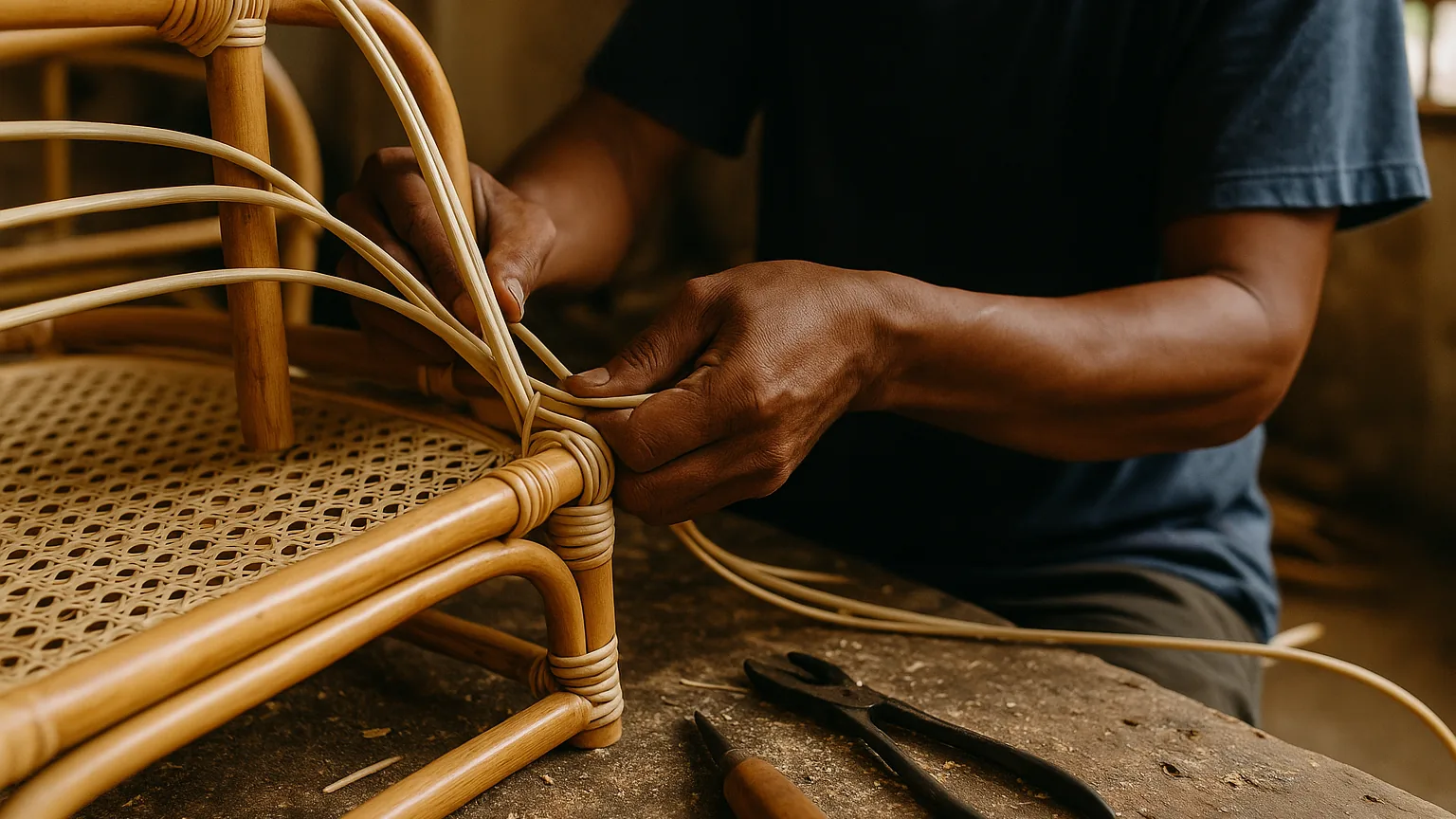
I'll carry one example through the whole thing, because it's easier to talk about real words than abstract advice. Say you help run the Himpunan Perajin Rotan Cirebon - the Cirebon Rattan Makers' Guild - a trade body of roughly 140 members, mostly small workshop owners and weavers, plus a handful of exporters, dues of around Rp 500.000 a year, renewals due each January. The guild runs a shared showroom, gets members a group rate on container shipping, sorts out the export paperwork that would sink a one-person workshop, and takes a stand at the annual furniture fair in Jakarta. Hold that in your head - we'll write its renewal letter as we go.
Lead with the ask
This is the one that fixes the most letters, and it's the one people resist hardest, because it feels blunt. You want to warm the reader up first, ease into it, build the case before you mention money. Resist that. The reader already knows what a renewal letter is the moment they see the subject line, so there's no reveal to protect - all the slow build does is make them scroll to find out what you actually want. Put the ask in the first line or two. "Your Guild membership is due for renewal on 31 January - here's your link to renew in a couple of taps." That's it. They now know exactly what this is and what to do, and everything after that is you giving them reasons to feel good about doing it rather than making them hunt for the point.
The mistake underneath the buried ask is usually a good instinct pointed the wrong way - you don't want to seem grabby, so you cushion the request in throat-clearing. But a clear, early ask doesn't read as grabby. It reads as respectful of their time, which for a workshop owner who's answering your letter between coats of varnish is worth more than any amount of charm. Say what you need, then be charming afterwards if there's room.
Remind them of the value - concretely
Once the ask is out of the way, give them one honest reason it's worth saying yes. Just one, and make it specific to what your membership actually does, not a bulleted list of everything it could theoretically be. The single most common filler in renewal letters is the generic benefits paragraph - "access to a vibrant community, exclusive resources, and networking opportunities" - which says nothing, could belong to any organisation on earth, and gets skated over precisely because the reader has read it a hundred times before.
Compare that to a line built for this particular member. For the Rattan Guild: "Your Rp 500.000 keeps the shared showroom open, gets you the group container rate that saved members an average of 15 - 20% on shipping last year, and covers your spot in the export-paperwork scheme." That's concrete, it's true, and crucially it reminds the member of things they'd genuinely miss - not abstractions, but the container rate and the paperwork help they used four times last year and had half-forgotten were part of the deal. You don't need three of these. One good, true, specific sentence does more than a page of features, and it does it without making anyone feel they're being sold to.
A word of honesty here, because it's easy to overpromise in a renewal letter and it always backfires. Only name value the member has actually had. If the showroom's been shut for renovations half the year, don't lead with the showroom - lead with something that's genuinely been delivering. Members can tell the difference between a reminder of real value and a sales pitch that's papering over a thin year, and the second one quietly costs you trust you'll want later.
Keep it short and human
Short, first. A renewal letter that runs past a screen's worth is nearly always too long, and the excess is almost never the important part - it's history, hedging, and throat-clearing. If you've led with the ask and given one solid reason, you're most of the way to done already. Read your draft back and cut anything that isn't the ask, the reason, or the warmth. You'll usually lose a third of it and lose nothing that mattered.
Human, second, and this one's harder to pin down but you know it when you see it. Renewal letters have a way of drifting into a stiff, official register - "We hereby remind you that your membership subscription is due for renewal" - that no actual person would ever say out loud. Write the way you'd talk to a member you know, because you probably do know them. "Hi Pak Budi, it's that time again - your Guild membership's up for renewal this month" is a letter from a person. The other version is a letter from a filing cabinet. People renew for the people, especially in a trade body where half the value is the relationships, so don't let the letter sound like it came from nobody.
Make paying the easy part
The best-written letter in the world falls over if the last step is hard, so the letter's real job at the business end is to carry a single, obvious way to pay and get out of the way. One clear link or button - "Renew now" - that takes them straight to a page with the amount already filled in. Not a login wall they've forgotten the password to, not "please transfer to the account below and email us the receipt", not a form asking for details you already hold. Every one of those is a place where a willing member's good intention gets a chance to evaporate.
Here in Indonesia that also means the payment page on the other side of the link needs to offer what people actually use - QRIS, bank transfer, an e-wallet - rather than assuming everyone's got a credit card to hand, because plenty of small workshop owners don't. A member who can scan a QR and be done before their coffee goes cold will renew. The same member faced with three steps and a receipt to email will mean to, and then a container order comes in, and then it's March. The letter's tone gets them willing; the payment link either closes it or loses it. So the strongest sentence in the whole letter is often just the link, and everything else is there to get them to click it.
A quick test worth doing: read your renewal letter on your phone, then actually tap the link and try to pay as if you were a member. Time it. If it takes more than about thirty seconds, or you hit a login you'd forgotten, that's the thing to fix before you rewrite a single word - the friction after the link costs you more renewals than any sentence in the letter.
Get the tone right - warm, not debt-collector
The tone question really comes to a head on the later reminders, the ones that go out as the deadline passes, and the temptation is to reach for urgency - capital letters, "FINAL NOTICE", a whiff of consequence. Resist it. These are your members, often people you see at the fair and the workshop visits, not debtors who owe you money, and the scary version reads as slightly desperate rather than motivating. A warm nudge outperforms it almost every time in my experience - "we'd hate to see you drop off the Guild rolls, Pak Budi, the group shipping alone usually pays for itself - here's the link whenever you get a minute" does more than any amount of shouting.
That doesn't mean going limp, mind you. Warm and clear can live in the same letter - you can be perfectly direct about the date and the amount while still sounding like a friend rather than a collections department. The thing to avoid isn't firmness, it's the manufactured pressure, the false deadline, the guilt. A trade guild runs on goodwill and reputation more than most organisations, and a renewal letter that leans on fear spends down exactly the thing the guild is built out of. Play it warm and straight and you keep both the member and the goodwill.

A simple structure that holds it all together
Put those together and the shape of a good renewal letter is genuinely simple - four parts, in this order:
- Open with the ask. Who it's from, what's due, when, and the link. One or two sentences.
- The value, in one concrete line. The specific thing they'd miss, named plainly and truthfully.
- The action, made trivial. A single clear button or link to a payment page that already knows the amount and takes QRIS or transfer.
- A warm sign-off. A human line that sounds like it came from someone who knows them, not a filing cabinet.
For the Rattan Guild, the whole thing can be four short paragraphs: "Hi Pak Budi, your Guild membership's up for renewal on 31 January - here's your link to sort it in a couple of taps. Your Rp 500.000 keeps the showroom open, holds your group container rate, and covers the export-paperwork help. [Renew now] Any trouble at all, just reply to this and I'll sort it - and either way, see you at the Jakarta fair in March. Cheers, Sari." That's it. It leads with the ask, names real value, makes paying one tap, and sounds like a person. You could write a version for your own organisation in ten minutes, and if you'd rather start from something and adapt, the templates article has a handful of these you can lift straight off the page for different types of member and different points in the sequence.
Don't over-engineer it beyond that, either. You don't need a different bespoke letter for every member, or a twelve-stage sequence with escalating designs, or clever subject-line tricks - not to start with, and probably not ever for a guild of 140. One good letter, sent on time, with the ask up front and the payment made easy, will do most of the work. Get that right and the fancier stuff is a rounding error. Start rough if you have to….a plain letter that actually goes out beats a beautifully-crafted one still sitting in drafts when the deadline passes.
If you take one thing away: lead with the ask, give one true reason it's worth it, make paying a single tap, and sound like a person the member knows. A renewal letter that does those four things will quietly outperform anything longer, cleverer, or scarier.
Getting the words right is most of the battle, and it's yours to get right whatever tool you send them through. Anggota happens to make the mechanical side less of a chore - the letter going out on time to the right members, the one-tap payment page with QRIS and bank transfer already set up, the link that lands them straight on it - so you can spend your effort on the writing rather than the plumbing. If that sounds useful you're welcome to try it for free and see how it fits your organisation. And if you'd sooner take these principles and run them through whatever you already use, that's genuinely fine - a warm, clear, easy-to-answer renewal letter works the same however it's sent, and your members will thank you for it either way.