

Membership renewals: the complete guide
Most members who leave don't decide to leave - they just forget to renew, and nobody reminds them properly. Here is how to fix that, step by step.

Here is the thing nobody tells you when you take over the membership side of an organisation: most of the members you lose in a given year didn't sit down, weigh it up, and decide they were done with you. They just forgot. Their card expired, or the reminder landed in a spam folder, or they meant to sort it out after the weekend and then life happened, and three months later they've quietly stopped being a member without ever really choosing to. That is the uncomfortable truth about renewals, and it's also the good news, because a problem caused by forgetting is a problem you can actually do something about.
There's a lot written about "member retention" that treats it as some deep strategic puzzle - engagement funnels, lifecycle marketing, the works - and some of that matters, sure. But in my experience the bulk of the renewals problem is far more boring than that. It's remembering to ask, on time, in a way that makes paying easy, more than once. Get that right and you'll recover most of the members you were otherwise going to lose to sheer inertia. The clever stuff can come later, once the basics are sorted.
Let me use a concrete example the whole way through, because it's easier to talk about real numbers than abstractions. Say you run the Riverside Cycling Club - 200 members, annual dues of $60, renewals due each March. If your renewal rate is sitting at 70%, you're losing 60 members a year, which is $3,600 walking out the door, and you'll spend the rest of the year trying to recruit 60 new people just to stand still. Nudge that renewal rate to 85% and you keep an extra 30 members - $1,800 you didn't have to go out and find. Keeping a member is nearly always cheaper than winning a new one, so that gap between 70% and 85% is about the most useful thing you can spend your time on, and renewals are where you either win it or lose it.
Why members actually lapse
Before you fix anything it's worth being honest about why people don't renew, because the reasons aren't all the same and they don't all have the same fix. From what I've seen, they fall into a few buckets:
- They forgot. Easily the biggest group, and the most recoverable. No reminder, or one reminder that they missed. Nothing personal - they'd have happily stayed if you'd made it easy.
- Paying was a hassle. The renewal link went to a login page they couldn't get into, or it asked them to fill in details you already had, or it only took bank transfer and they never got around to it. Every extra step here quietly loses you people.
- They drifted. They joined, came to a couple of things, then stopped showing up months ago. The renewal notice just formalised a decision they'd already half-made. This one is a real engagement problem, and no renewal email will save it.
- They genuinely don't want to renew. Moved away, circumstances changed, got what they needed and are done. This group is small, and chasing them hard is a waste of everyone's time.
The reason this matters is that your renewal process is aimed almost entirely at the first two groups - the forgetters and the ones who found it fiddly - and those two are the ones you can win back with nothing more than good timing and a payment page that works. So that's where I'd put your effort first. Don't obsess over the members who've genuinely moved on; you'll drive yourself spare and it won't move the number much.
When to start reminding (and how often)
There's no single perfect schedule, and anyone who hands you one without knowing your organisation is guessing. But as a rule of thumb that works reasonably well for an annual membership, I'd start earlier than feels comfortable and send more reminders than feels polite. Something like this:
- A first heads-up around 30 - 45 days before the due date. Friendly, no urgency - "your membership renews next month, here's the link if you'd like to sort it now".
- A reminder 7 - 14 days out. A bit more direct.
- One on or near the due date itself.
- And - this is the one people skip - a follow-up 7 - 10 days after it's lapsed, because a good chunk of renewals come in after the deadline, from people who simply hadn't got to it yet.
So that's roughly three to four touches spread across a couple of months. It sounds like a lot, and the first time you set it up you'll worry you're pestering people. You're not, or at least the data says you're not - the after-the-deadline nudge in particular tends to recover members you'd otherwise have written off, and the ones who find it annoying were probably lapsing anyway. Don't stress too much about hitting these exact days either; the pattern matters far more than the precise timing.
A quick aside on the "final notice" tone. Resist the urge to make the last reminder sound like a debt collector. "This is your FINAL chance" reads as slightly desperate, and these are volunteers and community members, not customers who owe you money. A warm "we'd love to have you back for another year, here's the link" outperforms the scary version nearly every time, in my experience.
What a renewal message should actually say
Keep it short and make the action obvious. The single most common mistake I see is a renewal email that spends four paragraphs on the history of the club and buries the actual renew button somewhere near the bottom, by which point half your readers have wandered off. Lead with the thing you want them to do. A renewal message really only needs to do three jobs: remind them it's due, remind them briefly why it's worth it, and give them a one-click way to pay.
On the "why it's worth it" bit - a plain, specific line does more than a list of benefits nobody reads. For the Riverside Cycling Club, "your $60 keeps the Saturday rides running, covers the club insurance, and gets you the members' discount at the two local bike shops" is worth more than a bulleted feature list, because it's concrete and it's true. Don't waffle on for paragraphs though - one honest sentence beats a page of marketing speak, and your members can smell the marketing speak from a mile off.
Make paying trivial - fix this before anything else
If you only fix one thing, fix this. Every extra step between "I'd like to renew" and "done" costs you members, and it costs you more than you'd think. The renewal link should take them straight to a page where the amount is already filled in and they can pay in a few taps, without hunting for a login or re-typing details you already hold.
Here in Indonesia that means offering the payment methods people actually use - a QRIS code, bank transfer, an e-wallet - rather than assuming everyone has a credit card handy, because plenty don't. A member who can scan a QR code and be done in fifteen seconds will renew; the same member faced with "please transfer to this account and email us the receipt" will mean to, and then won't. It's not that they don't value the membership. It's that the friction gives their good intentions time to evaporate.
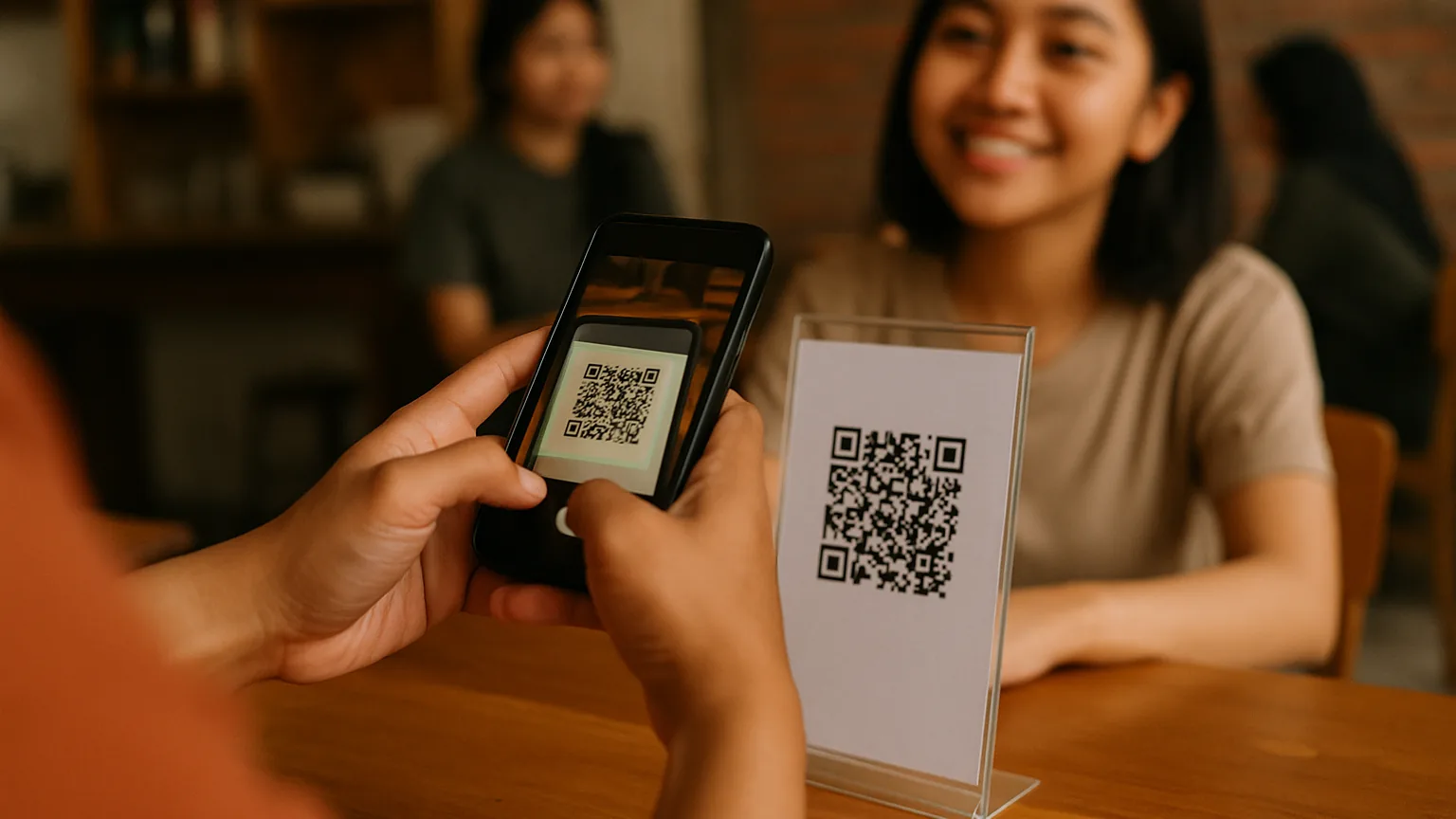
This is also where automation earns its keep, and it's worth being a bit careful about how you do it. Auto-renewal - where the member's payment method is charged automatically each year unless they cancel - genuinely lifts renewal rates, often by a fair margin, because it turns "remember to renew" into "remember to leave", and far fewer people do the second one. If your system supports it (Anggota does, by the way), it's usually worth offering. Two honest caveats though: be upfront that it's happening, send a reminder a week or so before each charge so nobody gets a nasty surprise, and make cancelling genuinely easy. Auto-renewal that feels like a trap does more long-term damage than the churn it saves. Play it straight and it's a win for everyone; play it sneaky and you'll pay for it in goodwill.
Grace periods and winning people back
Lapsed is not the same as gone. Someone whose membership ran out last week is still, for all practical purposes, a member who hasn't got around to paying - so treat them that way for a while before you treat them as lost. A grace period of a couple of weeks, where they keep their access and just get a gentle nudge or two, recovers a surprising number of people at essentially no cost.
Beyond that, a proper win-back is worth doing once a year, not constantly. Somewhere around 30 - 60 days after a lapse, a short, warm message - "we've missed you at the Saturday rides, here's a one-click link to rejoin whenever suits" - will bring a slice of them back. Not all of them, and you shouldn't expect it to. But a slice, for the price of one email, is a good trade. After that, let it rest…. hammering people who've clearly moved on just teaches them to unsubscribe, and you lose the chance to reach them again next year.

Measuring whether any of this is working
You don't need a dashboard with fourteen metrics on it. For renewals, one number does most of the work: your renewal rate, which is simply the members who renewed divided by the members who were due to renew, times 100. Riverside Cycling Club had 200 due and 170 came back - that's an 85% renewal rate. Track it each year and watch the direction of travel; the trend tells you more than the absolute figure.
As for what's "good" - it depends heavily on the type of organisation, so take this loosely. A lot of associations and clubs land somewhere in the 70 - 85% range, and the well-run ones push into the high 80s. If you're well below that, the fixes above (timing, more reminders, easier payment) will usually get you a chunk of the way there before you need to worry about anything cleverer. If you're already up around 90%, honestly, don't go looking for problems - you're doing fine, and the last few points get expensive to chase.
What not to bother with
It's easy to turn renewals into an unmanageable monster, so a word of caution. You do not need a fifteen-email nurture sequence, or personalised video messages, or a loyalty-points scheme, at least not to start with. Those things can deliver at the margins once the basics are humming, but they're the last 10% - and it's not worth chipping away at the last 10% while your renewal page still asks people to log in first. Get the timing right, send three or four good reminders, make paying take fifteen seconds, and follow up after the deadline. That's the 80% of the result, and most organisations I've seen haven't done it yet.
Keep it simple, in other words, and don't be afraid to start rough and improve it. A plain reminder that goes out on time beats a beautifully-designed one that you never quite finish setting up.
If you take one thing away: the members you're losing mostly aren't rejecting you, they're just not getting a clear, easy, well-timed prompt to stay. Fix the prompt and fix the payment, and the renewal rate looks after itself.
This is, as it happens, most of what Anggota is built to do quietly in the background - the reminder sequence, the one-tap payment page with QRIS and bank transfer, auto-renewal if you want it, and the renewal rate sitting there so you can see whether it's working. If that sounds useful you're welcome to have a go for free and see how it fits your organisation. And if you'd rather just take the ideas above and run them through whatever you already use, by all means - the principles hold either way, and above all we hope your next renewal season is a good deal less stressful than the last.