
Membership benefits ideas: what to actually offer members
A committee can brainstorm thirty perks in twenty minutes, and most will go unused. Here's a practical menu of benefit ideas by type, with an honest note on which actually keep members and which just look good in a brochure.
If you sit a committee down and ask them to brainstorm member benefits, you'll have a list of thirty things inside twenty minutes - discounts, a newsletter, a members' area, exclusive events, a loyalty scheme, branded merch, priority booking, the lot. It feels productive, and it's almost entirely the wrong exercise. The list of things you could offer is close to infinite and mostly cheap to imagine; the list of things your members will actually notice, use, and stay for is short, and it's different for every organisation. So the useful question isn't "what benefits can we offer" - it's "what do our members actually value, and are we giving them more of that". Most of what follows is really just a way of getting to that second question honestly, because a benefit nobody uses isn't a benefit at all - it's clutter you're paying to maintain.
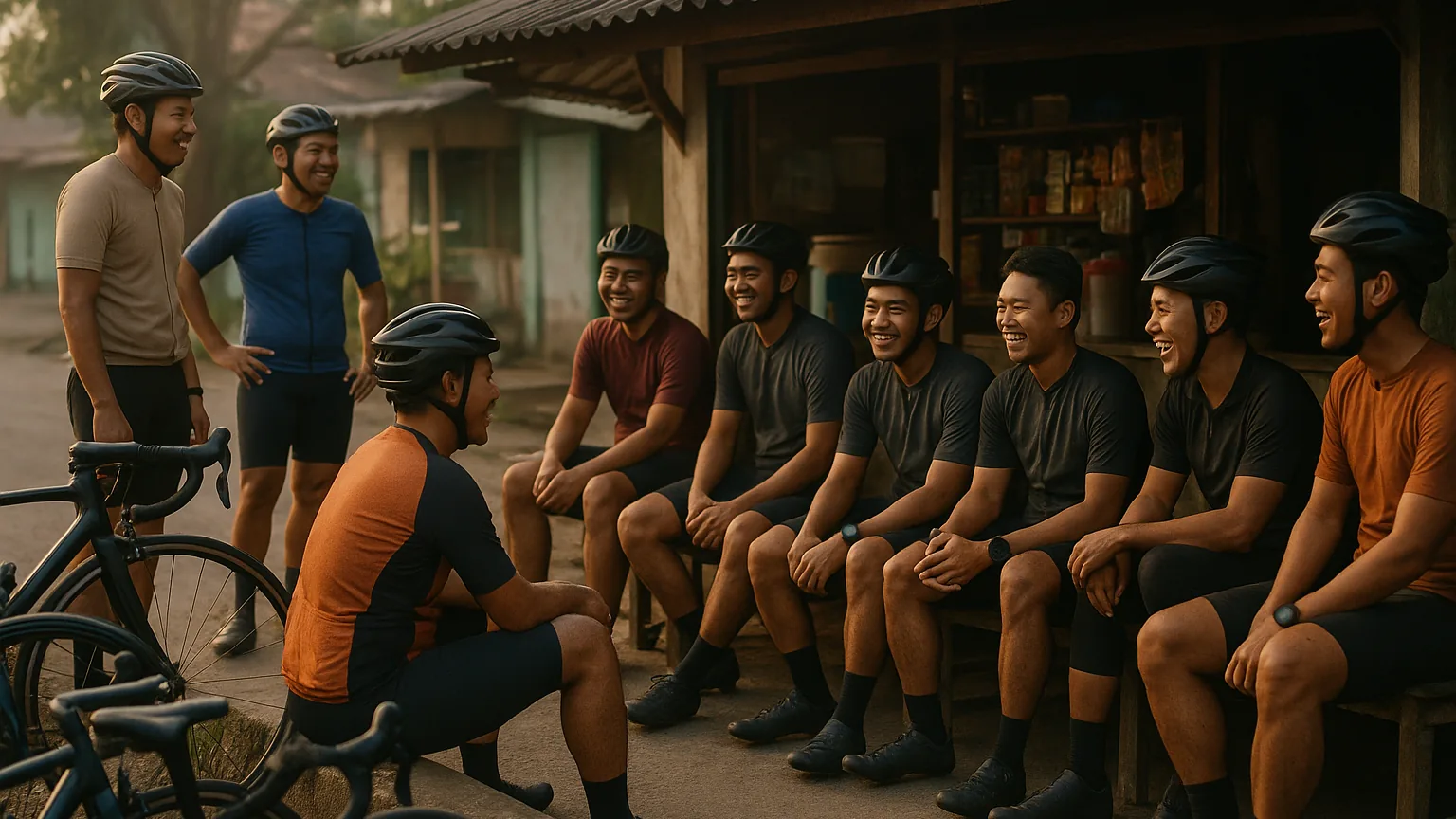
I'll carry one example the whole way through to keep it grounded. Say you help run the Langit Biru cycling club - 220 members, weekend rides around the city, a WhatsApp group that never sleeps, a mix of casual riders who mostly come for the coffee stop and a serious few training for gran fondos. When their committee sat down to "improve the membership", the first instinct was to pile on more perks. What they actually needed was to work out which handful of things were carrying the whole thing, and quietly let the rest go. We'll come back to them.
Start from what your members are actually here for
Before any list of ideas is worth a thing, you need a rough, honest answer to why people joined in the first place - and it's usually not one answer. In most organisations there are two or three different reasons sitting side by side. At Langit Biru, a big chunk are there for the company: the ride, the coffee, the group chat, the plain pleasure of not riding alone on a Sunday. A smaller group is there to get better - they want the training, the route knowledge, someone faster to chase. And a handful are basically there for the practical cover: the club ride insurance and the fact that someone else organises the whole thing. Those three groups value completely different benefits, and a perk that delights one can be invisible to another.
This matters because it stops you buying benefits for a member who doesn't exist. It's very easy to invest in a slick members' content library because it feels like the kind of thing a "real" membership has, when actually nobody at your club has ever gone looking for one. So before the menu below, spend ten minutes deciding, honestly, who your members are and what each group turns up for. Then read the ideas against that, not against some picture of an ideal association you saw somewhere.
A menu of benefit ideas, grouped by type
Here's the practical part - a run through the main kinds of benefit, with real ideas in each, plus an honest note on which tend to earn their keep and which look good in a brochure but quietly go unused. Treat it as a menu to choose a few things from, not a checklist to complete. Nobody needs all of these, and an organisation that tries to offer all of them usually does most of them badly.
Access and exclusivity
This is anything members get to do or see that non-members can't - priority or early booking for popular events, members-only rides or sessions, access to a space or facility, first dibs on limited places. For Langit Biru that might be early sign-up for the once-a-year overnight trip that always sells out, or a members-only fast group on Saturdays.
What actually works here is genuine scarcity. Priority booking is a real benefit when things genuinely sell out and members would otherwise miss out - and it's completely meaningless when there's always room, which is most of the time for most clubs. "Exclusive members-only content" is the classic one that looks great on paper and gets opened by about four people; if you wouldn't read it yourself, don't count it as a benefit. Access is worth most when it's access to something people already want and can't easily get elsewhere, not access invented purely so there's something behind the wall.
Savings and discounts
Partner discounts (the local bike shop, a cafe, an events supplier), member rates on your own paid events, the occasional group-buy on gear. These are popular because they're concrete and easy to advertise - "membership pays for itself after two services" is a tidy line.
The honest version: a discount on something members buy anyway is genuinely valuable, and a folder of forty partner discounts nobody can remember is admin for nothing. One good, well-used discount at the shop your members already visit beats a directory of deals they'll never open. There's also a trap worth naming - if your membership becomes, in members' minds, mainly a discount card, you've quietly turned a community into a transaction, and the day a competitor undercuts you or the partner pulls out, the reason to belong goes with it. Discounts are a fine supporting act. They're a shaky headliner.
Community and belonging
The group itself: regular meetups, the WhatsApp group or forum that's actually alive, sub-groups for different paces or interests, socials, buddy or mentor pairings for new members, the simple fact of knowing people will notice if you don't show up. For Langit Biru this is, when you're honest about it, the whole thing - the rides and the chat and the friendships are why 220 people renew, whatever's written on the benefits list.
This is the quiet winner, and it's worth saying plainly: belonging retains members harder than any perk, discount, or scheme in this article, by a distance. It's also the hardest to manufacture and the easiest to neglect, precisely because it doesn't feel like a "benefit" you can point to - you can't put "friendship" on a flyer. You don't buy it, you host it: a reliable regular meetup, a group that a real human keeps warm, small ways for people to contribute rather than just attend. I've written a whole guide on retention that comes back to this again and again, because when organisations lose people it's almost never the discount that failed - it's that the person stopped feeling like they belonged.

Status and recognition
Ways of marking that a member matters or has earned something: naming ride leaders, thanking volunteers publicly, marking anniversaries and milestones, member levels, shout-outs in the group, the occasional leaderboard. Done well, this is cheap and genuinely motivating - being made a ride leader at Langit Biru, or having your hundredth ride mentioned to the group, means something because the people whose esteem is on offer are people you care about.
Done as a mechanic rather than a human gesture, it falls flat fast. Gamified points and badges that don't connect to anything real get ignored within a fortnight - people can smell a system that's trying to manufacture a feeling. The test is simple: recognition works when it's a genuine person noticing a genuine contribution, and it curdles the moment it becomes automated flattery. Status is also only worth anything if the community handing it out actually matters to the member, which loops you straight back to belonging - the two aren't really separable.
Learning and development
Workshops, skills sessions, coaching, guest talks, a resource library, and at the serious end, training that leads to certification or accreditation. This is the group whose value swings most wildly by organisation type. For a professional body, development is often the reason people join and pay real money - the accreditation, the CPD hours, the credibility - and it can carry the entire membership on its own. For a hobby club it's more modest: a bike-maintenance evening or a "riding in traffic" session for newer members at Langit Biru will land nicely and get people talking; a grand members' content library will mostly gather dust.
So match your ambition to whether people will actually show up. A well-run practical workshop that thirty people attend beats an impressive-sounding online course that four people start and none finish. And be honest about which you are - if development isn't really why your members are there, a modest, well-attended session or two is plenty, and you don't need to apologise for not being a training institute.
Practical perks
The tangible stuff: insurance, a club jersey or kit, equipment hire, storage, a physical membership card, discounted parking at events. These are a mixed bag, and the difference between a good one and a pointless one is whether it removes a real worry or is just a thing.
Insurance is the sleeper here - deeply boring, easy to overlook, and quietly one of the most valuable things a club can offer, because it takes away a genuine anxiety about people getting hurt on a ride. A jersey people actually wear is worth it too; it's belonging you can see. On the other side, novelty merch that ends up in a drawer and a plastic card that does nothing are cost with almost no return - the card in particular is a benefit purely because memberships are "supposed" to have one, which is never a good reason. Ask of any practical perk: would a member genuinely miss this if it vanished? For insurance, yes. For the keyring, no.
What actually drives retention, and what just looks good
Step back from the six groups and a fairly clear pattern shows up, one that holds across most of the organisations I've seen. The benefits that keep people are the ones they use regularly and the ones that make them feel they belong - the reliable meetup, the group that's alive, the discount at the shop they already use, the recognition that comes from a real person, the insurance that quietly has their back. The benefits that look good in a pitch and quietly do nothing are the one-off novelties, the elaborate points schemes, the "exclusive" content nobody consumes, and the directory of perks too long to remember. Almost every wasted benefit fails the same simple test.
The test worth applying to every benefit: would a member actually miss it if it quietly disappeared next month? If the honest answer is no, it isn't a benefit - it's clutter you're paying to maintain, and dropping it will cost you nothing but the awkwardness of admitting it was never doing much.
None of this means the flashy things are forbidden. It means they're the last few percent, not the foundation - the sort of thing you add once the basics are genuinely humming, if you ever bother at all. Most organisations haven't nailed the boring, high-value stuff, which is oddly good news: the improvement you're after is almost certainly hiding in doing the plain things well, not in some scheme you haven't launched yet.
Connect the benefits to the price
Benefits and price are two halves of the same conversation, and it's a mistake to design them apart. Whatever a member pays, the value they get has to clear that price comfortably in their own head, or the renewal quietly doesn't happen - so once you've settled on your handful of real benefits, it's worth checking they add up to obviously more than the dues. That's really the other side of working out how much to charge: the number has to be justified by what people actually get, not by what it costs you to run, and certainly not by what sounds about right.
If you run more than one membership level, benefits are the whole reason a higher tier is worth paying for - the way you make an upgrade feel like an obvious yes rather than a con. There's a right and a wrong way to split them, and the big rule is: don't gate the belonging. The community, the core rides, the sense of being part of it - that's the thing that retains everyone, so it belongs in every tier, not locked behind the top one. Put the extras (priority access, the deeper development, the premium kit) up top, and keep the heart of it open to all. I've gone through how to structure this properly in the guide on building and pricing tiers, so I won't repeat it here.
How to choose without overcommitting
You don't need to design the whole benefits programme in one sitting, and you shouldn't try. Start with what you already do well - for Langit Biru that was the rides and the group, so the first move wasn't adding anything, it was making sure the welcome for new riders was warm and the WhatsApp group stayed a place people wanted to be. Then, if you want to add, ask your members rather than guessing: a two-question message ("what's the best thing about being part of this, and what's one thing you wish we did") will tell you more than an afternoon of committee brainstorming, because you'll be building for the members you have rather than the ones you imagine.
Pick three to five things and do them properly, not twenty things done at half-effort. Test the cheap version first - one workshop before a whole programme, one good partner discount before a directory - and watch whether anyone actually uses it. And don't be afraid to kill a benefit that nobody's touching; a perk quietly going unused isn't doing you any favours, and dropping it frees up the effort for something that lands. Start rough, keep the things people use, let the rest go….
If you take one thing away: stop asking what you could offer and start asking what your members actually value. A short list of benefits people genuinely use - especially the ones that make them feel they belong - will hold a membership together far better than a long list that looks impressive and mostly goes untouched.
A fair bit of this is what Anggota is built to make easier - somewhere for members to belong rather than just be billed, member records so you can see who's actually turning up and using what, tiers if you decide you need them, and the ordinary admin handled so you can spend your time on the benefits that matter rather than the spreadsheet. If that sounds useful you're welcome to try it for free and see how it fits. And if you'd rather take these ideas and run them through whatever you already use, that's genuinely fine too - the thinking holds whatever tool you're on, and a membership built around what members actually value is worth having however you get there.