
How to accept donations for a membership organisation
Donations sound like free money, which is exactly why they disappoint. Here is when they actually make sense for a club, the easy ways to take the money, and why a good event usually beats a donate button.
Donations have a way of sounding like free money, and that's exactly why they trip people up. The mental picture is a tidy little "Donate" button sitting in the corner of your website, quietly filling up while you get on with running the place, and what actually happens is a good deal less romantic than that. Money doesn't move because there's a button - it moves because someone you know asks for something specific, at a moment when the person being asked can see exactly what it's for and why it matters. Get that part right and donations can genuinely help. Get it wrong and you've got a button nobody clicks, which is most donate buttons, if we're honest about it.
So this piece is about when donations actually make sense (they don't always), the easy ways to take the money, and the bit most guides skip - being straight about what it's for and thanking people afterwards. I'll be honest about the ceiling too, because for most small clubs a good event will out-raise a donate button every time.
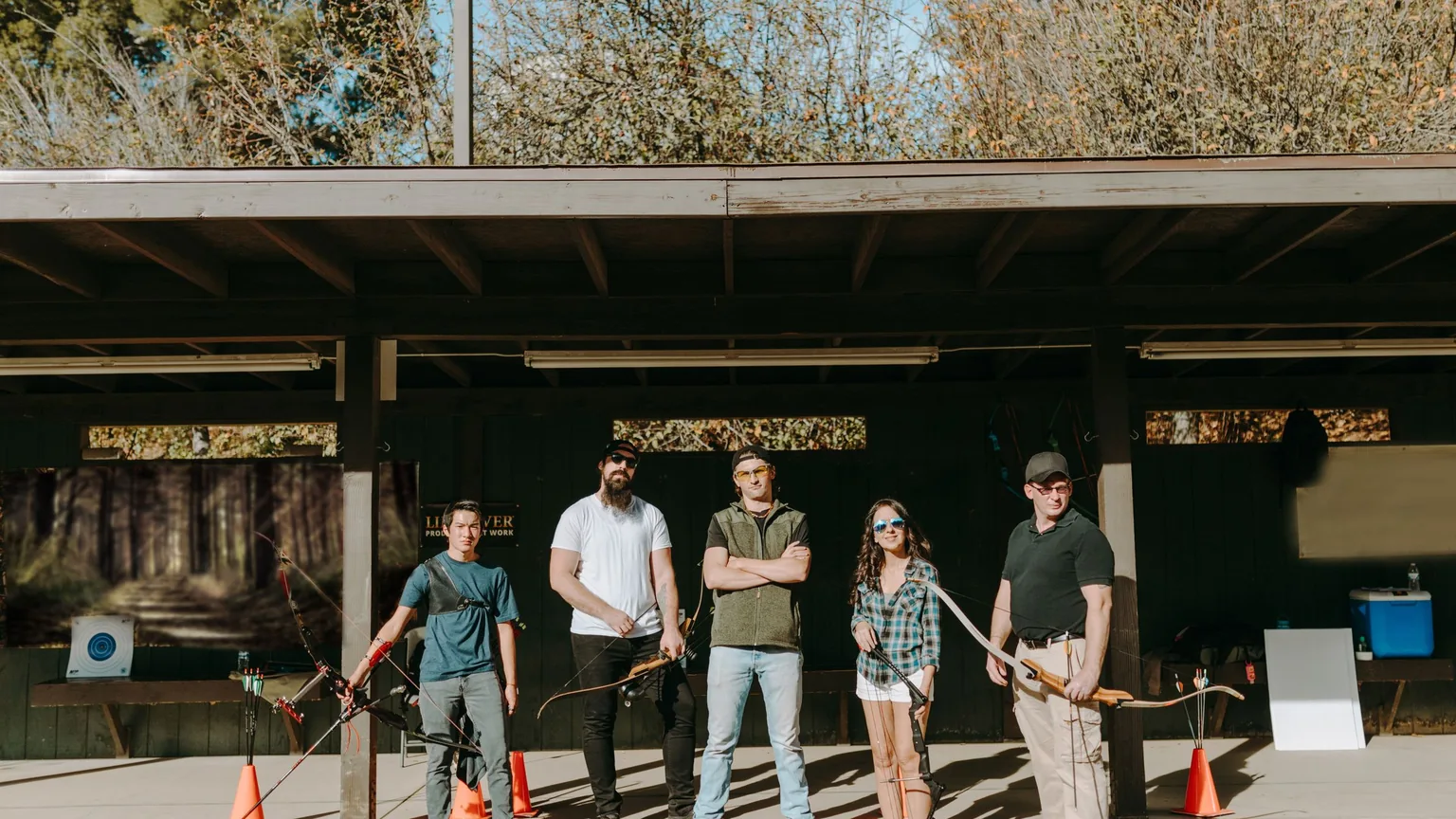
Let me carry one example through so this stays concrete. Say you help run Gowrie Creek Field Archers, a community archery club on the edge of Toowoomba - somewhere in the range of 60 - 80 members, a mix of weekend beginners and a handful who shoot competitively, training a couple of evenings a week and Sunday mornings on a scrappy bit of paddock you lease. Annual subs sit around $150 - 200, which covers the lease and the insurance and not a great deal else. The target butts (the foam bosses you shoot into) are getting soft and dangerous, a few of the club recurve bows the beginners borrow are held together with optimism, and you'd love a shade shelter so Sunday sessions don't cook everyone by ten in the morning once summer arrives. All up you're looking at $4,000 - 6,000 you don't have. That's the kind of situation where donations earn their place, and it's what this guide is really about.
When donations make sense, and when they don't
The cleanest way to think about it is one-off lumps versus the everyday running of the place. Donations are good at funding a specific thing that sits outside the normal budget - new target butts, a set of beginner bows, a shade shelter, sending a promising junior to the state championships, helping a member who's hit a rough patch. These are one-time needs with a face and a photo attached, and people give to those readily because they can picture the result. Gowrie Creek's soft, splitting target butts are almost the perfect ask: everyone can see they're worn out, everyone benefits from new ones, and the finish line is clear.
What donations are bad at is paying your ongoing bills. If the lease and the everyday costs are funded by whip-rounds and a donate button, you've built your foundations on sand, because that income is unpredictable and it quietly asks the same generous few to keep bailing you out until they're worn out too. Recurring costs are what membership fees are for, and if the subs aren't covering the running of the club then the answer is usually to look hard at the subs, not to paper over the gap with donations. I've written separately about the wider menu of ways clubs bring in money beyond subscriptions, and it's worth reading that piece alongside this one, because donations are only one item on a fairly long list.
A rough rule of thumb: if you can point at the thing the money buys and take a photo of it when it arrives, it's a good candidate for a donation drive. If the money just disappears into "running costs", it isn't - that's a membership fee question, or a job for a proper revenue idea, not a donation.
A donate button on its own will disappoint you
Most people get this part wrong, and I say it having watched plenty of clubs try: a permanent, generic "support us" button, sitting there year-round with no story attached, raises almost nothing. People aren't being stingy - a vague open-ended ask just gives them no reason to act today rather than never. Vague asks get "maybe later", and later doesn't come.
What actually works is the opposite of a standing button. It's a specific ask, for a specific thing, with a number attached and a rough deadline. "Help us replace our target butts - we need $3,000 by the end of August and we're $1,150 of the way there" pulls in money that "donations welcome" never will, because it's concrete, it's clearly nearly there (which makes people want to help finish it), and it has a reason to happen now. Give the drive a name, show people the sad state of the current butts, and let them watch the total climb - a visible progress bar or even a hand-drawn thermometer on the clubhouse wall does real work, because people give more readily to something visibly moving and close to done than to a bottomless pit.

The easy ways to actually take the money
Once you've got a real ask, taking the money should be the least of your worries, because the same handful of payment methods that matter for everything else a club collects are the ones that matter here. You want it even simpler than paying the annual subs, if anything, because a donor's goodwill is a fragile thing and every extra step bleeds a little of it away.
- Card payment by link, front and centre. If you do one thing, do this. Nearly everyone has a card on their phone or in their wallet, so a link that opens straight to a card payment is the shortest path from "I'd like to help" to done. Put it in the club's group chat and email, print it as a QR code on the drive poster, stick it on the clubhouse noticeboard. Someone reads the story, feels moved, taps the link, pays - all in the fifteen seconds before the feeling fades. The gateway takes its cut (roughly 1.7% plus 30 cents for a domestic card through something like Stripe at the time of writing, so check current rates), which on a $50 gift is about a dollar - worth knowing, not worth fretting about.
- Bank transfer with a reference. Plenty of your more established members and any local business wanting to chip in will prefer a straight transfer to the club account, by BSB and account number or PayID. Ask them to use their name plus a short code like "BUTTS" as the reference, so the money reconciles itself instead of leaving you squinting at a bank statement trying to work out who "TRANSFER 50" was.
- Cash or tap-and-go on the day. A tin on the table at the Sunday session or a come-and-try day, and a card reader if the club has one, still catches the people who'd never click a link but will happily drop in a twenty while they're standing there.
- A simple donation link or page. One link you can send that opens straight to a page explaining the drive, showing the progress, and taking the payment - no login, no account to create, nothing to remember. That's the whole apparatus. You send the link, they give, the page keeps count.
You don't wire any of this together by hand, thankfully - a payment gateway, or a membership tool with one built in, handles the plumbing behind all of it. It's the same machinery you'd use for collecting membership fees, so if you've sorted that out you're most of the way there, and if you haven't, the guide to collecting membership fees online covers the payment side in more detail. The only thing worth insisting on is that paying by card from a link is the obvious first option, because for most people that's the path of least resistance, and least resistance is genuinely the whole game with a donation.
Be clear about what the money's for
Transparency isn't a nice-to-have with donations - it's the thing that makes the second drive possible. When someone gives to your target-butt fund, they're trusting you with money for a purpose, and the fastest way to burn that trust is to be vague about where it went. So say exactly what you're raising for and how much you need, and when it's done, close the loop: tell everyone you hit the target, show them the new butts standing on the range, thank the people who made it happen. That final report-back does more for your next drive than any amount of asking, because it proves you do what you say with the money.
It helps enormously to keep the donation money visibly separate and accounted for, and none of this needs to be fancy - a treasurer who logs every gift against a name and a date, a running total anyone can ask to see, receipts issued as the money comes in. That way, when someone asks "so what happened to the shade shelter money?" you've got an answer on hand rather than a shrug, and when the treasurer's report comes round at the AGM it's all in one place rather than reconstructed from bank statements and scribbled notes each year.
Thank people like you mean it
This is the cheapest, highest-return thing you can do, and it's astonishing how often clubs skip it. Somebody just gave you money they didn't have to - the very least they've earned is a genuine thank you that sounds like a person wrote it, not an automated receipt. A warm message in the group, a shout-out at the next session, their name on a small "thanks to those who made this happen" board at the range (with their permission - some prefer to give quietly, and you should honour that), a photo of the new gear with a note that it exists because of them. It costs nothing and it does two jobs at once: it makes the donor glad they gave, and it shows everyone else that giving here gets noticed, which makes the next ask land far more softly.
Don't overthink it, and definitely don't turn it into another ask. The moment you thank someone and immediately hit them up for the next thing, you've cheapened both. Say thank you, mean it, show them the result, and leave it there - next time you need something, they'll remember you were gracious rather than grabby.
One-off or recurring?
Most giving to a club like Gowrie Creek is one-off and tied to a specific drive, and that's completely fine - it's the natural shape of it. Something's needed, you ask, people give, the thing gets bought, everyone moves on until the next need comes up. You don't have to manufacture an ongoing giving programme to be doing this right.
That said, a small club will often have a handful of people - a couple of former members who've done well, a founding member who still loves the place, a local business the club is fond of - who'd happily become regular supporters if you made it easy and optional. A modest recurring "friends of the club" or patron arrangement, where a few committed folk chip in a set amount each month, can quietly underwrite the extras and take some pressure off the drives. Keep it genuinely optional and low-key though - the moment recurring giving starts to feel like an obligation rather than a kindness, you've lost the very thing that made it work. For the mechanics of automatic monthly payments (the same whether it's membership fees or a patron's regular gift), there's a separate guide on that.
A light word on the formalities
I'm not going to pretend to give you legal advice, because I'm not qualified to and the honest answer is that it depends on your situation, your state and your scale. But a couple of sensible things are worth keeping in mind. A members-and-friends whip-round to buy your own club some target butts is a small, private, ordinary thing and nobody sensible will have a problem with it. It gets more involved if you start soliciting broadly from the general public, or running large or ongoing public appeals - each state and territory has its own rules on fundraising from the public, and some expect you to register or hold an approval before you run that kind of appeal. The other one people trip over is tax: a donation is only tax-deductible if the organisation has deductible gift recipient (DGR) status, which most small clubs don't have, so don't promise anyone a "tax-deductible receipt" unless you're certain you can issue one. If your drive is heading towards a big public appeal, check your state regulator's page or ask someone who actually knows rather than guessing (and if you're reading this somewhere other than Australia, the same caution applies to whatever the local rules are).
For most clubs, though, none of that will bite. Keep the money accounted for and separate from anyone's personal account, issue receipts, be able to show where it went, and keep your asks aimed mostly at people already connected to the club - that's the sensible stuff that keeps you out of trouble. Don't let the existence of rules scare you off a perfectly ordinary equipment fund; just don't run a mass public campaign on the assumption that anything goes.
Honestly, a good event usually beats a donate button
The fundraising-software brochures won't tell you this, but for a club the size of Gowrie Creek, a single well-run event will very often raise more than a donate button does all year. A fun-shoot with a modest entry fee, a sausage sizzle run by members, a local archery shop sponsoring a banner in exchange for a mention, maybe a small raffle - that can clear the cost of new target butts in an afternoon, and it builds the club at the same time, because people turn up, shoot together and remember why they joined. A button raises money in the abstract. An event raises money and does half a dozen other good things while it's at it.

So I'd put donations in their proper place: a useful tool for specific one-off needs, best run as a named drive with a clear target and an honest report-back, and always sitting alongside the other ways a club funds itself rather than carrying the whole load. Build around a specific thing people can see the point of and donations will pull their weight. Rely on a lonely button in the corner and they mostly won't….
If you take one thing away: a named drive for one tangible thing - "new target butts by the end of August, $3,000, here's the link" - with a visible total and a proper thank-you afterwards, will out-raise a permanent "donate" button many times over. Specific, honest, and closed off with a report-back. That's the whole recipe.
Making the mechanical side of this less of a chore is a fair bit of what Anggota is built for - card payments through the club's own Stripe or PayPal account, bank transfers recorded and matched against the right names, a link you can send that takes the money and keeps count, donations recorded against names and dates so your treasurer isn't reconstructing the year from bank statements, and receipts going out on their own. If that sounds useful you're welcome to try it for free and see how it fits your club. And if you'd sooner take these ideas and run them through whatever you already use, that's genuinely fine too - the principles hold whichever tool you land on, and a club that asks well and thanks properly will raise what it needs however it collects the money.