

How to collect membership dues online
Members rarely refuse to pay - they just get tripped up by the faff of paying. Here is how to collect dues online in a way that takes a member fifteen seconds.

Collecting the dues is the least glamorous part of running a membership, and it's also the part that quietly leaks money if you let it. Not because members won't pay - most of them fully intend to - but because every extra step between "I should sort out my membership" and "done" is another chance for them to put it off, get distracted by something, and never quite come back to it. A member who has to dig out your BSB and account number, do a manual transfer, remember what to put in the reference and then email you to say they've paid is a member who might, this month, just… not. And the annoying part is you'll rarely hear about it. They don't announce that they've quit. They drift, the way people do, and a couple of months later you notice they've stopped turning up and stopped paying, and you're honestly not sure which one came first.
So this piece is about taking that friction out - collecting membership fees online in a way that costs your member about fifteen seconds and costs you almost no chasing. I'll be straight about where it helps and where it doesn't, which payment methods actually matter here in Australia (a handful of them, not the whole list the brochures wave at you), how to make the pay page genuinely one-tap, what to do at reconciliation time, and how to handle the members who'll want to keep paying cash no matter what you build. The tools change nothing about the fact that some people just like handing over a fifty, and that's fine.
Let me carry one example through so this stays concrete. Say you help run Barwon Community Fitness, a not-for-profit community gym in Geelong - around 180 members, a free-weights floor, and a decent roster of morning and evening classes (functional training, a spin room, a bit of yoga). Monthly fees sit somewhere in the $60 - $90 range depending on whether someone's on a classes-only plan or full access. Right now the money comes in three or four different ways at once: some pay cash or tap a card at the front desk, a good chunk do a bank transfer with whatever reference they happen to think of, a few you genuinely can't account for until you check the book. Reconciling it at the end of the month eats the best part of an evening, and most months one or two members swear blind they paid while you can't find the transfer anywhere. If that sounds familiar, read on.
Why collecting online lifts your renewals
The link between "easy to pay" and "more renewals" isn't complicated, but it's easy to underrate. When someone decides to stay, there's a short window where that intention is warm and they'll act on it - the reminder lands, they think "yep, still worth it", and if paying is right there in front of them they do it on the spot. Make them go and find their banking app, look up the BSB, type in the amount and a reference, and then do the admin of proving it to you, and a fair few of those warm intentions cool off somewhere in the middle. They mean to finish later. Later doesn't always come. I've written a whole guide on renewals because the timing and the reminders matter a lot, but none of that machinery does you much good if the payment step at the end of it is a faff.
I'd put it this way: online collection doesn't win you members who were leaving anyway - a slick pay page won't rescue a gym nobody enjoys going to. What it does is stop you losing members who wanted to stay and simply couldn't be bothered with the hassle on the day. That's a smaller, quieter group than the marketing would have you believe, but at Barwon's numbers it's real money, and every one of them was cheaper to keep than to replace. Sort out what you're charging first (I've written separately on how to work out the dues), then make the paying of it effortless.
The payment methods that actually matter here
The good news in Australia is that the method most of your members will reach for without thinking is also the easiest one to set up. Card use here is about as close to universal as payments get - people tap for a coffee, a parking meter and a sausage at the Saturday sizzle - so you don't need a long menu of options, you need the right three or four, and you need the main one to be effortless. Let me go through the ones that earn their place, roughly in the order I'd prioritise them.
- Card, online. This is the big one, and if you only do one thing, do this. A member opens a link, the amount's already there, they put in a card (or their phone does it for them), confirm, done. No BSB to copy, no reference to get wrong, no proof to send. For a gym where most members are paying the same thing every month it's close to ideal, and it's how they already pay for nearly everything else.
- Bank transfer, with a proper reference. Plenty of members, and a lot of the older ones, still prefer to pay straight from their bank, whether by BSB and account number or by PayID. That's fine and worth keeping, but the trick is to give every member a clear reference to use (their name or member number), because a transfer with "gym" in the reference is the single most tedious thing a treasurer has to match.
- Direct debit. Common at commercial gyms and some bigger organisations, where fees come out of a bank account on a schedule. It works well at scale, but it's a separate arrangement with its own provider and paperwork, and for a smaller club it's often more setup than it's worth while card payments do the same job.
- Cash or tap-and-go at the desk. Worth keeping, for the members who like paying in person. More on them further down.
You don't wire all of this up yourself, thankfully. A payment gateway like Stripe or PayPal (or a membership tool that connects to one) handles the plumbing behind card payments, so from your side it's one setup rather than a project. The thing to make sure of is that paying by card is front and centre, because for most of your members that's the path of least resistance, and least resistance is the entire game here.
Be honest with yourself about the fee. Online collection isn't free - card payments through a gateway carry a fee, at the time of writing roughly 1.7% plus 30 cents for a domestic card through someone like Stripe (check the current rates, they do change), so on a $75 payment you're looking at about $1.60 skimmed off. Over Barwon's whole membership that adds up to a modest line item, not a crisis, and I'd happily trade it for getting an evening of manual reconciliation back every month. But don't discover it by surprise - factor a couple of percent into your thinking when you set the fees, and you'll never notice it again.
Make the pay page genuinely one-tap
This is where good and bad online collection actually part ways, and it's got nothing to do with which gateway you picked. The test is simple: from the moment a member decides to pay, how many taps and how much thinking stands between them and finished? The bad version makes them log in, navigate to a billing section, work out which plan they're on, type in the amount, choose a method buried in a menu, and then wonder whether it worked. The good version is a link you send them - by email or text, most likely - that opens straight to a page with their name on it, the right amount already filled in, and the card form ready to go. They pay without logging in to anything or remembering a single number.
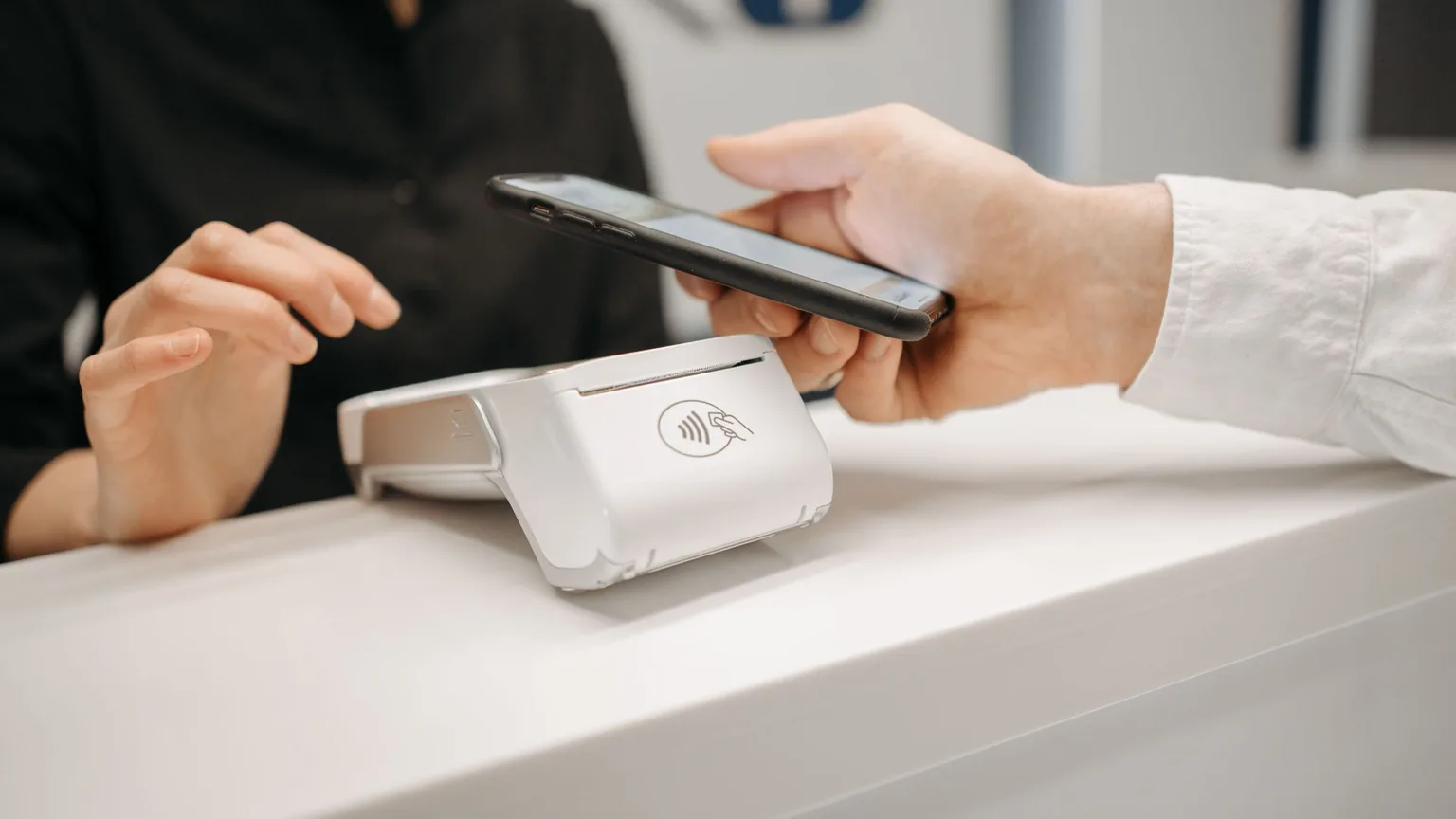
The details that make or break it are unglamorous. The amount should be pre-filled, so nobody fat-fingers $7.50 instead of $75. The page shouldn't demand a login, because a login is a wall and half your members won't remember the password. It needs to work properly on a phone, since that's where nearly every one of these payments happens - a pay page that's clearly a desktop form squeezed onto a small screen feels cheap and nasty and quietly costs you completions. And the second they've paid, they should see a clear "you're paid up until [date]" confirmation, because the number one thing a paying member wants is reassurance that it went through. Get those four right and you've built something people will actually use. Miss them and it doesn't matter how many payment methods you support.
Reconciliation and receipts, without the evening lost
The quiet win of online collection isn't really for the member - it's for whoever currently spends the last evening of the month cross-checking a bank statement against a spreadsheet against a pile of emails saying "paid!". When a payment comes in through a member's own pay link, the system knows who it was, marks their fees as paid, and moves their paid-up date forward on its own. No matching, no detective work, no member insisting they paid on the 3rd while you scroll back through a month of bank statements trying to find a transfer with "gym fees" in the reference. And for the members who still pay by transfer, recording each one against the member as it lands (rather than in a batch at month's end) turns the leftover matching into a two-minute job.
Receipts sort themselves out the same way. The moment the payment lands, the member gets a proper confirmation by email, and you've got a clean record on your side without lifting a finger. That matters more than it sounds, because a chunk of the "did my payment go through?" messages that eat your time are really just people wanting a receipt they never got. Give it to them automatically and those messages mostly stop. For an organisation that needs to show its books to a committee, a treasurer or an auditor at the AGM, having every payment logged, dated and attributed in one place - rather than reconstructed from memory each June - is worth a great deal on its own.
The members who still want to pay cash
Some of your members will want to keep paying cash, and I'd gently suggest you not go to war over it. There's usually a core of people - often the longest-standing and most loyal - who like the ritual of handing it over at the desk and having a quick chat while they do it, and that human moment is part of what they're paying for. Trying to force them onto a link they don't want is a good way to sour a relationship over something that was never the actual problem.

The trick is to keep cash as a payment method while still pulling it into the same system. When someone pays cash at the Barwon desk, whoever takes it records it against that member right there, so their paid-up date moves forward and the receipt gets issued exactly as it would for an online payment. The money still comes in as notes; the record lives in one place with everything else. That way you're not running two sets of books, the treasurer isn't reconciling cash separately at the end of the financial year, and nobody's fees quietly fall through a crack. And every so often, when a cash member is standing there anyway, you can offer to show them how the pay link works - no pressure, just "want to have a go?". A surprising number try it once, find it easier than hunting for the right change, and switch of their own accord. The ones who don't, don't, and that's genuinely fine.
Automatic, or just easy?
There's a step beyond one-tap payment, which is not making the member tap at all - recurring payments, where the fees come out automatically each month and renewal stops being a decision anyone has to actively make. It's a real lift for retention when it fits, because the single most common way a willing member lapses is simply forgetting, and you can't forget a payment that happens on its own. It doesn't suit everyone or every membership, and it's worth understanding the tradeoffs (and the mild awkwardness of a declined or expired card) before you lean on it, which is why I've given it its own guide. For a lot of gyms and clubs, though, a reliable auto-charge for the members who opt into it, plus a dead-easy one-tap link for everyone else, is about the best of both.
Whatever you do, don't over-engineer this before you've got the basics running. You do not need every payment method under the sun, a slick billing portal, or automated dunning sequences to start collecting fees online well. You need card payments working, a pay link you can send by email or text with the amount pre-filled, receipts going out on their own, and cash still welcome and recorded in the same place. That's the boring 80% that gets you almost all of the benefit. The finer points can be chipped away at later, once the simple version is quietly doing its job….
If you take one thing away: the goal isn't to be clever about payments, it's to make paying so easy that a member who wants to stay never loses that intention to friction. Card payments front and centre, a one-tap link, automatic receipts, and no war with the cash payers. Everything else is detail.
Making all of this less of a chore is a fair bit of what Anggota is built for - card payments through your own Stripe or PayPal account (including automatic renewals for members who want them), bank transfers recorded and matched against the right member, a pay page you can send members that fills in the amount and skips the login, receipts and reconciliation that look after themselves, and cash payments recorded alongside the rest so your books stay in one place. If that sounds useful you're welcome to try it for free and see how it fits your gym or club. And if you'd rather take these ideas and run them through whatever you already use, that's genuinely fine too - the principles hold whichever tool you land on, and a membership where paying the fees takes fifteen seconds is worth building however you get there.