
Membership event ideas that actually build belonging
Event ideas are never in short supply - picking the handful you can actually keep running is the hard part. A grouped, honest menu for member organisations, with the effort each one costs weighed against what it gives back.
Event ideas are never the thing in short supply. Sit any committee down for half an hour and you'll come away with a list as long as your arm - workshops, socials, a gala, a market stall, a big annual do that everyone gets excited about for a fortnight and then quietly dreads organising. The hard part was never coming up with ideas. It's picking the handful you can actually keep running once the novelty has worn off and the one person who volunteered to organise everything has remembered they have a job and a family. So this is less a list of clever things to do and more a way of sorting them, honestly, by how much they cost you against what they give you back.
And the first honest thing to say, before any of the ideas, is that a small reliable gathering that happens every month will do more for your organisation than a heroic annual gala almost every time. The gala is seductive - it photographs well, it feels like an achievement, people talk about it - but it eats months of volunteer energy, lands once, and then you're back to a year of silence with nothing holding people together in between. The dull monthly thing that only twelve people come to is quietly building something the gala never can: a habit, a rhythm, a reason your members stay in the loop. Keep that in mind as you read the rest of this, because nearly every mistake in this area comes from chasing the big impressive thing and letting the small steady one wobble.
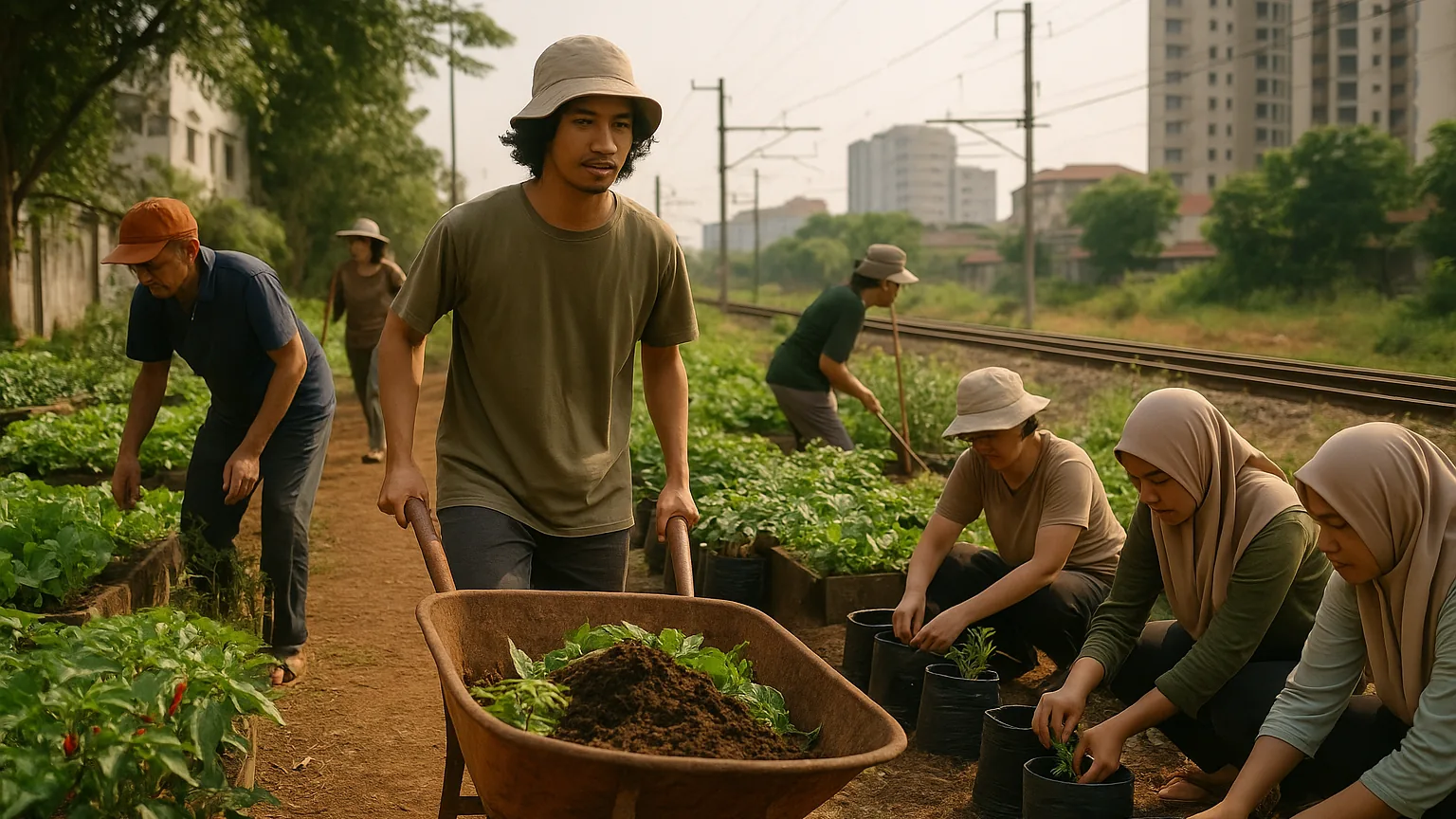
Let me carry one example through so none of this stays abstract. Say you help run Komunitas Kebun Semai, an urban farming collective in Jakarta - somewhere around 120 to 140 members tending a patch of reclaimed vacant lot near the railway, plus a scattering of rooftop and balcony plots across the city, a monthly kerja bakti where people turn up to weed and plant and haul compost, and a WhatsApp group that's busy the week after harvest and quiet the rest of the time. On paper it's healthy. But the same 20 to 25 faces do most of the turning up, and most of the organising lands on two or three people. Everything below is really about widening that circle without turning any of it into a second job - and I'll link the deeper argument about why members take part rather than rehashing it here, because this piece is about the what, not the why.
Regular low-effort gatherings - the backbone
Start here, always. The most valuable event your organisation runs is the plain, repeating one that happens whether or not anyone feels inspired that week - the thing people can plan their month around without checking. For Kebun Semai that's the monthly kerja bakti, and it's worth recognising it as the backbone rather than as something ordinary you ought to be improving on. A regular gathering asks very little of the organisers (the format never changes, so there's almost nothing to design each time) and it delivers the one thing that actually holds a membership together, which is people seeing each other's faces often enough to feel like they belong somewhere.
The effort-to-turnout maths on these is the best you'll find anywhere. Once it's established, a monthly work party or meetup costs you a reminder message and a bit of setup, and it turns out 15 to 30 people who leave feeling like part of something. The tradeoff is that they're a little boring to run - the tenth kerja bakti is nowhere near as exciting to organise as a shiny new format, and this is exactly where communities come unstuck, getting restless and letting the steady thing slide because it stopped feeling special to the organisers (never mind that the members still loved it just fine). Protect the regular thing first. Everything else in this article is a bonus bolted on top of it, and if the backbone is flaky, no amount of special events will paper over that.
Skill and learning sessions
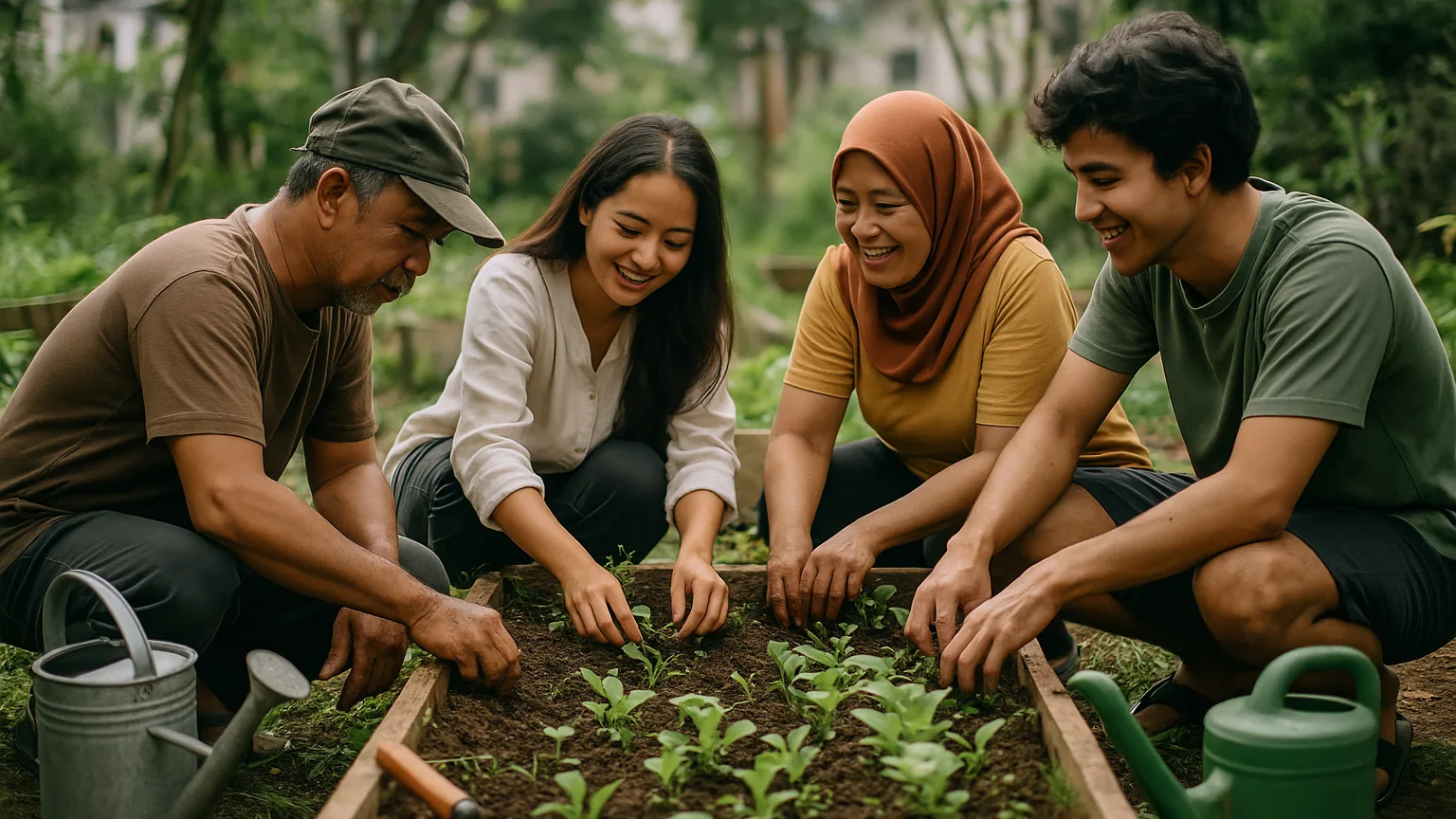
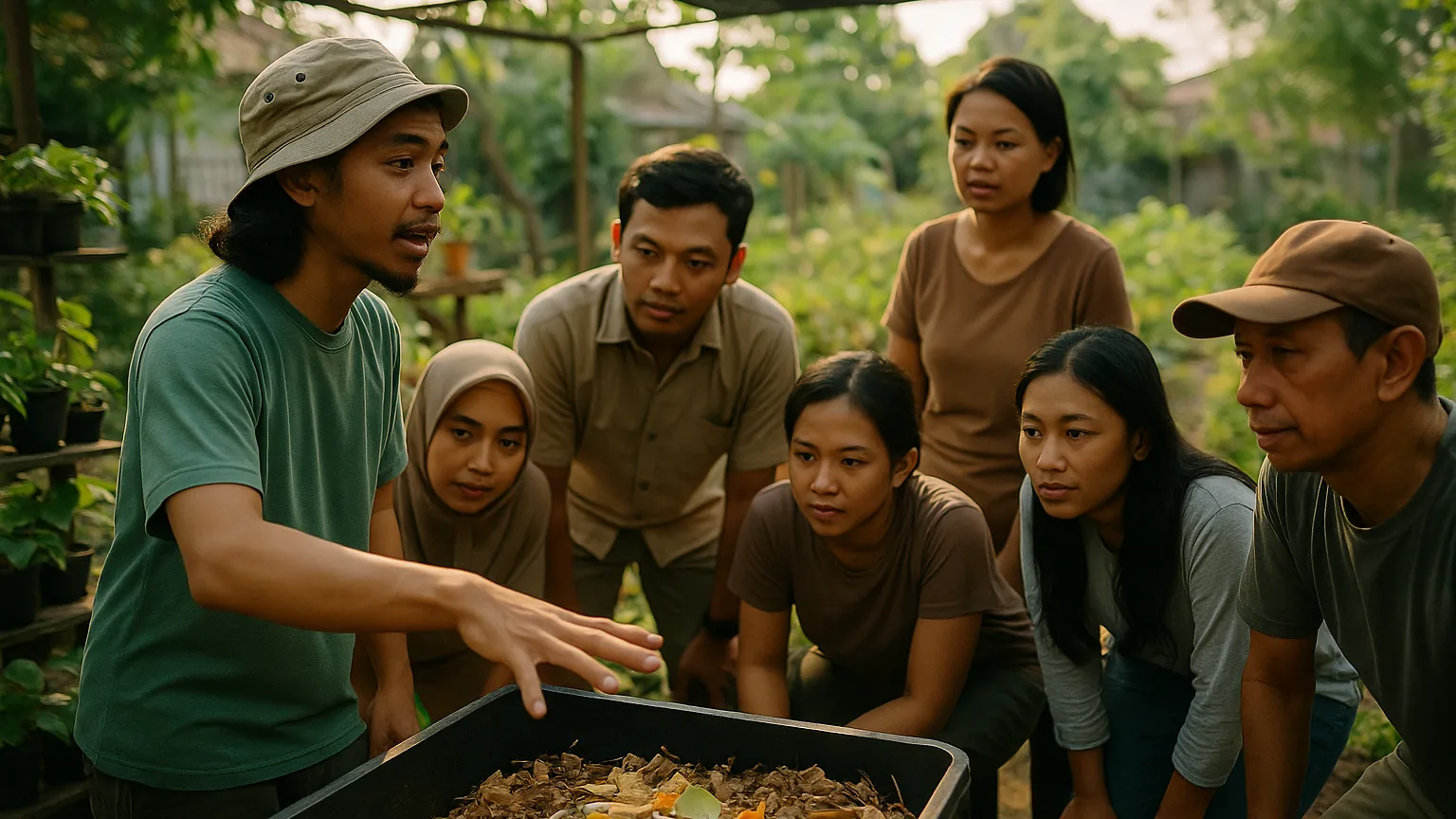
The next group up is anything where members come to learn something, and for most organisations this is the sweet spot between effort and reward. A learning session gives people a concrete reason to turn up (they walk away able to do a thing they couldn't before), it plays directly to whatever your membership is actually about, and - this is the part people miss - it hands you an easy way to give a member the floor. For Kebun Semai that's a composting workshop, a seed-saving session, a "what to plant for the dry season" evening, someone who's good with drip irrigation showing everyone else how they rigged theirs up from old bottles.
The effort here is moderate and mostly depends on who's teaching. If you're bringing in an outside expert it takes some arranging and possibly a small fee; if it's a member sharing what they already know, it costs almost nothing and does double duty, because the person teaching walks away far more attached to the community than they were before. That's the quiet win in learning sessions - they're not just an event, they're a way of turning a knowledgeable member into an involved one. Turnout tends to be solid because the value is so obvious, though be warned that a session pitched too far above (or below) where most of your members are will empty the room fast, so aim it at the middle of your group rather than the keenest few.
Social and celebration events
Then there's the stuff with no agenda beyond enjoying each other's company - a shared meal, an end-of-year gathering, marking a harvest, a birthday for the collective. It's tempting to treat these as fluff next to the "productive" events, but they carry a lot of the emotional weight of belonging, because they're the times people relax and actually get to know each other rather than just working shoulder to shoulder in the garden. Kebun Semai celebrating the first proper harvest of the year with a shared meal cooked from what they grew is doing more for retention than it looks like from the outside.
The honest tradeoff is that these can slide toward the heroic-gala end of the scale if you let them, so keep them proportionate. A shared makan-makan after the regular work party costs almost nothing and folds neatly into a gathering that was happening anyway - that's the version I'd reach for most of the time. The big standalone annual celebration, catered and decorated and photographed, is lovely once in a while but expensive in exactly the volunteer energy you can least afford to burn, so run one of those a year at most, and only when you've got the people to do it without wrecking anyone. A modest celebration tacked onto something regular beats a lavish one that leaves your organisers flat for a month.
Member-run events - hand the keys over
This is less a category of event than a way of running any of the above, and it might be the single most useful idea in this article: wherever you can, let a member run the thing instead of running it yourself. A member who leads a seed-swap, hosts a plot visit at their own rooftop garden, or organises the next learning session is worth two who only ever turn up, because they've crossed the invisible line from attending to owning, and people who own a bit of something stay. It also, not incidentally, takes the load off the two or three people currently carrying everything, which at Kebun Semai is the actual risk to the whole operation - not lack of ideas, but three tired people quietly holding it all up.
The catch is that handing over means genuinely handing over, roles with real ownership rather than chores dumped on whoever didn't step back fast enough. "Would you host a visit to your rooftop plot, show people how you did it" is an invitation someone will be chuffed to accept. "Can you bring the extra chairs" is not. And you have to be ready for it to feel uncomfortable and slower than doing it yourself - the member will run it differently, sometimes less smoothly, and you'll have to bite your tongue while they find their feet. Do it anyway. A collective where only the founders ever run anything has a hard ceiling on how big it can get, and when the founders burn out (and they will) the whole thing tends to go with them.
A rough guide to effort versus turnout: the events that pay you back best are almost always the small, repeatable, low-cost ones - the regular gathering, the member-led session, the celebration folded into something already happening. The big standalone showpieces cost the most and, once you count the months of organising against a single afternoon, usually give back the least per hour of volunteer effort spent. If you're choosing where to put a tired committee's energy, spend it on the boring reliable things first and treat the showpieces as an occasional treat.
Fundraiser-adjacent events
Plenty of organisations need to bring in a bit of money - for tools, for seedlings, for the rent on the land - and the temptation is to build an event whose whole reason for being is to extract cash from your members, which tends to feel exactly as grim as it sounds. The better move is nearly always to let the money ride along on an event people already wanted to come to. A plant sale or seedling stall at the monthly gathering, a small market where members sell their surplus produce and the collective takes a modest cut, a workshop with a voluntary contribution - these raise useful funds without making anyone feel shaken down, because the event stands on its own two feet and the fundraising is just quietly attached to the side.
Turnout on these depends entirely on getting that balance right. An event that's genuinely enjoyable with a gentle bit of fundraising bolted on does well; an event that's transparently just a fundraiser wearing a party hat does not, and worse, it teaches your members to be a bit wary of the next invitation. So lead with the thing people want and let the money follow. If you do run something with paid tickets or sign-ups, the logistics of taking registrations and payments cleanly are their own small craft, and I've written that part up separately in how to run member event registration so I won't cover it again here.
Collaborations with other groups
The last group is events you run with somebody else - another community, a like-minded organisation, a local business, a neighbourhood association. These punch well above their weight, because a collaboration brings you a whole room of people who'd never otherwise have found you, splits the organising load across two sets of volunteers rather than one, and gives your own members something genuinely fresh without you having to invent it from scratch. For Kebun Semai that might be a joint composting drive with the local RT, a seed swap with a community garden in another part of the city, a stall at a neighbourhood market, a session run together with a group that keeps chickens or bees.
The tradeoff is coordination - two organisations means two sets of schedules, two ways of doing things, and the odd bit of friction about who's responsible for what, so these take a little more diplomacy than running your own show. My rule of thumb is to keep the first collaboration with any new partner small and low-stakes, see how you work together, and only build something ambitious once you know you can. A modest joint seed swap that goes smoothly is a far better foundation than a grand shared festival that teaches both sides they'd rather not do it again. Start small, and let the relationship earn the bigger thing.
Pick a few, and let the rest go
You do not need to run something from every group above. That's the mistake this whole article is trying to steer you away from - the frantic calendar that exhausts the organisers long before it exhausts the members, who were perfectly content with once a month. Pick the backbone gathering and protect it. Add one learning session and one social a season if you've got the people. Reach for a collaboration or a fundraiser when there's a genuine reason, not because the calendar looks bare. And wherever you can, get a member to run it rather than doing it yourself, because that's the move that quietly makes all the others sustainable.
Test the cheap version first, too. Before committing to a monthly members-led workshop, try it once and see whether anyone actually wants to lead. Before assuming everyone's gagging for more events, ask them - a two-line message ("what's the best thing about being part of Kebun Semai, and what's one small thing you'd love us to do") will tell you more than an afternoon of the committee guessing. Build for the members you've actually got, keep whatever they genuinely turn up to, and let the rest go without mourning it too much. A good events programme isn't a long one - it's a short one that survives the people running it….
If you take one thing away: a small reliable gathering beats a heroic annual gala nearly every time. Protect the regular thing, add variety around the edges only as far as your volunteers can sustain, hand events over to members wherever you can, and treat the big showpiece as an occasional treat rather than the main event. The organisation that does one modest thing a month, forever, will comfortably outlast the one that does something dazzling once a year and burns out doing it.
A fair bit of the fiddly part - taking sign-ups, sending the reminders, seeing who came and who's gone quiet, keeping the members' area somewhere people actually want to be - is what Anggota is built to take off your plate, so the volunteers holding your community together can spend their energy on people rather than paperwork. If that sounds useful you're welcome to try it for free and see how it fits, and there's a fuller companion piece on keeping members over the long run if that's where your head is at. And if you'd sooner take these ideas and run them through whatever you already use, that's genuinely fine too - none of this depends on a particular tool, and a membership where people actually turn up is worth building however you get there.