

How to run member event registration
Registration is just knowing who's coming before the day. Here's the simple version - capacity, member or guest, free or paid, reminders and check-in - without the elaborate form nobody finishes.
Event registration sounds like the kind of thing that needs a system, a plan, maybe a meeting to decide on the plan. It really doesn't. Strip it back and registration is just you finding out who's actually coming before the day arrives, so you can set out the right number of chairs and not spend the afternoon guessing. That's the whole job. Everything else - the reminders, the guest rules, the payment bit if there is one - hangs off that one honest question: who is going to be in the room? Most small organisations either wing it and get caught out, or they build a form so elaborate that half the people who meant to come give up halfway through filling it in. There's a comfortable middle, and it's a lot closer to "wing it" than you'd think.
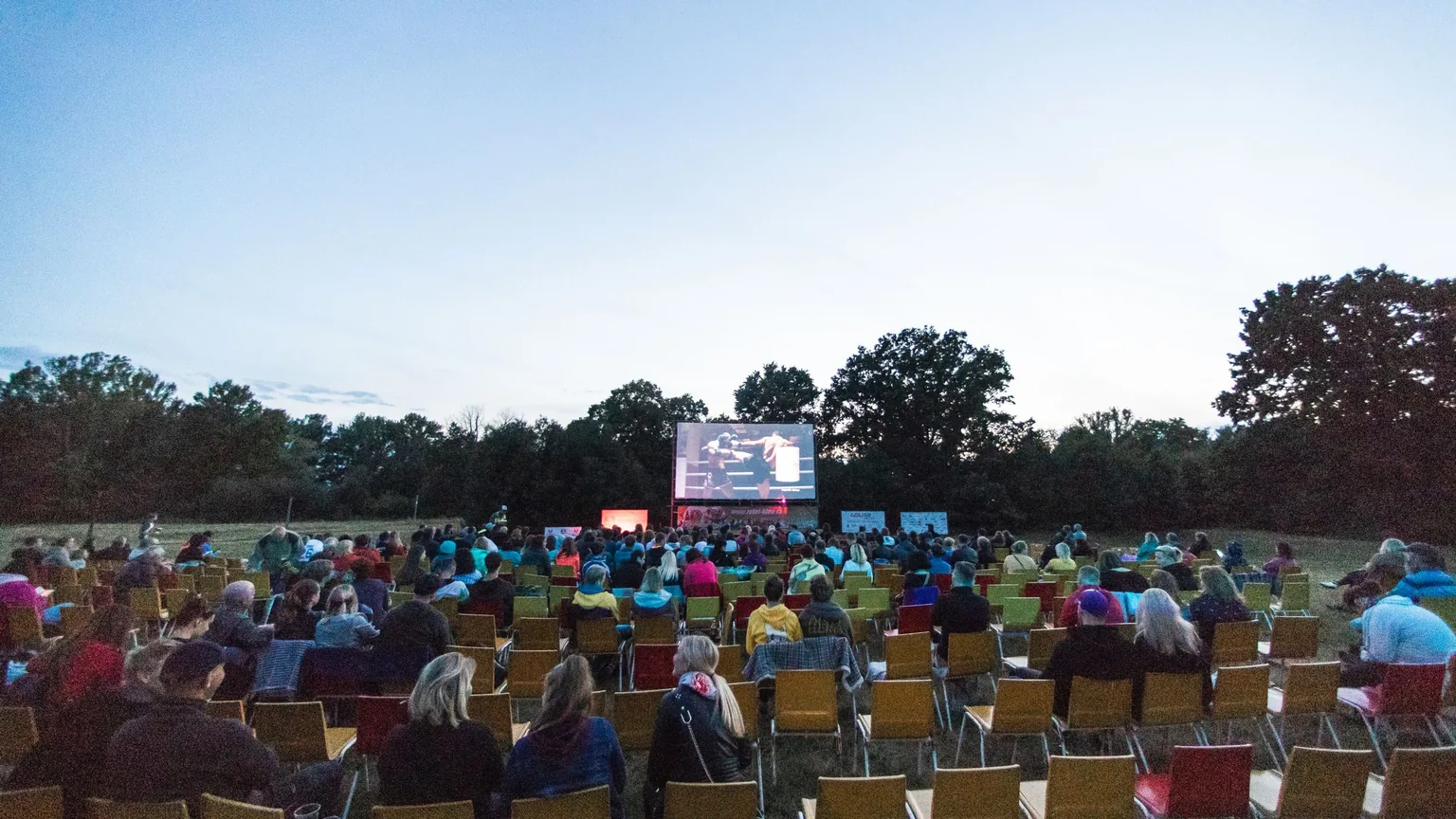
Let me carry one example through so this stays concrete. Say you help run Kine Klub Purnama, a community film society in Bandung - somewhere around 120 members, a monthly screening in a borrowed room above a coffee shop, a curated film, subtitles someone stayed up making sure worked, and a proper discussion afterwards that's really half the reason people come. The room holds maybe 45 - 50 at a squeeze. A normal screening pulls 30 - 45. Every so often you put on something bigger - a visiting director doing a Q&A, a themed all-nighter - and that one you have to charge a small amount for, to cover the guest and the extra hours on the room. Those two situations, the ordinary free screening and the occasional paid special, need slightly different handling, and I'll come back to both.
Why "just reply to this message" stops working
Nearly everyone starts with a WhatsApp headcount, and for a small enough group it genuinely works. You post "screening Thursday, react with a thumbs up if you're in", and for the first year of a club's life that's completely fine - don't let anyone tell you that you need software to count to fifteen. The trouble arrives quietly, as the group grows and the thread gets busy. Thumbs-up reactions from people who were just acknowledging the message. Three people called Andi and no way to tell which one's coming. Someone asking "can I bring my sister?" buried forty messages up. A person who typed "yes!" then quietly changed their mind and never said. By the time you're scrolling back through a 200-message thread trying to reconcile emoji into a seating number, you've reinvented a spreadsheet, badly, and you're doing it at 11pm the night before.
The moment a rough headcount stops being reliable is the moment a proper registration is worth the small effort, and not really a moment before. For Purnama that tipping point is probably when a screening starts regularly bumping against the room's capacity, because that's when getting the number wrong actually costs something - people standing at the back, or worse, people turned away who'd have come if you'd known. If you're nowhere near your capacity and nobody's ever been turned away, honestly, keep using WhatsApp and spend your energy elsewhere.
What you actually need to know
Here's where organisations overcomplicate things, so I'll be blunt about the minimum. For a standard event you need a name, a way to reach the person (one contact field, not three), and a yes. That's it. That covers the entire point of the exercise, which is a reliable count of who's coming. Everything past that you're adding because it's genuinely useful for this specific event, not because a form ought to be thorough.
Two extras earn their place often enough to mention. The first is member or guest, because it changes your numbers and sometimes your rules - a Purnama member might bring one guest, but you cap it at one so a members' screening doesn't turn into a stranger's night out. The second is a headcount for a plus-one, if you allow them, because "I'm coming" and "I'm coming with two friends" are a fifteen-chair difference over a full room. Beyond those, ask yourself of every field: what will I actually do differently because I know this? If the answer is nothing, cut it. Dietary requirements matter for a shared dinner and are pure friction for a film screening where nobody's eating.

The reason to be ruthless here isn't tidiness, it's completion. Every extra field is another small reason for a tired person on a phone to think "I'll do this later" and never come back. I've watched clubs lose a third of their sign-ups to a form that asked for a postal address nobody needed. Don't be afraid to make the form almost embarrassingly short - a short form that gets finished beats a thorough one that gets abandoned every single time, and it's not close.
Capacity, and letting the form do the counting
The nice thing about a real registration rather than a headcount is that it can count for you and stop when it's full. Set Purnama's screening to 48 places and the sign-up closes itself at 48, which means no more standing at the door doing mental arithmetic and no more apologetic "sorry, we're actually full" messages sent one at a time. If demand for a particular film runs hot, a waitlist quietly catches the overflow, and when two people drop out (they always do) the next two in line get pulled in without you lifting a finger. None of this is fancy, and it's the single biggest practical reason to move past a WhatsApp thread once your events start filling up.
A gentle warning on capacity though - set it to the number you can genuinely seat, not the number you're hoping for. It's tempting to open 60 places for a 50-seat room on the theory that some won't show, and sometimes that maths works out, but the day everyone does turn up you've got a real problem and a room full of people remembering it. I'd rather run a hair under and keep a short waitlist doing the buffering. Safer, and it makes the event feel wanted, which is no bad thing.
Free, paid, members-only, open
Most of your events will be free, and free is easy - registration is purely a headcount and the whole thing can be two taps. It's worth being honest about when you actually need money to change hands, because taking payment adds real friction and you don't want it on events that don't need it. Purnama's monthly screening stays free (or a voluntary bucket by the door, which is a different thing and doesn't belong in the registration at all). The paid one is the special - the visiting director, the all-nighter - where there's a genuine cost to cover and a small ticket price both funds it and, usefully, sharply cuts the no-show rate, because people protect what they've paid for. When you do get into charging members for something, there's a bit more to think about than I can fit here, so I've written that up separately in a guide to selling event tickets to members.
Member-only versus open is a decision worth making on purpose rather than by default. A members-only screening protects the intimacy that's often the whole appeal, and it's a real, felt benefit of joining - your registration just needs to check membership before it lets someone in. An open event, where guests or the public can register too, is one of the better ways to bring new people into the orbit and turn a few of them into members, so it's worth doing deliberately every so often. Both are fine. What you don't want is to drift, where every event is quietly half-open because it was easier not to decide, and the members' benefit you meant to offer never quite materialises. If you're still working out what mix of events to even put on, that's a whole topic of its own, and I've gathered a pile of event ideas for associations and clubs to borrow from.
Reminders, and the no-show problem
No-shows are the tax you pay on free events, and you'll never get the rate to zero, so the goal is just to keep it sensible. On a free RSVP where nothing's at stake, expect somewhere in the range of 20 - 40% of the people who said yes to not turn up - that's normal, it's not personal, and it's why a 48-seat room can safely take 55 registrations if you're brave (though see my nervousness about that above). The one thing that helps most, by a distance, is a reminder that lands the day before or the morning of - not a fortnight out when the event isn't real to anyone yet, but close enough that it catches people while they're planning their day.

One reminder is plenty for a small free event. Resist the urge to build a five-message sequence with a countdown - you'll annoy the very people who were reliably coming anyway, and past a certain point reminders start reading as nagging rather than helping. Give people an easy way to un-register too, which sounds backwards but isn't - a member who can tap "can't make it" the day before is a member who frees up their seat for the waitlist, instead of just silently not showing and leaving a gap you could have filled. Make cancelling as painless as coming, and more of your no-shows quietly convert into useful early warnings.
Check-in on the day
Check-in is where a lot of registration effort goes to die, because people build something elaborate - scannable codes, a tablet at the door, a queue - for an event where the host knows most of the room by name anyway. For Purnama, someone with the registration list open on a phone, ticking people off as they wander in, is completely sufficient and always will be. The only reason to want anything more structured is scale or money: if you're running a paid event and need to check that the person at the door actually holds a ticket, or if the room's big enough that a human with a list becomes the bottleneck, then a quick scan earns its place. Below that, a name on a list is fine.
What check-in quietly gives you, beyond letting the right people in, is the one number that actually tells you something afterwards: who said they'd come and did, versus who said they'd come and didn't. That gap, tracked casually over a few events, is honestly more useful than any survey. A member who registers for everything and turns up to nothing is a member drifting away in slow motion, and it's a soft signal worth a friendly nudge - which is exactly the sort of thing that ties into the broader work of keeping people engaged, and I've written a separate piece on member engagement ideas if that's where your head's at.
What not to bother with
You don't need a branded event app, tiered ticket types, assigned seating, or a registration flow with more steps than the event itself has minutes. Not to start with, and for a club like Purnama, possibly not ever. The whole of good event registration for most community organisations is: a short form that respects people's time, a capacity that matches your actual room, one well-timed reminder, an easy way to cancel, and a name ticked off a list at the door. Get those five right and you've solved 90% of it. The remaining 10% - the scanning, the seat maps, the multi-step funnels - gets expensive and fiddly fast, and almost nobody needs it as much as the tools selling it would like them to believe.
Start rough, as well. A plain form that opens on Monday and closes when the room's full beats a beautifully designed registration experience you're still tweaking the week of the event. Run the simple version, watch what actually goes wrong at a couple of screenings - too many no-shows, a reminder that came too early, a field nobody filled in - and fix that one thing next time….
If you take one thing away: registration is just knowing who's coming before the day. Ask the fewest questions that get you a reliable count, remind people once at the right moment, make cancelling easy, and tick names off a list on the day. The elaborate stuff is almost always solving a problem you don't have yet.
A fair bit of this is what Anggota is built to take off your plate - a short sign-up form that knows who's a member and who's a guest, a capacity that closes itself and runs a waitlist, reminders that go out on their own, and a check-in list on your phone at the door, all tied back to the members you already have so you can see who keeps showing up. If that sounds useful you're welcome to try it for free and see how it fits the way you run things. And if you'd rather take the approach and run it through a spreadsheet and a WhatsApp group you already know, that's genuinely fine too - the principles hold whatever you use, and a screening where everyone who wanted a seat got one is the actual goal, however you get there.