
How to write an LPJ your committee will actually finish
The format of a Laporan Pertanggungjawaban is the easy part. The hard part is the fortnight of archaeology that goes into one when nobody wrote anything down at the time.
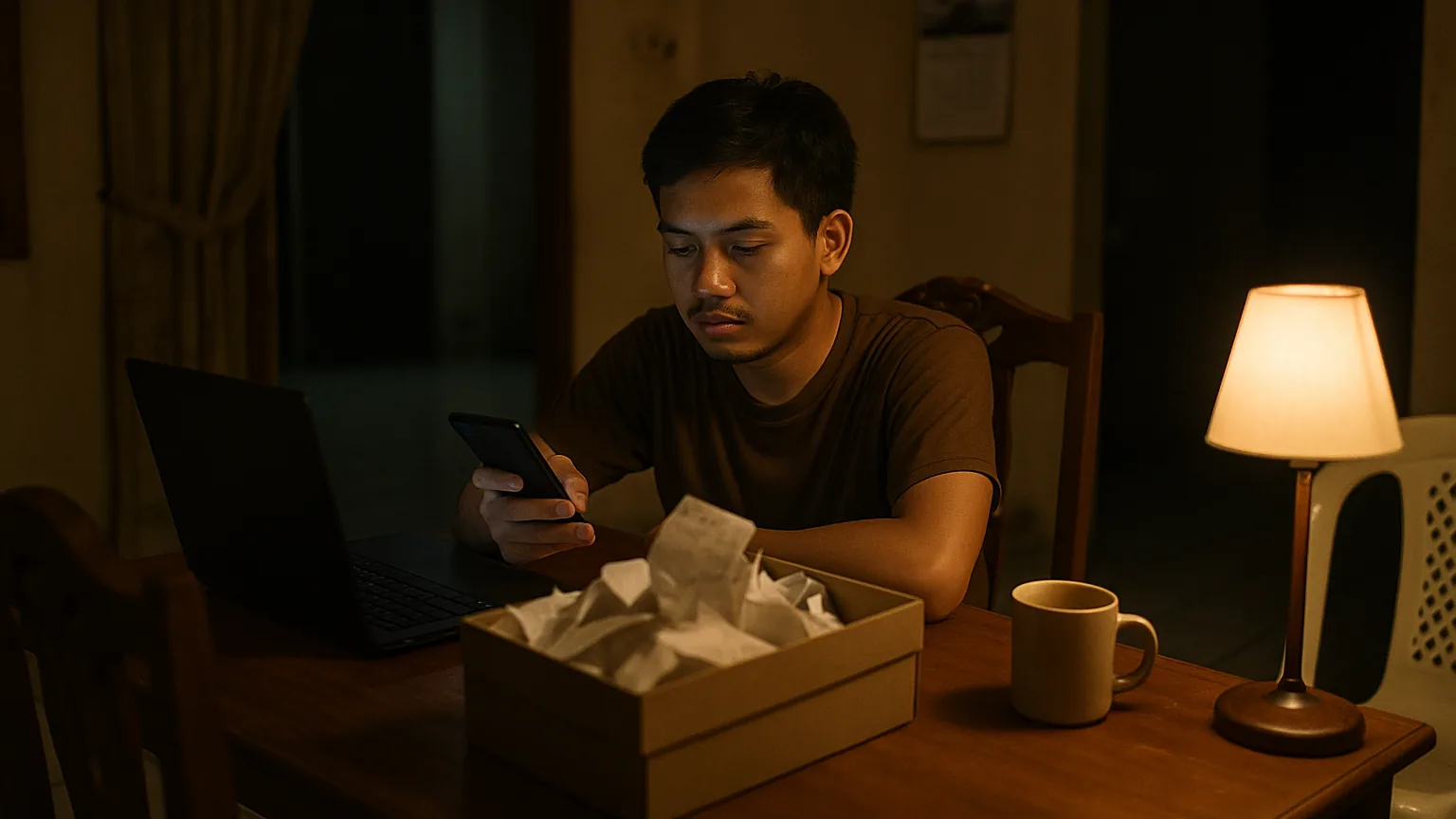
The Karang Taruna Bina Muda committee finished their Independence Day programme on a Sunday night in August, packed the sound system into somebody's Avanza, and went home. Three weeks later the treasurer, Rizal, was sitting at his mother's dining table at eleven at night with a shoebox of receipts, a WhatsApp group scrolled back four hundred messages, and a form from the kelurahan asking for the LPJ by Friday. He had the money right - he always did, and nobody has ever accused Rizal of losing a rupiah - but what he did not have was any record of who actually turned up to the three planning meetings, what the banner really cost after somebody changed the size on the Thursday, or which of the fourteen sponsors had paid and which had merely promised over the phone in a way that felt, at the time, like a yes.
That night is the actual subject of this article. Not the format of a Laporan Pertanggungjawaban - the format is the easy part, and you can have mine below - but the fortnight of archaeology that goes into one when nobody wrote anything down at the time.
If you're in a hurry
- An LPJ is a narrative report plus a financial acquittal. Most committees do the money well and the narrative badly, because the money was written down and the narrative wasn't.
- Structure is not your problem. There is a standard shape, it has not changed in decades, and it is in the template further down.
- The pain is data archaeology - reconstructing attendance, decisions and dues from memory and a WhatsApp group, weeks after the fact.
- Write the LPJ as the event happens, not afterwards. Four or five habits during the kegiatan turn a three-week reconstruction into an afternoon.
- Download the template below (PDF or Word) and start from a structure rather than a blank page.
What an LPJ actually is, and who reads it
Laporan Pertanggungjawaban translates roughly as "accountability report", and in practice it is the document a committee hands over at the end of something - an event, a programme, a whole year of office - saying here is what we said we would do, here is what we did, here is what it cost, and here is what is left. In Indonesia you will meet it in Karang Taruna, OSIS, koperasi, yayasan, masjid committees, university organisations, arisan groups, and almost any body that has ever taken somebody else's money and spent it on their behalf.
It is worth being honest about who reads it, because it changes how you write it. In my experience there are only ever three audiences, and they want different things:
| Who | What they actually check | What they skim |
|---|---|---|
| The funder - kelurahan, sponsor, parent body | Money in, money out, receipts, what is left over | Almost everything else |
| The next committee | What went wrong and what you would do differently | The financial detail, honestly |
| Your own members | Photos, names, whether their contribution appears | Both of the above |
Almost every LPJ I have seen is written entirely for the first audience and then wonders why nobody reads it. The evaluation section - the one the next committee would genuinely use - tends to be four bland sentences saying the event ran smoothly and the committee thanks all parties involved….which helps nobody at all.
Hot tip. Write the evaluation section first, on the night, while you are still annoyed about whatever went wrong. It is the only part of the document that is genuinely hard to reconstruct later, because irritation fades and you end up writing "the event ran smoothly".
The standard structure
Here is the shape. It varies a little between a kelurahan and a campus organisation and a koperasi, and if your parent body has issued its own format then use theirs without argument, but the bones are the same everywhere and have been for a long time.
Notice what that diagram is really saying, because it took me a while to see it myself: six of the eight sections are either boilerplate or bookkeeping, and both of those are solvable with a template and a shoebox, which means the two that actually hurt are the two that describe reality - who came, and what went wrong - and those exist only in people's heads unless somebody wrote them down at the time.
How long does an LPJ actually take?
This is where I would rather give you a range than a promise, because it depends almost entirely on what you recorded during the event rather than on how fast you type.
Rizal's Independence Day LPJ took him roughly 14 – 18 hours spread over three weeks, and I would guess 11 or 12 of those were archaeology rather than writing - chasing which sponsor had actually transferred and which had said they would, working out whether the 240 people in the photographs were 240 people or the same 90 people photographed four times from different angles, and asking the seksi konsumsi to cast their mind back and remember what the ice had cost.
Have a go at the calculator below with your own last event. It is not a formula I would defend to two decimal places - it is arithmetic on your own inputs, which is the only kind of estimate worth anything here.
Play with that middle dropdown and watch what happens. Nothing else on the page changes the answer as much as how you recorded things at the time, which is the entire argument of this article compressed into one select box.
The five habits that make the LPJ write itself
None of these are clever, and I would be embarrassed to present them as insight - they are all the sort of thing that feels like unnecessary admin on the day, gets skipped because somebody is carrying a speaker across a field, and then looks like genius three weeks later when the form arrives from the kelurahan.
Log attendance at the door, not from photos
A sheet of paper and a pen beats a headcount from a group photo every single time, and it beats trying to count faces in a Story that has since expired. If you have a member system with QR check-in, use it, and if you don't then a printed list with a biro is genuinely fine. What matters is that a number exists on the night and nobody has to invent it later.
Photograph every receipt the moment it exists
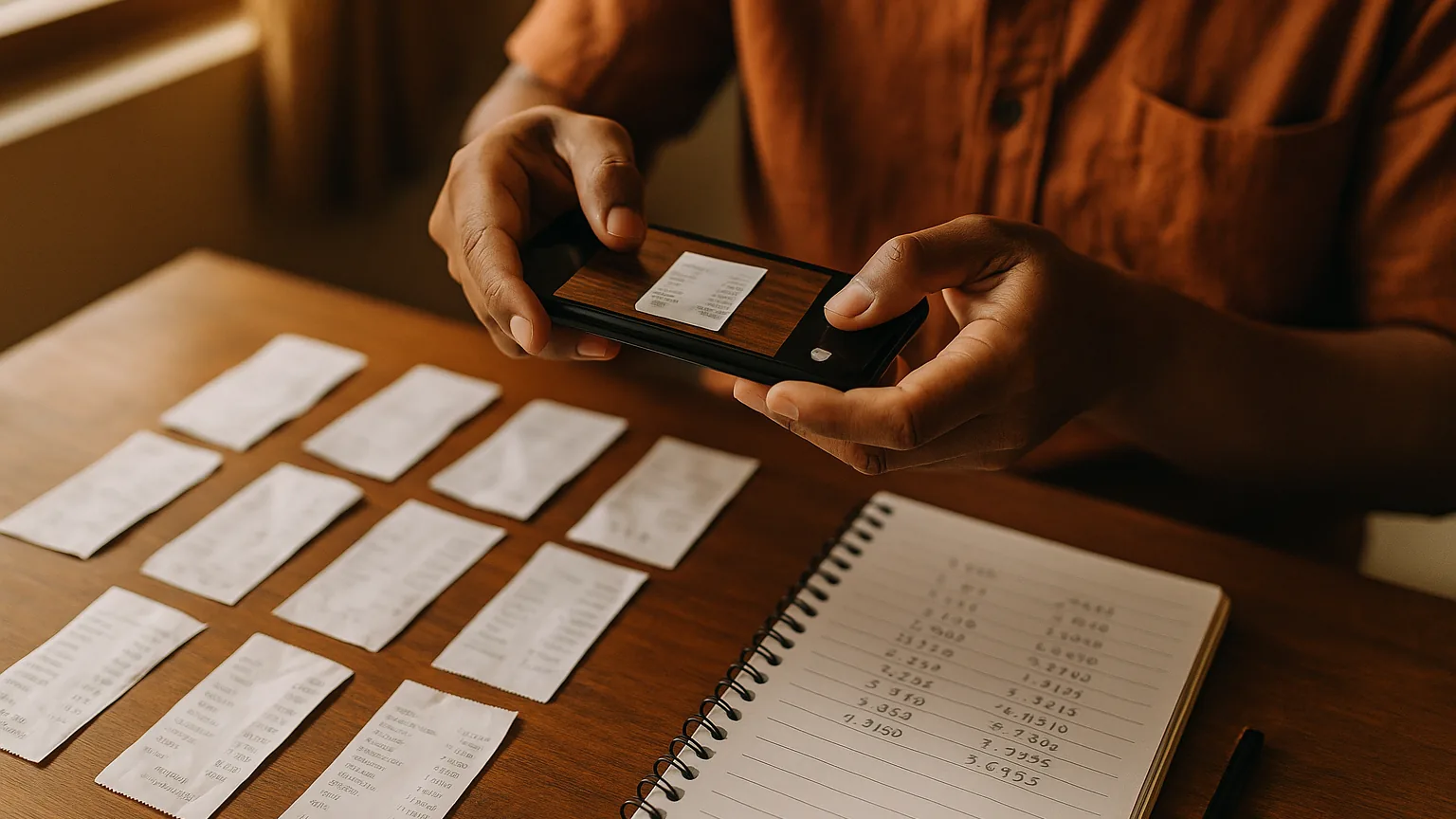
Not at the end of the week. The moment. Thermal paper from a warung fades to a blank grey strip in about a month and a half in a Jakarta glovebox, and the treasurer who tells you this is the treasurer who has lost one. A photo in a shared album, named with the date, is enough.
Keep one running money sheet, not four
The classic failure is a sponsorship spreadsheet held by the seksi dana, a purchases list in the treasurer's notebook, ticket money in a cash box, and transfers landing in somebody's personal account. All four are reconcilable, of course, but the reconciling is the fortnight. One sheet, one owner, updated the same day.
Write three lines in the group chat after each planning meeting
Decisions made, who is doing what, anything that changed. Three lines. This is what becomes section 4, and it is the single cheapest habit on this list - about ninety seconds per meeting, against several hours of scrolling back through four hundred messages trying to work out when the date moved.
Do the evaluation on the night
Twenty minutes, everyone still there, one person typing. What worked, what didn't, what we would change. Do not schedule it for the following week, because the following week it will not happen and by then everyone will have generously forgotten that the sound system arrived two hours late.
Watch out for. Cash that passes through a committee member's personal bank account. It is almost always innocent - somebody's ShopeePay was the only one working at the venue - and it is the single most common reason an LPJ gets sent back for revision, because there is no statement that shows it cleanly. Agree one account before the event, even if it is a personal one, and put it in writing.
How ready are you? A quick self-check
Tick what you have already got for your next kegiatan. Be honest rather than optimistic - the score is for you and nobody else is looking.
The financial section, which is where reports get sent back
The narrative sections get skimmed; the keuangan section gets read with a pen in hand, usually by somebody who has read forty of these and knows exactly where people fudge. In my experience there are only four things that get an LPJ returned for revision, and none of them is bad writing:
- The totals don't reconcile. Income minus expenditure does not equal the closing balance, usually because a small cash float never made it onto the sheet.
- A line has no receipt and no explanation of why not. "Konsumsi rapat" for Rp 450.000 with nothing attached will be queried every time.
- Sponsorship recorded as received when it was only promised. Show pledged and received as two separate columns and this problem disappears.
- Leftover funds are not addressed. If there is a surplus, say how much and where it now sits. Silence on a surplus reads far worse than the surplus itself.
Show the money in two tables rather than one long list - income, then expenditure by category - and put the running total at the bottom of each. It takes ten extra minutes and removes most of the back and forth. Anggota's own income tracking is built around the same idea, that categories you can total are worth more than a tidy chronological list.
LPJ template, free, no signup. The eight standard sections with the headings filled in, a two-table financial format, and an evaluation page that asks useful questions. Take the PDF if you want to print it and write on it, or the Word version if you would rather type into it and send a soft copy.
PDF, 278 KB Word, 13 KBThe awkward truth about all of this
Everything above is really one idea wearing five hats: the LPJ is not a document you write, it is a document you accumulate, and the committees who find it easy are not better writers than the ones who find it agony (I have watched both, and the difference is not talent). They kept a list.
And I would rather say plainly that a spreadsheet and a shared photo album will do this job perfectly well, because they will. Plenty of organisations run for years like that and their LPJ takes an afternoon. If your kegiatan is one event a year with thirty people and eight receipts, do not go looking for software - you do not have a software problem, and anyone who tells you otherwise is selling something.
Where it stops working is roughly where the counting stops fitting in one head. Somewhere around a few hundred members, or several events a year, or the point at which three different people are collecting money, the spreadsheet starts producing a version of the truth rather than the truth. That is usually the moment a committee starts looking around.
If that is where you are, Anggota keeps the attendance, the dues, the event registrations and the payment records in one place as they happen, which means the numbers for sections 4 and 5 are already sitting there when the LPJ is due - you export rather than reconstruct. You can try it free and see whether it fits the way your committee actually works. But the five habits above are the real answer, and they work just as well in a notebook. Above all - good luck with your kegiatan, and do the evaluation on the night.
Common questions
How long should an LPJ be?
For a single event, usually 8 - 15 pages including the appendices, and most of that is receipts and the attendance list rather than prose. A whole year of office runs longer. Length is not what gets a report accepted - a financial section that reconciles is. If your parent body has issued a page limit, that beats anything here.
Is there a legally required LPJ format in Indonesia?
Not a single national one. Kelurahan, campus organisations, koperasi and yayasan each tend to have their own house format, and where your funder has issued one you should simply use theirs. The eight sections in this article are the common shape underneath almost all of them.
What if we lost some receipts?
Say so in the line item rather than leaving a gap. A short note explaining what the spend was, who authorised it and why the receipt is missing is far more likely to be accepted than an unexplained amount. Silence on a missing receipt is what gets a report sent back.
Who signs an LPJ?
Usually the committee chair and the treasurer, and often a third signature from whoever the report is being handed to - a kelurahan officer, a head of organisation, or the chair of the parent body. Check who signed last year, because that is the answer that will be expected.
Can we write the LPJ before the event finishes?
Most of it, yes, and you should. The cover, foreword, introduction and the whole structure can be written in advance, and attendance and spending can be filled in as they happen. Only the evaluation genuinely has to wait, and that is best done on the night itself.
What is the difference between an LPJ and a proposal?
A proposal is written before, asking for permission and money against a plan. An LPJ is written after, accounting for what actually happened and what the money was spent on. They should mirror each other closely, which is why it helps to keep the proposal open while you write the report.