
Writing a donation letter people actually answer
The people around a small local group are generous enough, so generosity is rarely the problem - the letter is. What works is a proposal, not a mailshot, and it is built differently.
Anyone who has watched a country town turn out for a footy club fundraiser, buy a fistful of raffle tickets they don't need, or empty their wallets for a bushfire or flood appeal knows that the people around you are not tight-fisted. So when your group sends out an appeal and hears almost nothing back, the problem is usually not generosity, because on the evidence of every sausage sizzle and trivia night in the land there's plenty of it about. Something else is going wrong, and in my experience it is nearly always the same thing: the letter was written for a reader who isn't the one you're actually sending it to.
Most donation-letter advice online was written for a large charity, quite often an American one, and it quietly assumes a tax-deductible receipt the donor actually wants (which most small local groups can't offer), a postal mailing list built up over decades, a habit of giving money to strangers at arm's length, and a reader who will sit down of an evening with an envelope. Copy all that and send it from a small local group and what you have produced is a polite document asking a stranger for an unspecified amount for a vague purpose, offering nothing in return and giving no particular reason to trust you (which is a lot of ways to fail in one page). It gets ignored, the committee concludes that fundraising doesn't work in this town, and the whole idea gets quietly shelved for a year.
What works for a small group is closer to a proposal than an appeal - a proper document on letterhead, addressed to a named person, carried in by somebody who already knows them, asking for a specific amount for a specific thing and offering something recognisable back. That is a different kind of writing altogether, and it is worth learning properly, because the version most groups produce is doing almost none of that work.
I'll carry one organisation through the whole thing so nothing stays abstract. Golden Gully Cat Rescue is a volunteer cat welfare group in Bendigo of about 140 members, roughly 35 of whom give something every month, with around 60 cats in care at any one time between a small shelter and a network of foster homes (the foster network being the part that makes the numbers work at all). Running costs sit at $1,500 - $2,000 a month for food, litter and routine vet care, which the monthly givers just about cover. This year they want to run a subsidised desexing day with a local vet: 40 cats at about $150 each, so $6,000. Keep that number in mind, because a great deal of what follows hangs off it.
Where this sits: this is about the written ask itself - the document, its wording, who signs it, and how it gets delivered. If you are still working out whether donations make sense for your group at all, or how to actually take the money once somebody says yes (a surprisingly fiddly question), that's covered separately. If you want the relationship side of local sponsorship rather than the letter, see how to get sponsors for your club.
Three asks, three different letters
The most common mistake by a distance is writing one letter and sending it to everybody, which feels efficient on a Tuesday evening and costs you most of the replies you were hoping for. Your own members, a local business and a council grants officer are three quite different readers who want three quite different things from the same page, and a document trying to satisfy all three usually satisfies none of them. Members already believe in you and simply need to know what's needed and by when (they are not the hard part); a business wants to know what it gets and who will see it; a council mostly wants your paperwork to be in order (and will not tell you that's what it wants).
| Who you're asking | What they want to know | Format | Who signs it | Realistic size |
|---|---|---|---|---|
| Your own members | What's needed, by when, and that it's real | A text, the group chat or a short email, with a photo | Whoever they know best | $10 - $100 each |
| A local business | What they get back, and who will see it | Printed, handed over in person | The president, on letterhead | $100 - $1,000 |
| A larger company | Whether you're legitimate and can be reported on | Formal proposal plus your documents | President and secretary | $1,000 - $10,000 |
| Council or a grant program | Whether you meet the criteria and the paperwork is in order | Their own application form, before the closing date | The president, with attachments | Varies, often a small grant or help in kind |
| Your members' contacts | That their friend vouches for you | Something a member can forward | The member, not you | $10 - $200 each |
Look hard at that last row, because it's the one groups forget, and it is usually the one that quietly does the most work. The best-performing thing you will ever write is very often not the letter you send at all but the short message you write for a member to forward (which feels like cheating, and isn't). It turns up from somebody the reader already trusts and probably owes a favour, and that borrowed credibility is something you simply cannot manufacture on your own letterhead, however long you spend on the wording.
That ordering comes from watching groups do this rather than from any study, so by all means treat the gaps between the bars as impressionistic. The finding underneath it is solid enough however, and it is a little uncomfortable if you have just spent an evening polishing your paragraphs: how the thing arrives matters more than how well it's written. Which is why it's worth working out who is carrying it in, and to whom, before you have written so much as an opening line (I've watched perfectly good proposals die in a reception in-tray for want of that one decision).
What a proposal needs on the page
A funding proposal has a shape people recognise from every other one they have been handed, and readers use that shape (mostly without thinking about it) to work out in a few seconds whether they are looking at a real organisation or at somebody with an idea and a printer. Missing pieces tend to read as carelessness even when the cause behind them is excellent, which seems unfair and is nonetheless what happens. In the order they appear on the page:
- Letterhead - logo, the organisation's full name, address. This alone separates you from half the requests they get
- The date, and a contact name with a mobile number - signals that a real person will pick up
- A named person with their correct title - never "Dear Sir/Madam"
- The ask, in the first forty words - the amount and what it's for
- Itemised costs - line, unit price, total, adding up correctly
- What they get back - the banner, the logo, the mention, the photographs
- An easy way to say a smaller yes - a lower amount, or help in kind
- A signature from whoever's name carries the most weight
- Your ABN and your tax status - if gifts to you are tax-deductible say so clearly, and if they aren't, don't let anyone assume they are
- Bank details in the organisation's name - BSB and account number
- Attachments - incorporation certificate, last year's annual report, photos from last time
The bank account rule. The account must be in the organisation's name and never in a committee member's personal one, which is probably the fastest way there is to lose a business donor and is also completely avoidable. A company that has to record the donation in its books simply cannot send money to Dave's personal account - not because anybody suspects Dave of anything, but because their own bookkeeping won't wear it - and the awkward part is that they usually won't tell you that's why they went quiet. If your group hasn't got an account in its own name yet, then getting one is very likely the most valuable hour of admin available to you this year.
Nine things that change how many people reply
Roughly ordered by how much difference each one makes against how little work it takes, which is not quite the same ordering as how clever they are. If you only ever get round to three of them, make it the first three.
1. Name the thing you are asking for
"Support our work" leaves the reader to do all the imagining, whereas a named item with a price on it does that job for them and lets them picture exactly what their money turns into. It also makes the amount feel finite rather than the first instalment of an open-ended obligation, which in my experience is the quiet worry sitting behind an awful lot of unanswered letters (nobody wants to become the group's designated soft touch). So not "we hope you will consider supporting us so that we can continue our important work", but "$6,000 pays for 40 stray and community cats to be desexed on 14 September - that's the whole cost, $150 a cat, nothing hidden".
2. Put the ask in the first forty words
Groups bury the ask out of politeness, so you get three paragraphs of history and mission and then the actual number somewhere down near the signature, by which point the reader has usually stopped. Somebody deciding whether this deserves their attention is reading the top of the page, and if the top of the page is throat-clearing then that is all they will read (they are not being rude, they simply have a shop to run). Put the amount and the purpose in the opening lines and use the rest of the page to back it up, which is admittedly the reverse of how most of us were taught to write a formal letter, and is the single change I have seen make the most difference to whether anybody writes back.
3. Use one number, and repeat it
A letter containing $6,000, 40 cats, $150 each, 60 animals in care, 140 members and a $1,500 - $2,000 monthly running cost has handed the reader six numbers and no anchor at all, which is a very easy way to be remembered as "that group with the cats" and nothing more. Pick the one figure you actually want lodged in their head (here it is $6,000) and let the others either support it quietly or disappear off the page altogether. When your donor repeats this to a colleague a week later, and they usually will if they are minded to help, you want one number in their mouth rather than six.
4. Sign it with the name that carries weight
The signature does a surprising amount of the persuading, and it is easy to treat it as an administrative afterthought when it is really part of the argument. A proposal signed by the volunteer who happened to write it lands quite differently from the identical proposal signed by the chair, and differently again if a well-known figure locally is willing to add their name underneath as patron. Nothing else on this list is anywhere near as cheap to change (the words stay exactly as they were) and yet the document becomes noticeably more likely to be taken seriously.
For your own members it works the other way round entirely. An appeal to the membership signed by "the committee" reads as an institution asking for money, whereas the identical words from the person who actually knows them reads as a friend asking, and the friend does considerably better. So the signature wants to follow the relationship rather than the org chart, even when that means the chair doesn't sign the thing at all.
5. Carry it in yourself
A proposal that arrives in somebody's hands from a person standing in front of them gets read more or less immediately, while the identical document emailed to a general address quite often never reaches anybody with the authority to say yes at all. That is inconvenient for a committee of volunteers with day jobs, and it is also about the most dependable thing in this whole piece, so it is worth building the plan around it: decide who is carrying it, to whom, and on which day, and do that before anybody starts drafting sentences.
6. Give them an easy way to say no
Offering a smaller option tends to raise the total rather than lower it, which sounds back to front until you have watched it happen a few times. Somebody who can't manage $2,000 this year and is given no smaller door to walk through will usually just not reply at all, and you have quietly lost the $500 they would have handed over quite happily (silence is nearly always a pricing problem, not a rejection). Offer a tier or two, or something in kind, and a good number of those silent noes turn into modest yesses instead - and a modest yes this year is how you end up with a larger one next year. So: "$2,000 covers a full session and puts your name on the banner. $500 desexes three cats. If cash is difficult just now, 20 kg of cat food helps us every bit as much."
7. Send the receipt nobody asked for
Money arrives, nothing is said, and that is very often how a first donation quietly becomes a last one. An acknowledgement sent the same day, carrying the amount, the date and what it is going to pay for, takes perhaps two minutes to write and does far more for the second donation than any amount of persuading did for the first (it is also, frankly, just good manners). Most small groups don't bother with it at all, which is precisely why the ones that do are remembered.
8. Move willing people onto a standing monthly amount
The second conversation wants to ask for less effort rather than more money, which is not the instinct most committees have. Somebody who has already given once by transfer is a good candidate for a standing monthly amount (they have proved the transfer works, which is half the battle): smaller each time, considerably more over a year, and after that first decision there are no further decisions for them to make (inertia works in your favour for once). At Golden Gully it is the 35 members giving $20 - $80 a month who actually cover the food bill month to month, and the one-off clinic appeals then sit on top of that floor instead of having to be the floor themselves, which is a much less nerve-wracking way to run a year.
9. Report back in public, with a photograph
The report-back looks like simple courtesy and is really next year's letter getting written a few months early. A post naming the donor alongside a photograph of the thing their money actually bought gives them something to show their own customers, gives you hard proof to attach to the next proposal, and shows everybody who didn't give this time what giving around here looks like. Do it properly once and you will find the following year's ask is already half written for you.

What a reply rate actually looks like
Almost nobody publishes honest numbers for any of this, which leaves a lot of small groups quietly assuming they are failing when in fact they are doing perfectly well by any reasonable standard. Below is the most useful public set I know of, and it comes with a caveat that genuinely matters rather than one I have added for form's sake.
| Who you're writing to | Typical reply rate | What that means for you |
|---|---|---|
| People who have given before | 5 - 9% | Your best list by a wide margin. Write to them first |
| People who used to give and stopped | Can be above 10% | Worth a specific "we noticed" note, not a group message |
| Strangers | 0.5 - 1.5% | 200 letters for one or two replies. Rarely worth a small group's evenings |
| People who have given a lot before | 25 - 40% | These are conversations, not letters |
Read the caveat before you use those numbers. They are US and European postal-appeal benchmarks drawn from established charities with tax-deductible status, ie a rather different animal from a volunteer cat rescue in Bendigo emailing its supporters. The shape of them holds up well enough (warm lists beat cold ones by something like ten to one, and that ratio does seem to travel) but I would not take the percentages themselves literally for a small local group. Use them to set your expectations, then measure your own and trust those instead - and be a little wary of anybody who quotes you a precise figure for small community groups, because as far as I can tell nobody has actually measured it.
The practical reading is that writing to strangers will chew up a small group's evenings for very little back: two hundred letters, at those rates, buys you one or two replies and a sore hand. The same evening spent writing to thirty people who have already given you something, or to five businesses where one of your members knows the owner well enough to walk in, is a completely different proposition and usually a far happier one. If you are choosing where to put a limited number of volunteer hours, put them into the people who already know you (which is, admittedly, less exciting than the idea of a big new corporate sponsor).
When to ask
Timing is not a small refinement here, it makes more difference than most of the wording does, and it costs nothing at all to get right. The Australian giving year has two genuine peaks, and a letter landing inside one is competing for a wallet that is already open rather than trying to prise one open from cold. The first is the run-up to 30 June, when people with tax-deductible gifts in mind sort them out before tax time (that matters most if gifts to your group are tax-deductible, and a good deal less if they aren't) and when most businesses are closing off their financial year. The second is Christmas, when people are in a giving mood and every cause in town knows it.
Two practical notes go with that. Not every business runs its year to 30 June - some run to December, and overseas-owned ones often follow their parent company's year - so it is well worth asking, politely, when their budget year ends rather than assuming. And this next one groups get wrong nearly every single time, myself included in the early days: arrive before the peak rather than during it. A proposal handed over in early May gets read while budgets are still being worked out and there is money left to allocate, whereas the identical proposal turning up in the last week of June is competing with everything else in town and will be answered, if it is answered at all, some time after the money has gone.
The budget nobody uses. Plenty of local businesses set aside a little for community sponsorship and then never quite get round to spending it, and because their budgets run annually, unspent money doesn't carry over into the new year. A modest, well-documented proposal landing on somebody's desk a few weeks before their year-end, at the point where they are looking at a line they haven't managed to spend, can do considerably better than a far more deserving one sent just after it (which is not a comfortable thought if you believe the best cause should win, but there it is).
One letter, before and after
Below is a first draft of the sort almost every group writes at some point, followed by the same request rebuilt using everything above. Nothing about the organisation has changed and nothing about the need has changed either - the only differences are in the writing and in how it gets delivered.
Before - the draft that gets no reply
Dear Sir/Madam, warm greetings from Golden Gully Cat Rescue. We are a community organisation founded in 2019 by a group of animal lovers concerned about the condition of stray cats in our city. Since that time we have grown considerably and now have many dedicated members and volunteers who work tirelessly.
Our vision is a city in which no animal suffers unnecessarily. We are currently running various programmes and are in need of funding support to continue our important work. Any assistance you are able to provide would be greatly appreciated. We hope for your kind consideration and positive response.
It is perfectly polite, it is grammatically correct, and there is nothing whatever in it that anybody could act on: no amount, no purpose, no date, no named recipient, no signature that means anything, and nothing at all offered back in return. The reader could not say yes to that even if they very much wanted to, for the simple reason that they have not been told what they would be saying yes to.
After - the same request, rebuilt
To Mr Tony Nguyen, Owner, Northside Pet Supplies, Bendigo
Dear Mr Nguyen, we are asking for $2,000 towards a desexing day for 40 stray and community cats on 14 September. The full cost is $6,000 - $150 per cat - and $3,400 is already committed by our members.
Golden Gully Cat Rescue has 140 members and cares for around 60 cats at a time. We desexed 62 last year, and the three streets in Long Gully where we worked have had no litters dumped since. This year's target is 40 more, in Eaglehawk.
What $2,000 pays for: twelve desexings at $150, which is $1,800, and $200 of medication and after-care. In return, your shop's name and logo go on the banner that stands all day outside the community hall where the vet team sets up, you get a mention in our report to members, and a set of photographs from the day that you're welcome to use.
If $2,000 is more than works this year, $500 covers three cats and still goes on the banner. If cash is difficult, 20 kg of cat food helps just as much. I'll call in on Thursday to answer anything.
Yours sincerely, Karen Doyle, President. BSB 000-000, account 1234 5678, account name Golden Gully Cat Rescue Inc. Attached: certificate of incorporation, 2025 annual report, photographs from last year.
It is barely any longer than the first one, which is the part that surprises people. What has changed is that every sentence now hands the reader something they can decide with, the ask sits in the opening line where it will actually be read, one number carries the whole document, there is an obvious way to say a smaller yes without embarrassment, and somebody is turning up on Thursday whatever happens.
The follow-up nobody does
Most groups send one letter, hear nothing, and read that silence as a no, when silence is almost never a no at all - it is usually a document sitting underneath something else on a busy desk. A short and fairly relaxed follow-up will recover a decent share of the asks that would otherwise have died quietly of neglect, and the whole business amounts to perhaps ten minutes of work spread across a month (four short messages, no more) (it is one of the better returns on effort available to a committee).
Day 10 is where most of these sequences come unstuck, because "just following up" gives the reader absolutely nothing to reply to and so, quite reasonably, they don't. A question gives them something. "Would it help if I sent the banner measurements so you can see how your logo would sit?" is answerable in four words, and it restarts the conversation without either side feeling awkward - which in a town where everybody knows everybody matters a good deal more than persistence does.
And when the answer genuinely is no, take it well and keep them on the list anyway, because a business that said no this year purely because the timing was wrong is a decidedly warm prospect next year, whereas a business that said no and then noticed it was being treated a bit coldly afterwards is gone for good and will tell others why. It costs you nothing at all to be gracious about a no, and it is remarkable how often that is the thing that eventually gets you the yes….
Three templates
Fill in the parts in brackets and change anything that doesn't sound like you saying it out loud. All three are deliberately short, because length is not what persuades anybody, and a proposal that fits on a single page tends to get read then and there rather than put aside for later (later being where documents of this kind quietly go to die).
1. Members, by text or email
Hi [name]. Quick one. We're desexing [40] cats in [Eaglehawk] on [14 September] and we're [$2,600] short of the [$6,000] it costs. [$150] covers one cat completely. Anything helps, and if this month is tight please just ignore this, no awkwardness at all. [BSB and account number, in the organisation's name]. I'll post the photos and the full total on [15 September] either way. [Your name]
2. A local business, printed and handed over
[Letterhead: logo, full name, address, ABN]. [Bendigo, 1 September 2026]. [Contact name and mobile].
To [Mr Tony Nguyen], [Owner, Northside Pet Supplies].
Dear [Mr Nguyen], we are asking for [$2,000] towards [a desexing day for 40 stray and community cats] on [14 September]. The full cost is [$6,000], and [$3,400] is already committed.
[Two sentences: who you are, and one result from last year with a number in it.]
What the amount pays for: [line item, $ amount]. [Line item, $ amount]. Total [$ amount].
In return: [banner, logo, a mention in our report, photographs you can use].
If that's more than works this year, [$500] covers [three cats] and still [goes on the banner]. If cash is difficult, [20 kg of cat food] helps just as much. I'll call in on [Thursday] to answer any questions.
Yours sincerely, [signature]. [President's name], [President, organisation]. [BSB and account number, in the ORGANISATION's name]. Attached: [incorporation certificate, last year's report, photos].
3. The thank-you, sent the same day
Dear [name], your [$2,000] arrived today, [3 September]. Thank you. It pays for [twelve desexings and the medication that goes with them] at the clinic day on [14 September]. I'll send you photographs and the final numbers by [16 September], including what we did with every dollar. [Your name], [role, organisation]
The third one is much the shortest and is far and away the one groups skip, usually because it feels too small to bother with. Sending it turns somebody who gave once into somebody who now expects to hear from you again, and that expectation is what every future ask you make of them will rest on. Two minutes, on the day the money lands, every single time - it is possibly the highest-value writing you will do all year.
Reporting back is next year's letter
This is the point at which fundraising stops being a series of separate and faintly awkward requests and starts building on itself, which is a much more pleasant way to live. It needs three things and honestly nothing more: what came in, what it bought, and a photograph of the thing it bought (the photograph doing most of the persuading).
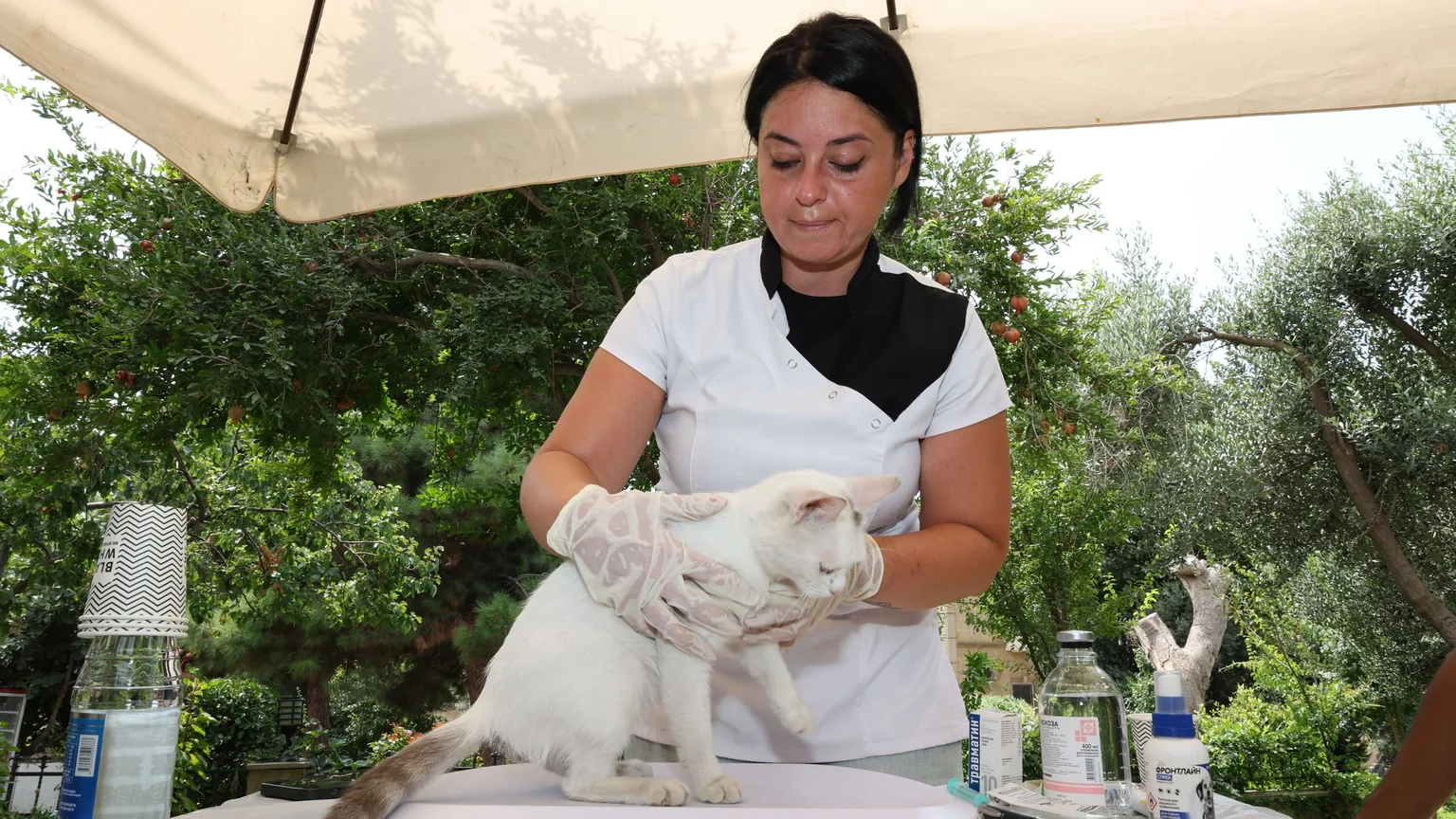
Publish it somewhere the people who gave will actually see it (the members' email or Facebook group, not only your website), name them unless they have asked you not to, and be specific about the money rather than gracious about it in general. A group that posts "thank you to everyone for your generosity" has told nobody anything at all, whereas a group that posts "$6,150 came in, 40 cats were desexed, $150 is left over and goes to the next drive" has just made its next letter enormously easier to write, because the reader is being handed evidence rather than hope.
Be honest when it falls short as well, which is the harder half. "We raised $4,200 of the $6,000 we were after, so we did 28 cats rather than 40, and the other 12 move to November" costs you nothing much and buys you a great deal of goodwill. People forgive a shortfall very easily indeed (most of them have run something themselves and know how it goes). What they do not forgive is discovering later that an awkward number was quietly buried, because from then on every figure you publish carries a small question mark next to it.
What to measure
Four numbers, checked once per campaign and no more often than that (monthly tracking of a thing that happens twice a year is just admin). Track any more than four and nobody will keep it up past the second month, and track any fewer and you will not be able to tell a genuinely good letter from a lucky one.
- How many you asked, split into people who know you and people who don't. Without that split the rest means nothing
- How many replied at all, including the noes. Lots of replies but few yesses is a pricing problem; silence is a letter problem, and they need opposite fixes
- How many gave, and the total - then the average, which tells you whether you pitched the ask right
- How many gave again next time you asked. This is the only one that compounds, and it's the one nobody tracks
A page in a notebook is perfectly fine for this, and in some ways better than a spreadsheet nobody opens. What matters is simply being able to look at last year before you write this year's letter, because otherwise every campaign starts from nothing and the committee patiently learns the same handful of lessons over and over again.
Take the printable version with you: the proposal checklist on one page, all three templates with the blanks marked, the follow-up schedule, the giving calendar and a tracking sheet for the four numbers above. Download the Ask Kit (PDF).
A fair bit of what makes this work over time is just knowing who gave, how much, when, and whether they gave again - which is exactly the sort of record that lives in somebody's head or a spreadsheet nobody else can find. That's the part Anggota is built to hold onto, so next year's letter starts from who actually gave rather than from a list somebody has to rebuild. If that sounds useful you're welcome to try it free. And if you'd rather keep the whole thing in a notebook and a group chat, that's genuinely fine - none of the writing advice above stops working because of where you keep the records.