
Virtual and hybrid event ideas for associations
Online events won't replace a good night in the room, but they reach the members who can't get there and fill the quiet gaps. Here's what actually works, and the honest catch with hybrid.
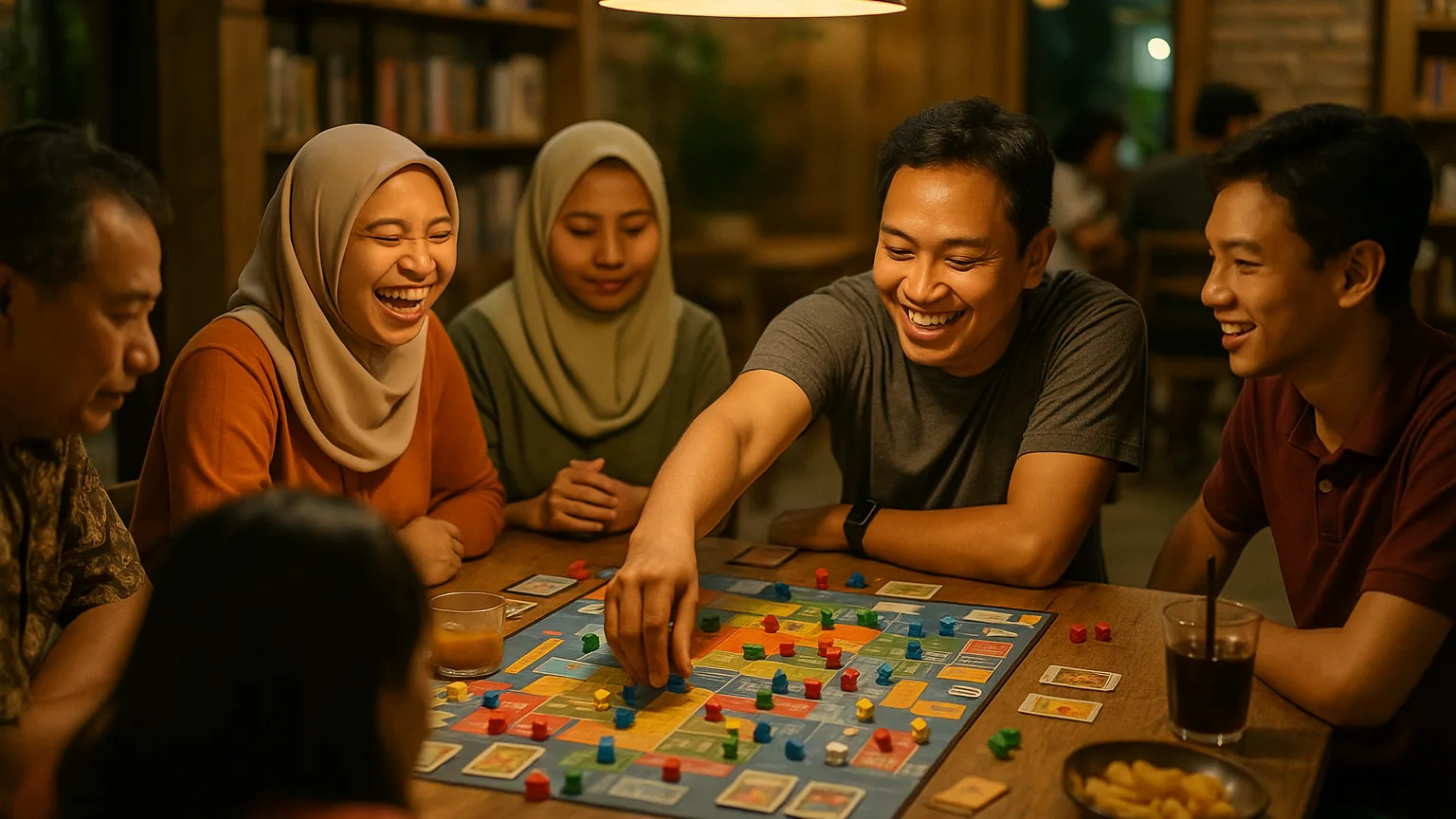
Let me say the awkward part first, because it shapes everything else. If your organisation is built around a thing people do in a room together, then an online version of that thing is usually a pale copy, and pretending otherwise just leaves everyone a bit flat. A board-game night is a good example - half the pleasure is the physical stuff, the pieces in your hand, the person across the table groaning when you take the spot they wanted, the snacks, the easy talk that happens in the gaps. You can play the same game online and it works, sort of, but nobody's ever driven home from a video call buzzing the way they do after a good night around a real table. So if you came here hoping virtual events would replace your in-person ones, I'd gently talk you out of it before we start.
That said - and this is the part worth staying for - online and hybrid events do two things that in-person events simply can't, and for a lot of associations those two things are the difference between a membership that grows and one that quietly caps out at whoever can physically make it to the venue. The first is reach: the members who moved cities, the ones who can't get a babysitter, the ones who work shifts, the one who took a job in Singapore and would love to still be part of things. The second is filling the gaps between the big events, so the membership doesn't go dead for three weeks at a stretch. Neither of those is glamorous, but both are real, and both are cheap.
Let me carry one example the whole way through so this stays concrete. Say you help run Klub Meja Dadu, a tabletop gaming community of around 140 members - mostly in Jakarta and Bandung, with a scattering in Surabaya and Yogyakarta and a couple who've moved overseas for work. You run a physical game night twice a month at a board-game cafe, and 10 to 16 people usually turn up, which is lovely but it's the same faces, because the same faces are the ones who live close enough to come. That gap - between 140 members and the 12 or so in the room on a given night - is really what this whole article is about.
When online actually helps, and when it doesn't
Before you plan a single virtual event, be honest about which side of the line your organisation sits on, because it changes what you should even attempt. Some memberships are mostly about information and connection - a professional association, an alumni network, a trade body. For those, a huge amount of the value travels perfectly well down a video call, and going online-first isn't a compromise at all, it's often just sensible. Other memberships are about a shared physical activity - a futsal team, a hiking group, a board-game club - and for those the in-person thing genuinely is the product. Klub Meja Dadu is squarely in that second camp, and I want to be clear-headed about it rather than sell you a fantasy.
So the useful question isn't "should we do virtual events?" as a yes/no. It's "what specific job do we want online to do that in-person can't?" For a tabletop club the honest answers are pretty narrow, and that's fine - narrow and real beats broad and wishful. Online is good for reaching the members who can't physically get to the cafe, whether that's distance, small kids, a disability, or just a bad week. It's good for keeping something on the calendar in the fortnight between physical nights, so the membership never fully goes quiet. And it's cheap - no venue, no minimum spend, no travel - which means you can run it often and casually without it costing anyone much.
What online is bad at, for this kind of group, is being the main event. Don't try to make your online play night the centrepiece and let the physical ones wither, because you'll hollow out the exact thing people joined for. Think of online as the supporting act that keeps the show running between the headline gigs, not a replacement for them. Get that order right in your head and most of the rest follows.
Virtual formats that actually work
Here's the trap almost everyone falls into first: they picture a "virtual event" as a webinar. One person talking, a slide deck, thirty little muted squares, a chat box nobody uses, and a quiet slide toward everyone half-watching while they answer emails. It's the default because it's easy to organise, and it's also the format most likely to teach your members that online events are boring and not worth showing up to. You run two of those and attendance halves, then halves again, and you conclude "our members don't like virtual events" when really they just didn't like that one.
The thing that separates a virtual event people come back to from one they quietly abandon is simple to say and easy to forget: people need to be doing something together, not watching one person do something. The webinar fails because it's passive. Anything where the members are participants rather than an audience has a fighting chance. For Klub Meja Dadu that's wonderfully easy, because playing a game is inherently participatory - so the flagship online format almost picks itself.

The online play night is the obvious one and it earns its place. Board Game Arena runs plenty of the popular titles straight in a browser with no setup, and Tabletop Simulator does the heavier games if your members don't mind buying it, and either way you put everyone in a Discord or a video call for the voices, because the talk is most of the point. Six to ten people is about the sweet spot - enough for a couple of tables, small enough that nobody's a spectator. It won't feel like the cafe. It'll feel like its own thing, which is the right ambition.
A few other formats work for the same reason - they give people something to do:
- A rules-teaching session for one game. Pick a game a lot of members own but nobody quite knows, and have someone who knows it walk everyone through a live play. It's a workshop, not a lecture, because the learners are actually playing along. This is also how you get shy or newer members involved without the pressure of a full night.
- A small-group hangout rather than one big room. If you must have people talking rather than playing, keep the groups to four or five, not forty. Break a video call into small rooms and the conversation actually happens; keep everyone in one big room and you get silence punctuated by one confident person. Small is the whole trick.
- A show-and-tell. For a hobby with physical stuff - painted miniatures, a new game someone imported, a clever storage solution - a casual "bring one thing and hold it up to the camera" evening is low effort and genuinely warm. People love showing their gear.
- An online tournament that runs over a week. Not a single evening at all, but a bracket people play through on Board Game Arena in their own time, with the results and the trash-talk landing in the group chat. It suits the members in other cities perfectly, because there's no fixed hour they have to make.
Notice none of those is a webinar. If your organisation genuinely does need to broadcast to a lot of people - an AGM, a guest speaker - by all means do it, just build in real interaction (proper Q&A, small breakout chats afterwards) and keep the talking-at-people part shorter than feels natural, because it always runs long.
The honest problem with hybrid
Hybrid is the shiny idea - run the event in the room and stream it to the people at home, best of both worlds, everyone included. And it can work. But I want to be straight about the cost, because it's the thing the enthusiastic write-ups skip: a hybrid event is two events happening at once, and unless you resource it as two events, the online half quietly becomes second-class. You've seen the failure even if you've not named it - a laptop propped at the back of the room, a camera pointing at the general direction of things, tinny audio, and eight people at home watching the backs of heads and slowly giving up while the folks in the room have a great time and forget they're even there.

For a physical game night, honestly, full hybrid is often not worth the bother, because the tactile thing doesn't stream - a remote player staring at a webcam pointed at a board they can't touch is having a worse time than if they'd just joined a proper online table instead. So my first bit of advice on hybrid is the unglamorous one: quite often, don't. Run a great in-person night, and run a separate great online night, and let them be two good things rather than one compromised one.
When hybrid genuinely does earn its place - a one-off AGM, a big talk, an anniversary night you want the overseas members to feel part of - the rule that saves it is a single one. Give one person the sole job of looking after the online room. Not the host, not someone also doing five other things - one person whose entire evening is watching the chat, reading out the remote questions, telling the room "we've got Rina and Dimas joining from Surabaya, say hi", and making sure the camera and sound are actually pointed at the right thing. That one role is the difference between hybrid working and hybrid being a polite disappointment. If you can't spare that person, you can't really do hybrid, and it's better to know that before the night than during it.
Keeping the online people actually engaged
Whether it's a fully online event or the online half of a hybrid one, the people on the other side of the screen drift off unless someone keeps pulling them back in, and that's not a technology problem, it's a hosting one. The single most effective thing costs nothing: use their names, out loud, often. "Nice one, Andi." "Bagus, what do you reckon?" A remote attendee who gets named twice in an evening feels present; one who's never addressed by name spends the whole time feeling like they're watching through glass, and they don't come back.
Beyond that, a few things that genuinely help and cost little:
- Keep the numbers small. This keeps coming up because it keeps being true. Engagement falls off a cliff as the group grows, because in a big room the polite thing to do is stay quiet. Six people will chat; twenty-six will listen.
- Start with something low-stakes. A daft question, a quick round of "what have you been playing lately", anything that gets people to unmute and say a word early. The longer someone stays silent, the harder it is for them to start, so break that seal in the first five minutes.
- Don't over-run it. An online event that's a touch too short leaves people keen for the next one. One that sprawls past its energy teaches them to dread it. Ninety minutes is plenty for most things; some of the best online play nights are an hour.
- Let it be a bit informal and imperfect. The over-produced online event feels like work; the slightly rough one where someone's cat walks across the keyboard feels like your actual community. Aim for the second.
Keep the tools simple
You almost certainly already own everything you need, and the temptation to go and buy a dedicated "virtual events platform" is one I'd resist hard, at least to start. For most associations the whole kit is: a group chat you already have (a WhatsApp group, or a Discord if your members skew that way), a plain video call for the voices, and whatever tool actually runs your activity - for a tabletop club that's Board Game Arena in a browser, or Tabletop Simulator for the fancier stuff. That's it. That runs a genuinely good online play night for nothing.
The reason I'd hold off on the paid platforms isn't that they're bad, it's that the thing that makes an online event work isn't a feature you can buy - it's someone hosting it well, using people's names, keeping the group small, and caring whether the quiet person in the corner is having a good time. No amount of software supplies that. Spend a fancy-platform budget of nothing, get the hosting right, and you'll beat a well-funded event with a bored audience every time. If you outgrow the free tools later, you'll know exactly what you need by then, and you'll buy the right thing instead of a guess.
A cheap test worth running: before you announce anything, run one small online play night for six to eight of your keenest members, tell them plainly it's a trial, and ask them afterwards whether they'd come to another. If they would, you've found your format. If they were politely bored, you've learnt that for a couple of hours instead of building a whole online programme nobody wanted. Either answer is worth having.
None of this replaces getting your in-person events right, and it's not meant to - if you want the physical side of your calendar to sing, that's a separate craft and I've written about the broader mix in the association event ideas piece. And the always-on online space - the group chat that ticks over between events - is its own thing again, worth building deliberately rather than leaving to chance, which is what the guide on building an online member community is about. Virtual events sit in the middle of those two: scheduled things that happen online, filling the gaps and reaching the people the venue can't.
The practical side - putting an event on a calendar members can actually see, taking sign-ups so you know who's coming, sending the link and the reminder without doing it by hand, and keeping one member list whether people join you in a cafe or over a video call - is a fair chunk of what Anggota is built to take off your plate. If that sounds useful you're welcome to try it for free and see how it fits your group. And if you'd sooner take the ideas and run them through the tools you already have, that's genuinely fine too - a good online play night needs a decent host far more than it needs any particular software, and the members in Surabaya who finally get to play will be just as glad either way.