
Managing volunteers: how to recruit, train and keep them
Most groups lose volunteers the same quiet way they lose members - a vague role, no thanks, one too many asks. Here's how to recruit, train and keep them without wearing your best people out.
Most membership organisations run on volunteers, and most of them manage those volunteers by accident. Someone puts out a call for help, a few kind souls raise their hand, the same three or four end up doing almost everything, and about eighteen months later those three or four are quietly exhausted and nobody quite noticed until one of them stopped answering the group chat. That's not a failure of good people - there are usually plenty of good people around. It's a failure to treat volunteering as something you actually manage, the way you'd manage anything else that matters to your organisation, rather than something that just sort of happens to you.
And it's worth saying the uncomfortable part early: volunteers are members too. Everything in the bigger guide on member engagement about giving people a real role rather than just a seat, and everything in the piece on appreciation about being seen for your effort, applies to volunteers with the volume turned up. A member who drifts away costs you a subscription. A volunteer who burns out costs you a subscription and a chunk of the actual work your organisation depends on, and usually takes a bit of goodwill with them on the way out. So the same retention thinking runs straight through this - find them well, give them something real, don't wear them out, and notice them - it's just that the stakes are higher, because volunteers are the people holding the whole thing up.
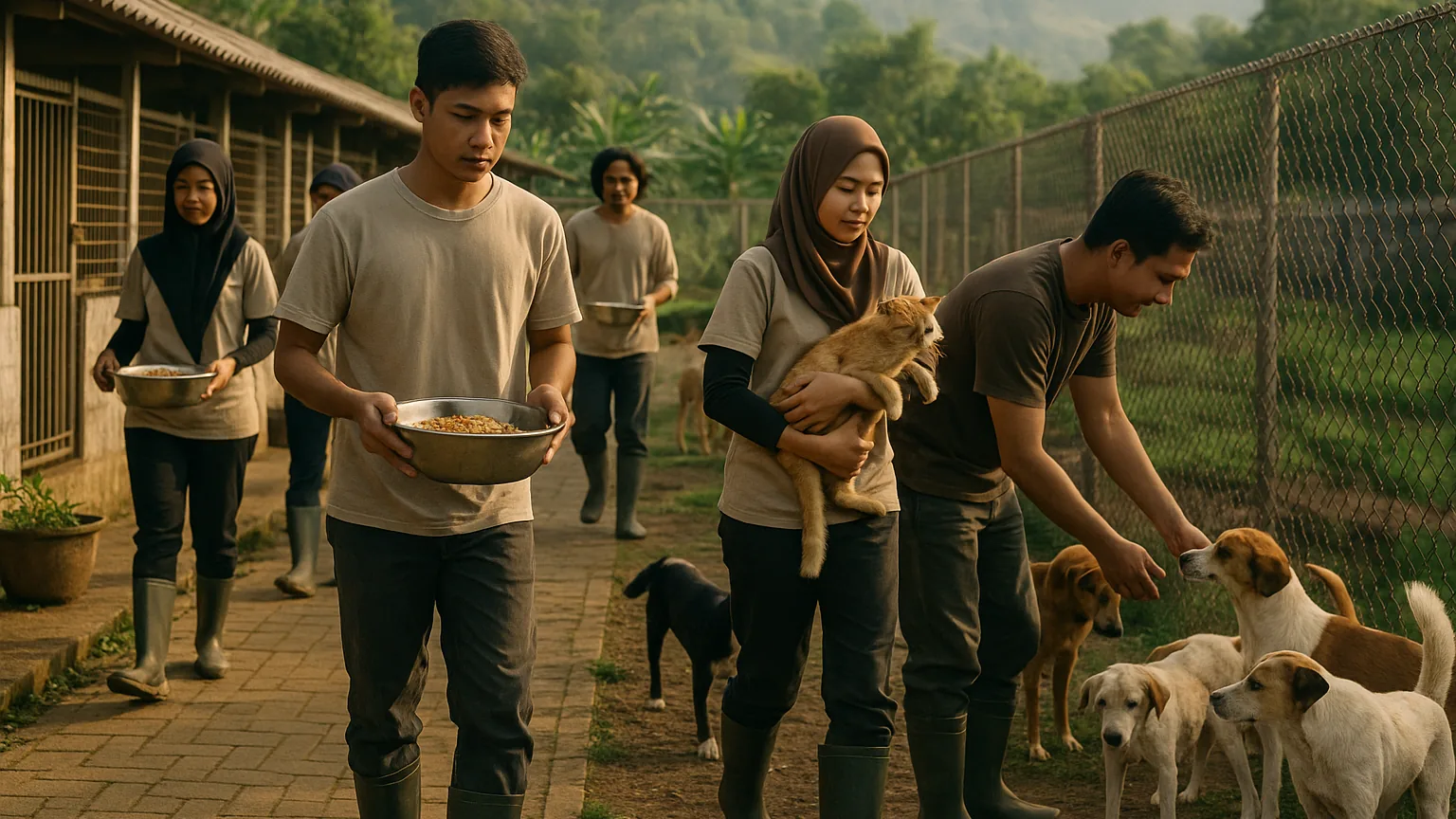
Let me carry one example through so this stays on the ground rather than floating off into theory. Say you help run Rumah Satwa Harapan, an animal rescue and shelter in Bandung - somewhere between 90 and 120 rescued cats and dogs at any given time, daily feeding and cleaning rounds, a monthly adoption day, a handful of foster carers, and a vet who comes in once a fortnight. On paper there are maybe 50 to 60 people signed up as volunteers. In practice the shelter runs on about 12 to 15 of them, and most of the load - the 6am feeds, the vet runs, the awful late-night calls about a dog hit out on the bypass - lands on Ratih, who founded the place and has been quietly doing more than any one person should for the better part of five years. That's an extremely ordinary picture for a rescue, and almost everything below is about widening that circle of 12 without breaking the people already in it.
Asking directly beats putting out a call
The first thing worth un-learning is the general call for help. "We need volunteers - DM us if you can spare some time!" posted to your followers feels like recruiting, and it's the least effective way to do it that I know of. It's not that nobody responds - a few will - but a broad appeal to everybody is heard by nobody in particular, and the ones who do reply are often the people with the vaguest idea of what they're actually offering. You'll spend more energy sorting through good intentions than you ever save by casting wide.
What actually works is unglamorous and a little uncomfortable: asking specific people directly, for a specific thing. Not "would you like to volunteer sometime" but "we're short a person on the Saturday morning feeding round twice a month, and I reckon you'd be good at it - are you up for it?" A direct ask to a named person lands completely differently, because you've done the hard part for them - you've decided they're wanted, and you've told them exactly what "yes" commits them to. Most people, it turns out, are quietly waiting to be asked. They won't volunteer into a vague fog, but ask them to do a defined thing that clearly matters and a surprising number say yes.
For Rumah Satwa Harapan that means someone - ideally someone other than Ratih, more on that shortly - going through the adoption-day crowd, the regular donors, and the people who always comment warmly on the posts, and quietly asking the promising ones face to face. The woman who adopted a cat last year and still sends photos every month. The fellow who lingers after every adoption day just talking to the dogs. These are your best prospects and they're already in the building; a public post reaches them far less reliably than a two-minute conversation does. It's slower, and it doesn't scale the way a broadcast pretends to, but the yes you get back is a real one.
Worth keeping a quiet list: most groups have no memory at all of who might be willing. Keep a simple running note of people who've shown a flicker of interest - offered once, asked a good question, stayed back to help pack up - even when you don't need them yet. Then when a gap opens you've got five names to ask instead of firing another hopeful post off into the void.
Give them a real job, not "help out"
Once someone says yes, the fastest way to lose them again is to leave them standing around waiting to be useful. "Just come along and help out" sounds warm and welcoming and is actually a small cruelty, because it quietly hands the volunteer the job of working out what to do, where to stand, and whether they're getting in everyone's way - and a lot of people, faced with that, decide it's easier not to come back at all. Vagueness feels generous. It isn't.
A real role has a name, a scope, and an end to it. "You're on the cat-room cleaning team on Sunday mornings, roughly 8 to 10, and it's you and Sinta - she'll walk you through the routine" is a job a person can actually do and feel good about having done. They know when it starts, when it finishes, who they're with, and what "done" looks like. Compare that to "help out at the shelter", which never starts and never ends and slowly curdles into a low background hum of guilt. Give people a box with edges and most will fill it happily and reliably for years.
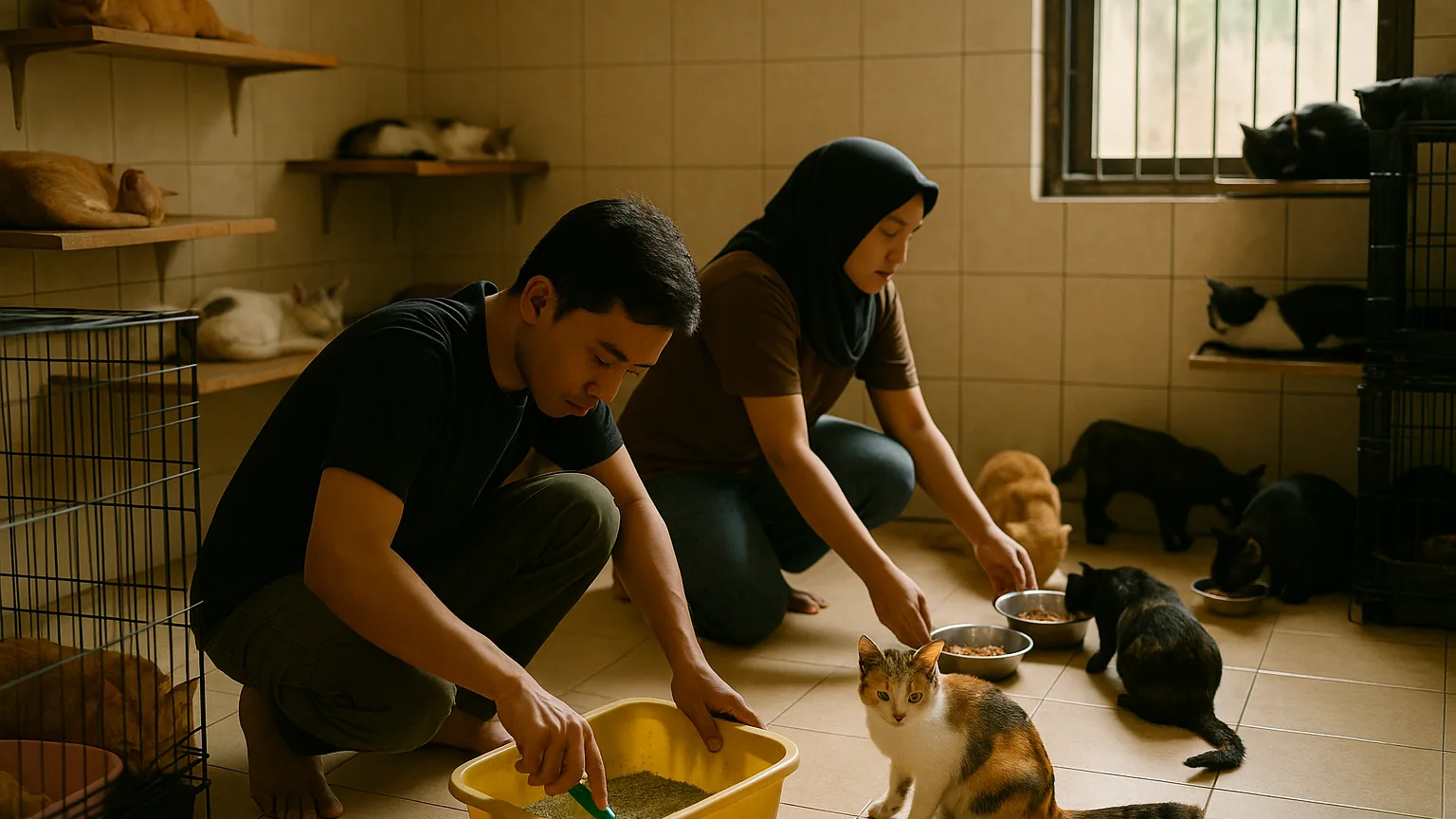
This is also where thinking about roles properly pays off. It helps enormously to write down the handful of jobs your organisation genuinely needs doing - the feeding rounds, the adoption-day setup, the social media, the fostering, the transport, the fundraising - as small, defined roles rather than one undifferentiated heap of "help". You don't need formal job descriptions (a rescue is not a corporation and shouldn't try to be one), but a plain list of roles with a sentence each does two useful things: it lets you ask people for a specific thing, and it shows you at a glance which jobs are dangerously resting on a single pair of shoulders. If your committee or core team is fuzzy about who owns what, the piece on board roles and responsibilities is well worth a read alongside this one - the same clarity that helps a committee helps your volunteers.
Train them fast, and lightly
Training scares people off before it's even started, because they picture an induction manual and a half-day session nobody has the time to run. For most volunteer roles you need almost none of that. What you need is for someone to stand next to the new person the first time or two, show them how the thing is done, and be there when they get it slightly wrong - which they will, and which is completely fine.
A buddy system does maybe 90% of the work here. Pair the new cat-room volunteer with Sinta for their first two Sundays and they'll learn more than any document could teach them - where the food's kept, which cat bites, how much bleach goes in the water, who to call if something's wrong - and they'll have made a friend along the way, which matters more for whether they stay than the training ever does. The written stuff, where you need it at all, should be short and practical: a one-page "how the feeding round works", a laminated card by the door, a pinned message in the group. Save the real detail for the few things that genuinely bite if you get them wrong - handling a frightened dog, the medication schedule, what to do in a proper emergency - and don't drown a willing person in policy for a job that's mostly common sense and kindness.
Don't wait until you've got perfect training materials before you let anyone start, either. You'll never have them, and the waiting just means the willing person you finally recruited stands idle and goes cold. Start them with a buddy this week, and write the one-page version the moment you notice yourself explaining the same thing for the third time….
Don't wear out the willing few
There's a pattern that quietly kills more volunteer efforts than anything else, and it's worth naming plainly, because it never feels like a mistake while you're making it. A few people are reliable. So you lean on them. They say yes, because they're the sort who say yes, so you ask them again, and because they did it well you ask them for the next thing too, and within a year your "team of 50" is really five people doing everything and 45 names sitting on a list. Then one of the five gets sick, or has a baby, or simply wakes up one morning with nothing left in the tank, and suddenly the wheels are off - and you never saw it coming, because the reliable ones almost never complain.
The willing few are willing precisely because they care, and the people who care are the easiest to overload and the least likely to tell you they're going under. So the discipline has to come from you, not from them. A few things genuinely help. Spread your asks deliberately across the wider list, even when it's slower and a touch less reliable than going straight back to your safe pair of hands - because every task you hand to a newer volunteer is both load off the core and a person growing more attached. Cap what any one person carries, at least in your own head. Check in on your most reliable people about whether they're actually okay, rather than about what else they could take on. And watch for the quiet tells - the volunteer who used to reply within minutes going slow, the one who's stopped suggesting things - because in a rescue the gap between a tired volunteer and a gone one can be about a fortnight.
Notice them, or you'll lose them anyway
Volunteers aren't paid, which means the ordinary currency of appreciation - being noticed, being thanked, being seen to matter - is the whole of what they get back, and it's astonishing how often organisations forget to actually hand it over. The fix isn't an annual volunteer-of-the-year certificate (those are fine as far as they go); it's the small, specific, timely thank-you that tells a person their effort landed on a human being who cared. "Thanks everyone, good work" evaporates in the car park. "Budi, you drove two hours to get that dog to the vet on Sunday and she's alive because of it - thank you" is remembered for months.
I won't repeat the whole menu here, because the article on member appreciation lays it out properly, and every bit of it applies at least as strongly to volunteers as to ordinary members. The one thing I'd stress for a rescue in particular is to catch the invisible work. The visible stuff - the dramatic rescue, the adoption-day smiles - gets thanked more or less naturally. The person who quietly scrubs the kennels every week, or keeps the accounts straight, or answers the desperate messages at 11pm, does work that nobody sees, which means nobody thanks them for it, which means they're usually first to burn out. Go out of your way to name the unglamorous jobs out loud.
The part nobody warns you about
Everything so far applies to just about any volunteer-run group, from a futsal club to a choir. But a rescue asks something extra of its people, and it would be dishonest to write a volunteer guide for one and skip straight past it. The work is emotionally heavy in a way a lot of volunteering simply isn't. Your volunteers will bond with an animal and then watch it not make it. They'll take the call about the cruelty case. They'll already be full when another dumped litter arrives, and have to make the kind of decision that stays with a person. This has a name - compassion fatigue - and it isn't weakness, it's the predictable cost of caring hard about suffering you can't always fix, and left unacknowledged it will quietly hollow out your very best people.
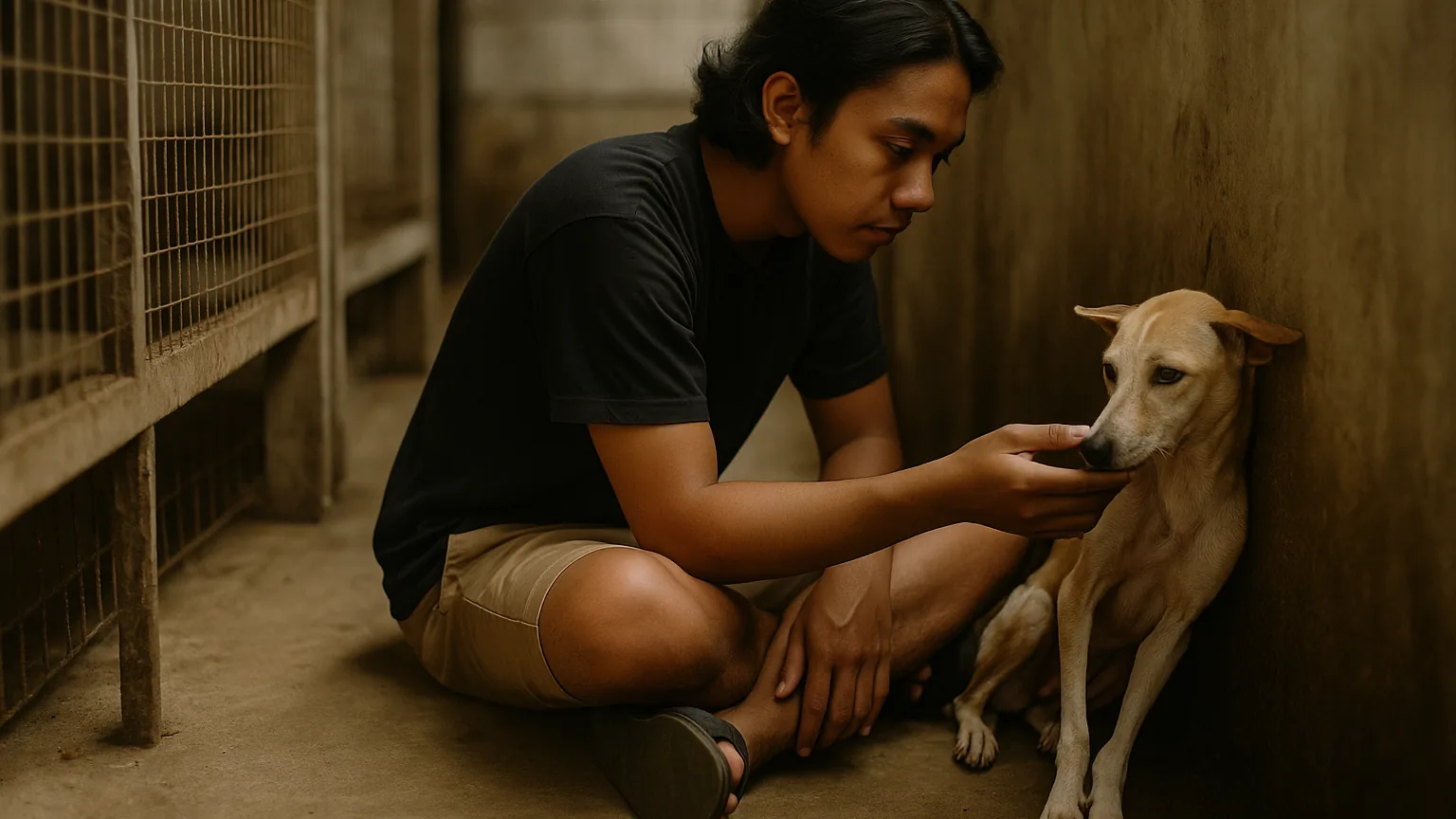
You can't remove the hard part - it's the nature of the work - but you can stop pretending it isn't there. A few things help more than you'd expect. Talk about it openly, so a volunteer having a rough week knows they're not the only one and not somehow failing at it. Make it genuinely okay to step back for a while without it being treated as a resignation - "take a month, the animals will still be here, come back when you're ready" holds on to far more people over the long run than quietly expecting everyone to be endlessly tough. Try hard not to let any one person carry the worst calls on their own. And keep the wins visible, because people running on empty stop noticing them - the adoption that went perfectly, the terrified dog that finally trusts a hand, the plain count of how many you got out this year - since those are the fuel, and in the grind of the bad weeks they're the easiest thing of all to lose sight of.
A volunteer who takes three months off and then comes back is worth ten who quietly burned out and never returned. Protecting your people isn't the soft, optional part of running a rescue - on a long enough timeline it's very nearly the whole of it.
Volunteers are your most committed members
It's worth circling back to where we started, because it's the idea most likely to actually change how you run things day to day. The instinct is to file volunteers in a different mental drawer from members - members are the people who pay and turn up, volunteers are the people who help - but for retention purposes they're the same, and the very same drift happens to both. A volunteer joins full of intent, isn't given a clear role, doesn't feel especially noticed, gets asked for a bit too much a bit too often, and six months later has quietly faded off - which is exactly the arc an ordinary member follows when their first weeks are left to chance. Treat your volunteers as your most engaged members, because that is precisely what they are, and manage their experience with at least as much care.
What not to bother with
You do not need volunteer-management software, a formal rota system, a points-based reward scheme, or a volunteer handbook the size of a phone directory - not to start with, and quite possibly not ever for a group your size. Those things solve problems you mostly don't have yet, and the effort of setting them up is effort not spent on the actual people. The bulk of the result comes from four fairly unglamorous habits: ask specific people directly, give them a defined role, don't overload the ones who say yes, and thank them properly and often. A shared note of who does what, and a group chat that people actually read, will carry a shelter a very long way before any of the fancier machinery earns its place.
If you take one thing away: your volunteers are your most committed members, and they leave the same quiet way ordinary members do - a vague role, no thanks, one too many asks, and a slow fade nobody clocked until they were already gone. Ask directly, give them something real, guard them from burnout, and notice them out loud.
A fair bit of this is what Anggota is built to make less of a juggle - a clear record of who your volunteers are and what they've each taken on, roles you can actually see rather than carry around in your head, a members' area that treats volunteers as the engaged members they really are, and a way to spot the ones going quiet before they're gone for good. If that sounds useful you're welcome to try it for free and see how it fits your group. And if you'd sooner take the ideas and run them through a spreadsheet and a WhatsApp group you already trust, that's genuinely fine too - none of this depends on the tool, it depends on treating the people who hold your organisation up as though you'd rather not lose them, which of course you wouldn't.