

Free vs paid membership: should you charge?
Free grows your numbers and funds nothing. Paid funds the thing and puts a wall at the door. The honest tradeoffs, the hybrids that get you both, and how to decide - with an urban sketching club weighing it up.
Should your membership be free or should you charge for it? It's one of those questions that sounds like it has a right answer, and it doesn't - or rather, it has a right answer for your organisation, which is a different thing, and nobody who hasn't sat in your meetings can hand it to you. What I can do is lay out the honest tradeoffs, because both roads have a cost, and the mistake most groups make is picking one without seeing what it quietly takes from them. Free grows your numbers and funds nothing. Paid funds the thing and puts a wall at the door. Everything else is detail hung off those two plain facts.
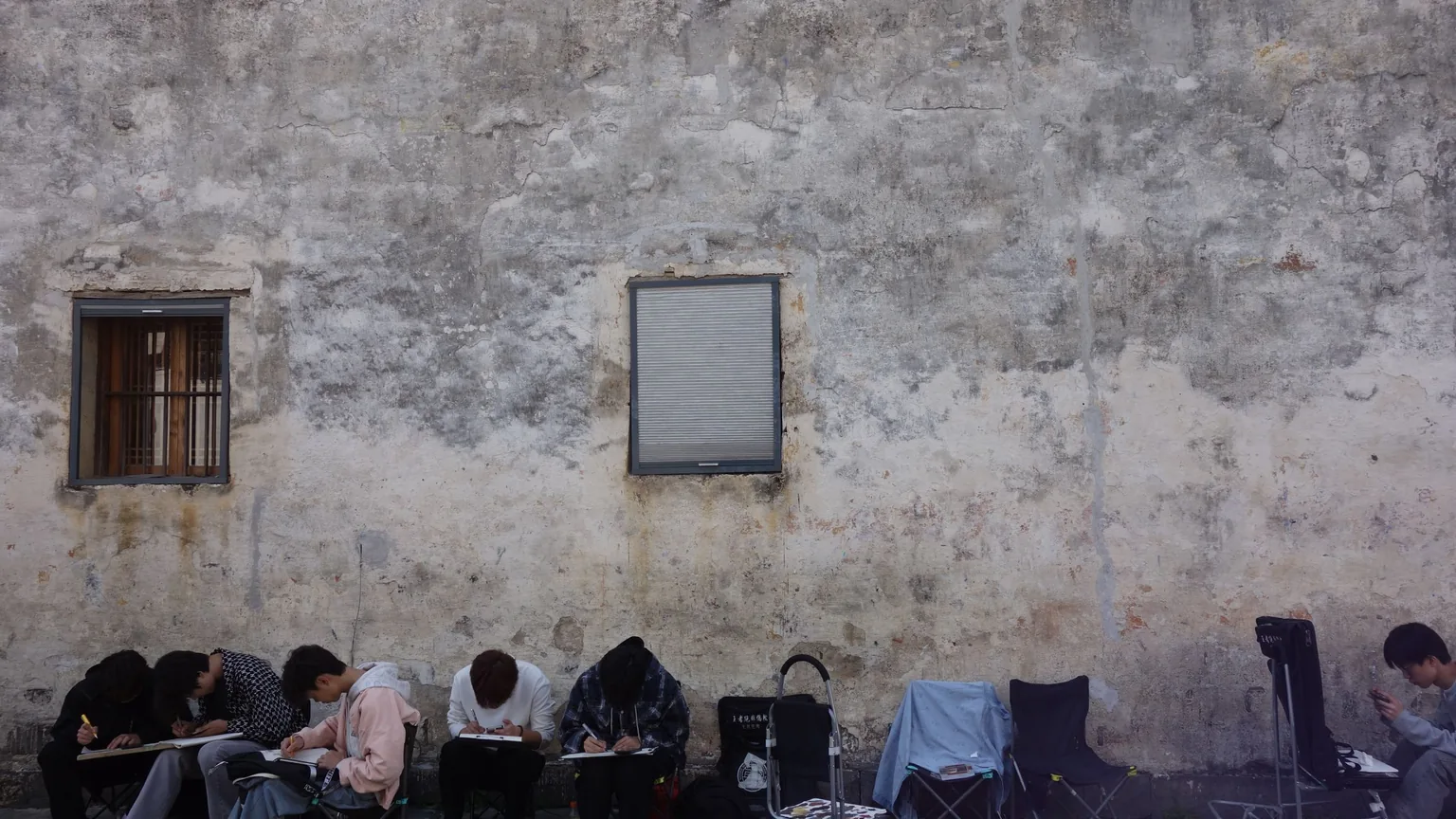
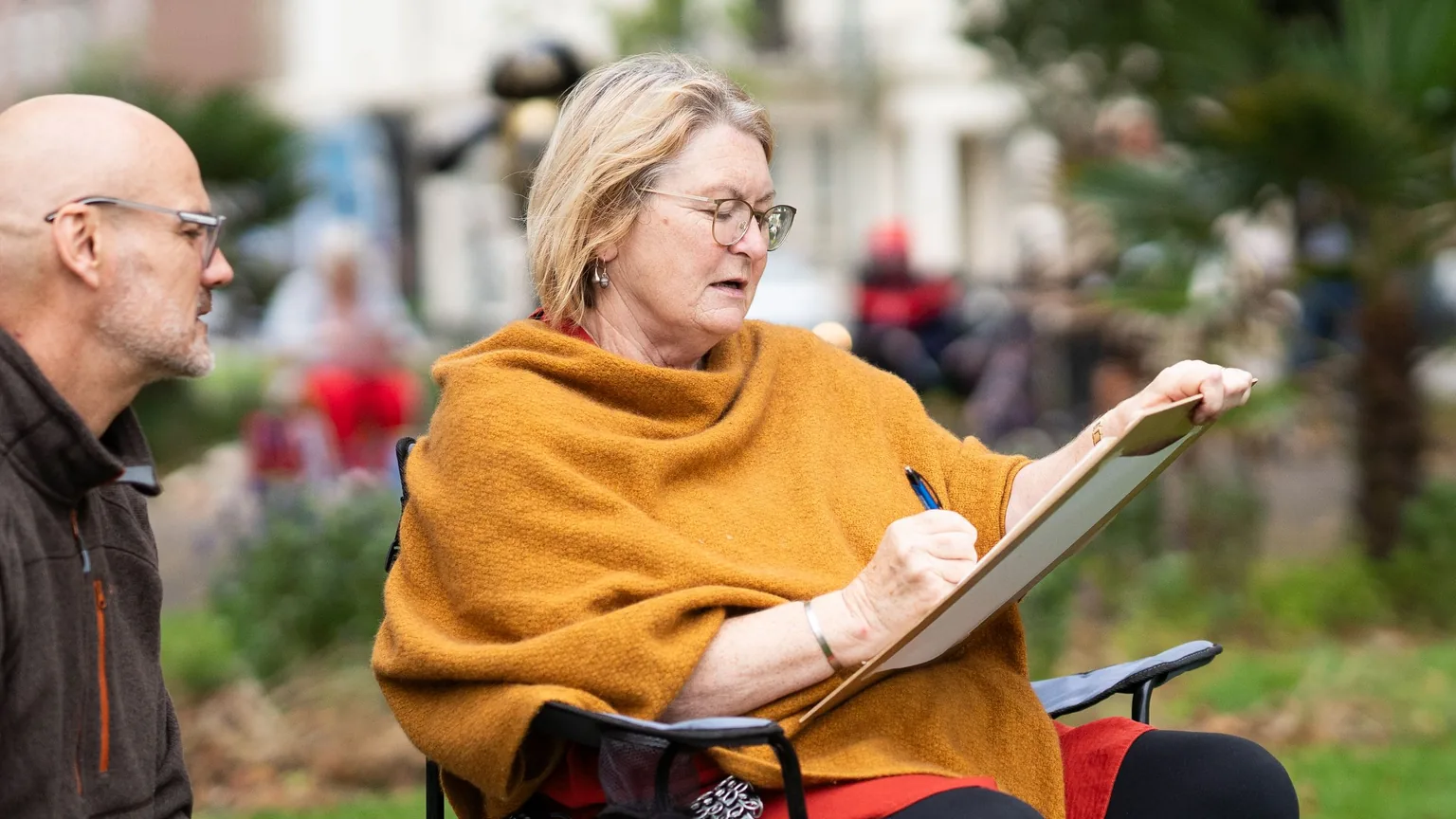
Let me carry one example the whole way through so this stays concrete. Say you help run Sketsa Kota - an urban sketching club in Bandung, the sort where people meet on a Saturday morning with pens and little watercolour tins and spend a couple of hours drawing an old shopfront or the mess of a wet market, then compare pages over coffee. It's been free from the start. Turn up, sketch, you're in. There are maybe 200 names on the WhatsApp group now, the founders are quietly tired, and someone at the last meetup asked the question that's been hanging in the air for a year: should we start charging? We'll come back to them at every turn, because their situation is the one most young clubs are actually in.
"Free" is never actually free
Start here, because it's the thing people skate over. A free membership doesn't mean the thing costs nothing to run - it means someone other than the member is paying for it, and that someone is usually the two or three people doing all the work. For Sketsa Kota, "free" currently means one of the founders buys the spare pens and paper for newcomers out of her own pocket, another spends most of Friday night organising the location and posting the reminders, and the cafe that hosts them tolerates fifteen people nursing one coffee each because it likes the vibe. None of that is free. It's just invisible, because it's not showing up as a line item - it's showing up as somebody's Friday night and somebody's spare cash.
This matters for the decision, because the real question is never "free or paid" in the abstract. It's "who pays, and is that sustainable". Plenty of free memberships run happily for years on the goodwill of a couple of dedicated people, and if that's genuinely fine - if those people aren't burning out and the money's coming from somewhere honest - then free is working and you should leave it alone. But if "free" actually means "funded by one exhausted volunteer who's about to quit", that's not a free membership, that's a problem with a countdown on it, and no amount of not-charging changes the arithmetic underneath.
What free is genuinely good at
Free has real virtues, and I don't want to talk you out of it if it fits, because for a lot of groups it honestly does. The obvious one is growth: drop the price to zero and far more people will give you a go, because there's nothing to lose and no form to fill in and no awkward "is this worth it" calculation to make. If your whole point is reach - you want as many people as possible drawing, or turning up, or being part of the thing, and the value to you is the size and life of the community rather than the revenue - then a barrier at the door works directly against what you're trying to do. Free is the correct answer for a genuine community-first group, not a compromise.
Free also makes sense in the early days, almost regardless of where you'll end up. When Sketsa Kota was six people and a founder's idea, charging would have been daft - you don't put a turnstile in front of something that's still proving it exists. Getting bodies through the door, learning what people actually want, building the habit and the friendships, all of that is far easier when there's no price conversation muddying it. Many clubs that end up charging were right to start free, and the skill is knowing when you've moved from "proving this works" to "this works and it's costing me", because those want different answers.
And free is the right call when the money genuinely comes from elsewhere. If you're funded by grants, by a sponsor, by donations, by a parent organisation, or by events that make their own money, then dues might be a rounding error you don't need and a hassle you don't want. The test is simple and worth being honest about: is the membership fee actually funding something, or is it just a barrier you'd be putting up out of habit because that's what memberships do? If it's not funding anything, don't charge for the sake of charging.
The quiet problem with free: drift
Here's the cost of free that nobody mentions in the enthusiasm of growing a big group. A free membership fills up with people who signed up on a whim and were never really coming, and over time the gap between "members" and "people who actually show up" turns into a canyon. Sketsa Kota has 200 names on that WhatsApp group. Ask the founders how many come to a typical sketchwalk and the honest answer is 15 to 25. The other 175 aren't bad people - they just joined because it cost nothing to join, felt a mild flicker of interest, and drifted off without ever formally leaving, because there was nothing to leave. Free doesn't filter, so it doesn't tell you who's real.
That drift has knock-on effects beyond a misleading headcount. It's demoralising for the organisers, who see 200 members and 18 attendees and quietly wonder what they're doing wrong (usually nothing - that ratio is just what free produces). It makes planning hard, because you can't tell from the membership list who'll actually turn up. And it dilutes the sense of belonging, because a group where most "members" are strangers who've never come feels different from one where members are people you know. None of this means free is wrong. It means free has a characteristic failure mode, and if you're seeing it, that's a signal worth reading rather than ignoring.
What paid is genuinely good at
Charging, even a small amount, does two useful things at once, and they're worth separating. The first is obvious: it funds the thing. Dues mean the pens and paper aren't coming out of a founder's pocket, the venue can be paid for properly rather than tolerated, and if the club wants to run a proper workshop or bring in a guest or print a little zine of members' work, there's actually money to do it with. A funded club can do things a broke club can only talk about, and there's a quiet dignity in paying your own way rather than perpetually leaning on one generous person's goodwill.
The second thing charging does is less obvious but often more valuable: it filters for commitment. A person who's paid even Rp 100.000 for the year has made a small decision that they're in, and that decision changes behaviour - they're more likely to turn up, more likely to feel like a member rather than a name on a list, more likely to treat the thing as theirs. The barrier that keeps casual passers-by out is the same barrier that concentrates the people who stay into a group that actually shows up. A smaller paid membership that all comes to things can be a far better club than a huge free one where nobody does, and that's the tradeoff in a single sentence.

The honest downside of paid is the wall itself. Every rupiah you charge is a rupiah's worth of reason for someone not to bother, and you will lose some genuinely lovely would-be members who'd have come along happily for free but won't get out their wallet for a club they haven't tried. That's a real loss, not a rounding error, and it falls hardest on exactly the people a barrier hurts most - students, the young, anyone for whom a small fee isn't small. You don't get the filtering benefit of paid without also getting its exclusion cost. They're the same wall seen from two sides.
The middle ground: hybrids that get you both
Now the good news, which is that "free or paid" is a false binary and most of the interesting answers live in between. You don't have to choose the pure version of either, and for a club like Sketsa Kota some blend is almost certainly the right shape. A few that genuinely work:
- Free to attend, paid to be a full member. Anyone can come to the sketchwalks for nothing - the community stays open, the growth engine keeps running, nobody's turned away at the door. But being a paid member gets you the things that cost money to provide: the workshops, the printed zine, the members' critique sessions, a spot at the annual exhibition. The free attendees are your recruiting ground and your open front door; the paid members fund the club and form its committed core. This is the shape I'd point most young clubs at first.
- A free tier and a paid tier. Everyone's a member, but there's a free level and a paid level with more to it. This is really just membership tiers applied to the free-versus-paid question, and if you go this way it's worth thinking properly about what separates the levels so the paid one is a genuine yes rather than a padded list - I've written a whole guide to building and pricing tiers that covers exactly that.
- Free to join, pay per thing. Membership itself is free, but the workshops or the bigger events carry a small charge that covers their own costs. Good for a group that mostly does free stuff but occasionally does something that genuinely costs money, so the people who use the expensive things pay for them and everyone else isn't subsidising a workshop they didn't attend.
- Free with an optional donation. No fee, but a plain, unembarrassed "if you value this and can chip in, here's how". You'd be surprised how many people do, and it keeps the door fully open while giving the committed a way to fund the thing. It won't fund a club that has real costs, but for a genuinely low-cost group it can be enough, and it costs you nothing to offer.
The point of the hybrids is that they let you keep the growth and openness of free where it matters - at the front door, for newcomers, for the core community activity - while charging where charging is fair and where the money's actually needed. You get the recruiting benefit of free and the funding-and-filtering benefit of paid, at the price of a slightly more complicated thing to explain. For most clubs that tradeoff is well worth it.
So what should Sketsa Kota do?
Walking it through the honest way: they've clearly outgrown pure free - the founder-funded pens and the exhausted organiser are the tell, and 200 names with 18 attendees says the free model has done its recruiting job and is now mostly storing strangers. But going hard the other way and slapping a compulsory fee on everyone would kill the open, anyone-can-come spirit that made the club lovely in the first place, and it'd cut hardest at the students who are half the point of a city sketching scene. So the pure-paid answer is wrong too.
The shape that fits them is free to attend, paid to belong. Keep the Saturday sketchwalks free and open - that's the heart of it and the thing that grows the community. Add a modest annual membership, somewhere in the region of Rp 100.000 - 200.000, that funds the club properly and gets you the members-only extras: the occasional workshop with a proper artist, the printed zine, the year-end exhibition, first dibs when spots are limited. Work out that actual number using the three checks - what it costs, what it's worth to a member, what comparable groups charge - which I've set out in full in the guide to setting membership dues rather than repeating here. The free attendees keep the club growing and feed the paid membership; the paid members keep the club running. Nobody's turned away, and the thing finally funds itself….
The one question underneath all of this: what is the fee actually for? If it's funding something real that the club needs and the members value, charge for it, and charge properly. If it's just a wall you'd be building because "memberships cost money", don't. The fee has to earn its place the same way everything else does.
One thing to know before you start charging
A last honest note, because it catches people out. The moment you start charging, the relationship changes, and mostly for the better but not for free. A paying member has, quite reasonably, an expectation - they've handed over money, so they're owed something in return, and "we meet on Saturdays like we always did" may not feel like enough once there's a price on it. This isn't a reason not to charge. It's a reason to charge only when you've actually got something worth the money to offer, and to be clear about what that something is. Going from free to paid works when members can see what their fee buys. It grates when the club is exactly the same as it was when it was free, only now with an invoice attached.
So don't rush the fee ahead of the value. If Sketsa Kota starts charging, the workshops and the zine and the exhibition want to be real, or at least visibly coming, before the first invoice goes out - not vague promises, but "here's what your membership funds, and here's the first thing it's funding". Get that order right and members are genuinely happy to pay, because they can see the club got better and see that their money is why. Get it backwards and you've just made your free thing cost money, which is the one version of this that reliably annoys everyone.
A fair bit of the fiddly side of all this - a free tier and a paid one sitting side by side, dues collected online with QRIS or bank transfer, the paid members clearly marked off from the free attendees, renewals that remind themselves - is the kind of thing Anggota is built to take off your hands, and it's free to start. But the decision itself, free or paid or some sensible blend of the two, is entirely yours, and you're far better placed to make it than any tool is - you're the one who knows your members, your costs, and what your club is really for. Whatever you run it in, get that call right and the software is just a detail. We only hope the tradeoffs above make it a slightly clearer choice than it was.