

The best membership software in Indonesia (what to look for)
Most "best membership software" lists were written for organisations on the other side of the world. Here's what actually matters when you're running a koperasi or community group here - and how to choose.

Search for "the best membership software" and you'll get a dozen lists that all look roughly the same, and almost none of them were written with you in mind if you're running something here in Indonesia. They rank tools that were built for a professional association in Chicago or a golf club in Surrey, priced in US dollars, paid for on a credit card, with members who happily click a link in an email and never touch WhatsApp. That's a real world, it's just not yours, and a tool that's genuinely excellent in that world can be an awkward, expensive fit the moment you try to run a koperasi or a community group with it. So rather than hand you another ranked list, I'd sooner walk you through what to actually look for - the handful of things that matter a great deal for an Indonesian organisation and get quietly skipped in most of the advice you'll find.
None of this is complicated, and there's no single right answer at the end of it (the right tool for a 3,000-member chamber of commerce is not the right tool for a neighbourhood cooperative, and anyone who tells you otherwise is selling something). What I can do is lay out the criteria that separate a good fit from a bad one here, be honest about the main categories of options including where the big global platforms genuinely shine, and tell you plainly where our own tool, Anggota, sits in that picture. If you take the criteria and go with something else entirely, that's a perfectly good outcome too.
Let me carry one example through so this stays concrete. Say you're the treasurer of Koperasi Rukun Makmur, a community savings cooperative in Bandung - somewhere between 200 and 300 members, monthly dues (iuran wajib) in the Rp 25,000 - 50,000 range, a committee that turns over every couple of years, and a members' meeting you dread a little because half the evening goes on working out who's actually paid. Right now the member list lives in a spreadsheet that only you fully understand, the dues arrive by a mix of cash and manual transfers, and every renewal season is a fortnight of chasing. You're not looking for something clever. You're looking for something that fits how your members actually behave, in a language they actually read, at a price that makes sense in rupiah. That's the whole brief, and it's a good one.
Start with what you're actually trying to fix
Before you compare a single product, it's worth being clear about what membership software is even for, because the category is broader than it sounds and you probably don't need all of it. At its plainest it's a shared, tidy place for three things: who your members are, whether they've paid, and how you talk to them. Some tools pile events, websites, email marketing, forums and a dozen other things on top of that, and for some organisations all of it earns its place. For Rukun Makmur, honestly, the win is mostly in the first three. If you're not sure what the category covers, I've written a plainer piece on what membership management software actually is that's worth a read before you go shopping - it'll stop you paying for a stack of features you'll never open.
One honest note while we're here, because it matters for a cooperative specifically: membership software handles your member roster, your dues and your communication well, but it is not accounting software and it is not a simpan-pinjam ledger. If your koperasi runs loans and needs proper bookkeeping for them, that's a separate job and a separate tool, and no membership platform (ours included) will do it properly. Plenty of community groups happily run membership software for the member-and-dues side and keep their books elsewhere. Just go in knowing which problem you're solving, so you don't buy the wrong thing and feel let down by it.
What actually matters for an Indonesian organisation
Here's where the overseas lists quietly lead you wrong, because the features they weight heavily are not the ones that decide whether a tool works for your members. If I were sitting next to you evaluating options for Rukun Makmur, this is the short list I'd score each one against, roughly in the order I'd care about it:
- Local payments, done properly. This is the big one, and it's where most global tools fall down hardest. Your members pay with QRIS, with e-wallets like GoPay, OVO and DANA, and with bank transfer via virtual account. A lot of imported tools offer you a credit-card box and little else, which is close to useless when card penetration for everyday payments is low. If a tool can't take QRIS, it can't really take your members' money, and you'll be back to collecting screenshots. I've gone deep on this in a separate guide on collecting dues online, so I won't repeat it all here - just treat QRIS support as a hard requirement, not a nice-to-have.
- Bahasa Indonesia, not just an English form with Indonesian bolted on. Your members read the payment page, the reminder, the receipt. If those land in English, a fair few people hesitate, and hesitation is where renewals leak away. Bilingual is genuinely useful (plenty of committees work in both), but the member-facing side needs to feel native, not translated.
- Built around WhatsApp. Overseas tools assume email is where members live. Here, a reminder that goes out on WhatsApp gets read; the same reminder buried in an inbox often doesn't. You don't need anything fancy - just the ability to send a member a pay link they can open and act on from the app they're already in all day.
- Mobile-first, for real. Almost every one of your members will only ever see this software on a phone. A pay page or members' area that's clearly a desktop layout squeezed onto a small screen feels cheap and nasty and quietly costs you completions. Open the thing on your own phone before you believe anyone's claim that it's "mobile-friendly".
- Pricing that makes sense in rupiah. A price quoted in US dollars, billed annually, that felt reasonable to a mid-sized American association can be genuinely eye-watering once it lands in your budget - and worse, unpredictable, because the exchange rate does its own thing. Look for pricing you can understand up front and pay for the way you actually pay for things.
- Self-serve, and quick to leave if it's wrong. You're a volunteer treasurer, not a procurement department. Being able to sign up, have a go, and see whether it fits without booking a sales call or signing a year's contract is worth a lot. A free trial tells you more in a fortnight than any feature list will.
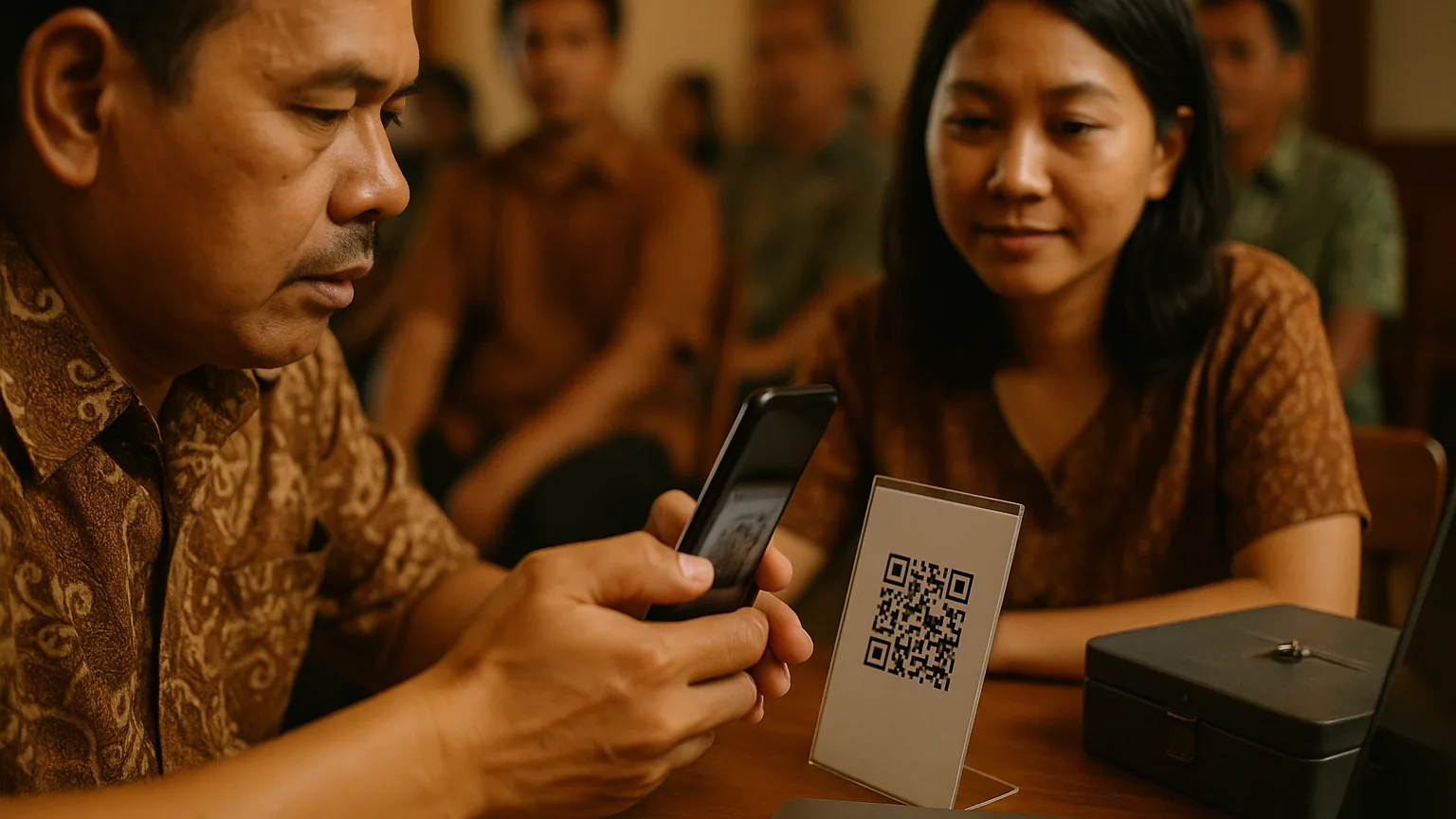
Notice what's not on that list. I've said nothing about which tool has the most features, the prettiest dashboard, or the longest integration menu, because for an organisation like yours those things are mostly noise. The best all-round product in the world scores badly here if your members can't pay it with the phone in their hand. Get the six things above right and you've got something that fits; miss the first one and it barely matters what else it does.
The kinds of options you'll run into
Broadly, what you'll find sorts into three groups, and it's worth understanding the shape of each rather than treating every product as a one-off. None of them is wrong, exactly - they're just built for different people.
The global all-in-one platforms. These are the serious, capable, does-everything systems - membership, events, email, payments, sometimes a whole website - aimed at larger associations, chambers of commerce and professional bodies. Glue Up is the one you're most likely to come across here, and to be fair to it, it's a genuinely capable platform with a real presence across Asia, which many of its rivals don't have. If you're running a big chamber with a heavy events calendar and staff to drive it, something in this category may well be the right call, and I wouldn't talk you out of it. The catch for an organisation like Rukun Makmur is twofold: it's built for a bigger, more complex operation than yours, so you're buying (and learning) a lot of machinery you'll never use, and the pricing is quote-based and annual - third-party listings suggest an entry point somewhere in the low thousands of US dollars a year, though you'd need your own quote to know. For a 200-to-300-member cooperative collecting Rp 25,000 a month, that maths is hard to make work, however good the software is.
The international DIY tools. The second group is the cheaper, self-serve, build-it-yourself membership tools out of the US, UK and Australia. Some are perfectly nice pieces of software. The trouble is almost always the same story from the criteria above: the payment side assumes cards, the whole thing speaks English, and it was never designed with QRIS or WhatsApp or a rupiah price in mind. You can sometimes bend one into shape with workarounds, but you'll feel the friction every month, and your members will feel it every time they try to pay. If you're specifically a small club rather than a cooperative, I've written more about weighing these up in a guide aimed at small clubs - a lot of it applies here too.
The local, purpose-built options. The third group is tools built for the Indonesian market from the start, where QRIS, e-wallets, virtual accounts, Bahasa Indonesia, WhatsApp and rupiah pricing are the assumptions rather than the afterthoughts. This is the group our own tool sits in, and I'll be straight about that in a moment. The honest tradeoff here is that a young, focused, local tool won't have the sheer sprawl of features that a fifteen-year-old global platform has accumulated - so if you genuinely need that sprawl, this isn't the group for you. For most clubs, cooperatives and community groups, though, the sprawl was never the point.
Where Anggota fits, honestly
Anggota is our tool, so read this with the appropriate pinch of salt - but since the whole article is about what to look for, it's only fair I tell you plainly where we sit and where we don't. We're firmly in that third group: Indonesia-first, bilingual (Indonesian and English), mobile-first, with QRIS, e-wallets and bank transfer via virtual account built in rather than bolted on, and pricing that's transparent and quoted in rupiah - roughly Rp 75,000 to Rp 500,000 a month depending on how many members you have, every feature included at each tier, and a free trial so you can see it fit your own members before you pay anything. There's no sales call to sit through and no annual contract to sign to find out whether it works for you.
Where we're not the answer: if you're that big chamber with the heavy events program and the appetite for a sprawling all-in-one, one of the global platforms will serve you better than we will, and I'd rather say so than pretend otherwise. And if you need real accounting or a proper simpan-pinjam ledger, you'll want dedicated tools for that alongside whatever you pick for membership. We're built to do the member-roster, dues and communication job really well for Indonesian clubs, cooperatives and communities - not to be everything to everyone. For Rukun Makmur, that happens to be exactly the shape of the problem, which is why I'd point a treasurer in your position at us first. But I'd point you at the criteria before I pointed you at us.
How to actually choose
Reading and comparing will only get you so far, and it's easy to spend a fortnight lost in feature tables and come out no wiser. The far better test is cheap and takes about half an hour: pick the two or three tools that look like they fit the criteria, start a free trial of each, and run one real thing through it. Add ten of your actual members. Send yourself a dues reminder and see whether it lands somewhere your members would actually see it. Then try to pay it, on your own phone, with QRIS - the way your members will. You'll learn more from that one loop than from any amount of homepage-reading, and you'll feel, immediately, which one was built for people like yours and which one is fighting you.

Don't over-think the decision, either. There's a strong pull, when you're spending the organisation's money, to research exhaustively and hold out for the perfect tool, and it mostly wastes time you could spend on the actual members. The basics carry almost all the weight here: local payments that work, a language your members read, reminders that reach them, a phone-friendly experience, and a price that fits. Any tool that nails those five is a good tool for you, whatever else it does or doesn't have. Get the simple version running, watch whether renewals get easier, and refine from there….
If you take one thing away: "best" is the wrong question - the right question is "best for an organisation like mine, here". For most Indonesian clubs, cooperatives and community groups that means local payments (QRIS first), Bahasa Indonesia, WhatsApp reminders, a phone-first experience, and a price in rupiah you can understand. Score every option against those, and the shortlist writes itself.
Making all of that the default rather than the workaround is a fair bit of why we built Anggota the way we did - QRIS, e-wallets and virtual accounts handled behind one setup, everything bilingual and mobile-first, reminders your members will actually see, and honest rupiah pricing with a free trial so you can check the fit before you commit. If that sounds like the shape of your problem you're welcome to try it for free and see how it sits with your own members. And if you take these criteria and land on something else entirely, that's genuinely a good result too - the thing that matters is choosing for how your members actually behave, not for whatever topped a list written on the other side of the world.