

How to get your members bringing their friends
Referred members are the warmest you'll ever get - and you can't buy your way to them. Here's how to run a referral or ambassador program that grows your community without turning members into a reluctant sales team.
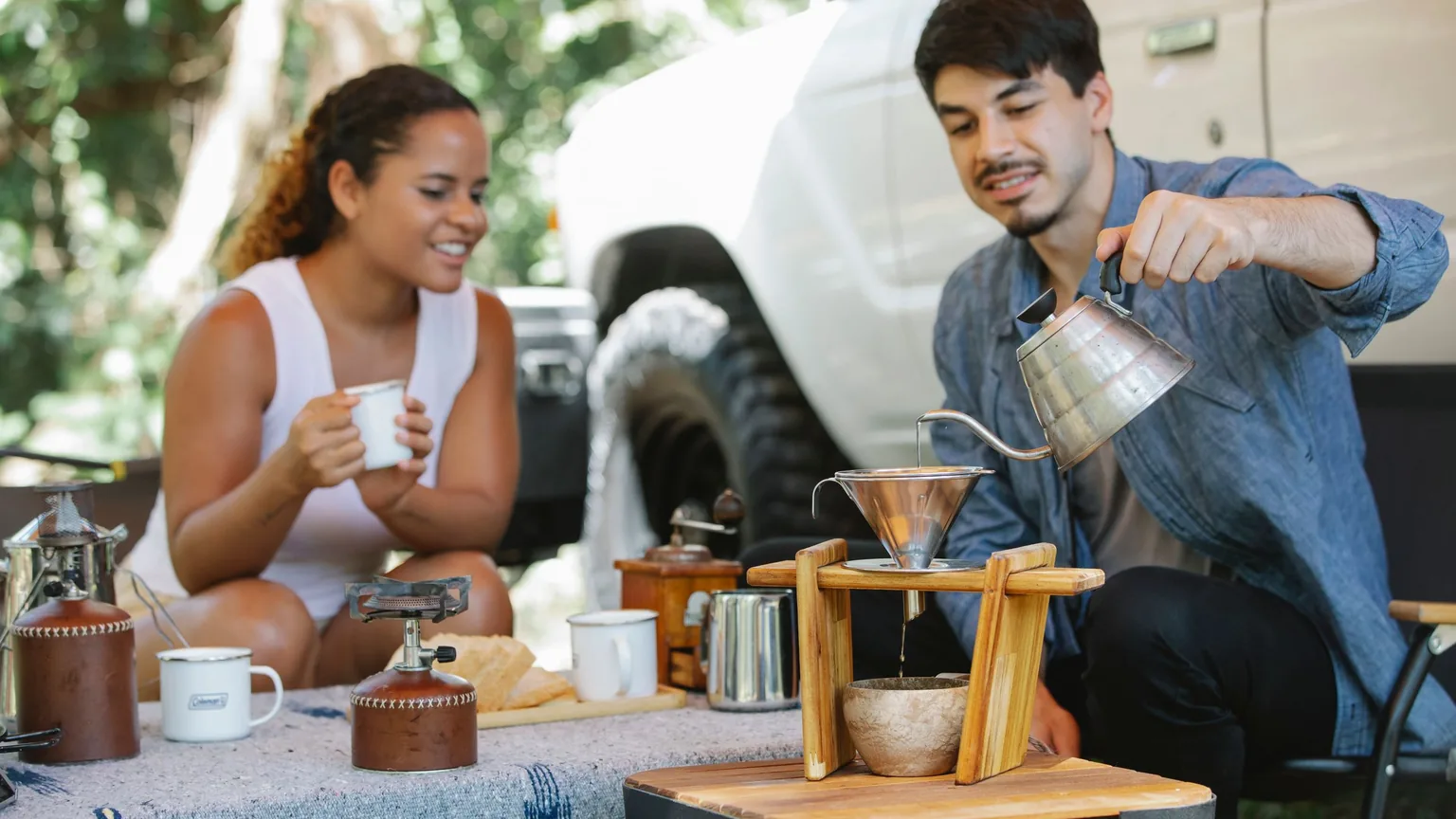
Ask a room full of your members how they first found the group - actually ask, out loud, next time you're all together - and if your membership is any good the answer that comes back most often won't be your Instagram, or your website, or a poster someone once spotted taped to a cafe wall. It'll be a person. A friend dragged them along, or wouldn't shut up about it, or just said "you'd love this, come along Saturday" over a coffee. That's a referral, and it's the warmest way anyone ever joins anything, because a recommendation from someone with nothing to sell carries a weight your own marketing simply can't match - you'd say you're good, wouldn't you, so a stranger quietly discounts every word of it, whereas a mate has no angle and gets believed. So it's well worth getting a bit deliberate about referrals rather than just hoping they happen.
But there's a catch I want to put right at the top, before any of the mechanics, because it's the thing that quietly sinks half the referral schemes I've watched people set up: the best referral engine by a distance is a membership people genuinely want to talk about, and no clever incentive on earth will manufacture that enthusiasm if it isn't already there. A reward can give a happy member a nudge and an excuse to bring someone. It cannot make an indifferent member into an advocate. Keep that order in your head as you read the rest of this, because everything below assumes the underlying thing is worth recommending - and if it isn't yet, that's a retention job first, not a referral job.
A quick note on where this sits, so I'm not repeating myself. Referrals turn up as one channel among several in the wider acquisition strategy piece, and "bring a friend" gets a mention in the practical recruitment ideas menu. This article is the one that goes properly into that single channel - the actual mechanics of a referral or ambassador program, what rewards do and don't work, and how to run one without turning your members into a reluctant sales team.
Let me carry one example through so none of this floats off into the abstract. Say you help run Komunitas Seduh Bareng, a home-brew coffee club in Bandung - somewhere around 200 members, a mix of hobbyist manual brewers, a few baristas and one or two roasters. There's a monthly brew-and-cupping session that rotates between a friendly warkop and the odd member's garage, a group-buy of green and roasted beans from a couple of local roasters, and a lot of good-natured arguing about grinders, water and whether tubruk counts as "proper" coffee (it does). It's a genuinely nice thing to belong to. The committee has noticed, though, that growth has gone flat, and they'd like more members, partly because a bigger group means better bean prices and more interesting guests. We'll come back to them.

Why referrals beat almost everything else
It's worth being clear about why this channel is worth the fuss, because the reasons go a fair bit beyond "it's cheap". Yes, it's cheap - a member telling a friend costs you nothing where an advert costs you money and gets ignored - but the bigger thing is the quality of the person who arrives. Someone brought along by a member turns up already trusting the place, already knowing one friendly face, and already roughly the right sort of person, because your members tend to know people like themselves. For most community groups something like half to two-thirds of new members can be traced back to an existing one, if you bother to ask them how they heard about you (which you absolutely should - it's one question on the join form and it tells you where your growth actually comes from).
The other quiet advantage is that referred members stick around better. A stranger who found you through a search has to be sold on the whole thing from cold; a friend who came because someone they trust vouched for you has a reason to give it a proper go, and a person already there to sit with on the first awkward evening. So referrals don't just bring in warmer prospects - they bring in members who lapse less, which compounds nicely with everything you're doing on retention anyway. It's one of the few moves in the whole growth game that helps you at both ends.
The mechanics, from plainest to most involved
There are really three levels to a referral program, and they stack - you can stop at the first, and plenty of good clubs should. Don't feel you have to build the whole staircase. Start at the bottom, see whether it's earning its keep, and only add the next step if the last one's genuinely working.
1. Bring-a-friend - the version everyone should do
The simplest referral mechanic isn't a scheme at all, it's just permission and a nudge. Pick a session, call it a bring-a-friend brew, tell every member a fortnight out that guests are welcome and the cupping's free for them, and then actually ask - by name where you can - the members who obviously love the club to bring someone along. That's it. For Seduh Bareng it's an easy fit, because anyone who's into home brewing almost always knows a friend who keeps saying they want to "get into proper coffee" but doesn't know where to start, and a relaxed Saturday session with a mate already on the next stool is about the gentlest possible way in. Run it two or three times a year and it does most of the work a fancier program would, at none of the cost.
2. Member-get-member - adding a light incentive
Once bring-a-friend is ticking along, you can add a small thank-you for a member who actually brings someone who joins. This is what most people picture when they hear "referral program" - the member introduces a friend, the friend signs up, and the member gets a little something for it. The incentive isn't there to bribe reluctant members into recruiting (that never works, and we'll get to why cash in particular tends to backfire). It's there to say thank you properly, to give an enthusiastic member a concrete excuse to make the introduction, and to signal that you notice and value it. For Seduh Bareng that might be a free bag of the next group-buy roast for a member whose friend joins - genuinely appreciated, obviously coffee, and it costs the club almost nothing.
3. An ambassador or champion tier - for your most enthusiastic few
The third level leaves the mass of members alone entirely and concentrates on the handful who are already, unmistakably, your biggest advocates. Every membership has three to five people (out of a couple of hundred) who evangelise for the thing whether you ask them to or not, who bring people constantly, who'd host a session at their place at the drop of a hat. An ambassador tier just names that role and gives it a bit of shape: you ask those few whether they'd be your "duta seduh", host the occasional session, welcome newcomers, be the friendly face who says "come find me". In return they get some recognition, first dibs on the good stuff (a seat at a capped cupping with a visiting roaster, say), maybe a distinctive club mug, and the plain satisfaction of a role that suits them.
The thing to understand about an ambassador tier is that it's recognition, not recruitment targets. The moment you hand your ambassadors a quota - "bring three friends this quarter" - you've turned a labour of love into an unpaid sales job, and the people who were doing it for love will quietly stop. Keep it light, keep it about the enjoyment and the status of the role rather than the numbers, and it runs itself. Get greedy with it and you'll kill the exact enthusiasm you were trying to reward. For a group the size of Seduh Bareng, three or four ambassadors is plenty - this is not a tier you want half the club in.
What rewards actually motivate - and why cash usually doesn't fit
Here's where a lot of referral programs go quietly wrong, so it's worth slowing down. The instinct is to reach for cash or a cash-like discount, because it's simple and it feels generous. In a community setting, though, cash is often the weakest thing you can offer, and sometimes actively harmful - and the reason is worth understanding rather than just taking on faith.
When you put a cash bounty on a referral, you change what the referral means. A member who recommends the club to a friend over coffee is doing a warm, social thing - passing on something they love. The moment there's fifty thousand rupiah in it, that same recommendation risks feeling like a transaction, both to the member (who now feels a bit mercenary mentioning it) and, worse, to the friend, who may wonder whether they were invited because they'd be good company or because they were worth a payout. It also tends to attract exactly the wrong behaviour - the person who'll spam their WhatsApp groups for the bounty and bring you ten names that never turn up twice. And there's the plain admin faff of handling money, which nobody running a coffee club got into it for.
What tends to work far better, in my experience, is a reward that fits the culture of the thing - something that says "you're one of us" rather than "here's your fee". For a coffee community that's easy and cheap:
- A bag of beans. A free single-origin from the next group-buy, or a bag of a limited roast members can't easily get otherwise. It's on-theme, genuinely wanted, and costs the club very little.
- First pick on the good stuff. Early access to a limited-lot group-buy, or one of the scarce seats at a cupping with a visiting roaster. Access as a reward often lands harder than money, because you can't buy it anywhere else.
- A free month or a small credit. This is the closest thing to cash that still feels right, because it keeps the reward inside the membership rather than handing over money - and for some kinds of organisation (a professional body, say) a fee credit is entirely sensible, so don't take my anti-cash point as a rule for every group.
- Recognition. A "thanks to the members who brought a friend this year" line in the newsletter, a name on a little board at the warkop, a shout-out at a session. Cheaper than anything else on this list and, for a lot of people, more motivating than any of it.
- Something with the club's face on it. An enamel mug, a tumbler, a tote - small, useful, and quietly turns the member into a walking recommendation every time they use it out in the world.
None of this is a hard rule, and I'd be wary of anyone who gave you one. Read your own members. But the general shape holds: in a community built on shared enthusiasm, a reward that deepens the belonging beats a reward that just pays people, nearly every time.
Make it genuinely easy to refer
You can have the warmest members in the world and still lose most of your referrals to plain friction, because "I'll bring my friend along sometime" dies the same quiet death as every other good intention. Two things fix most of it: an easy way to actually make the referral, and catching people at the right moment to ask.
On the easy way - the single most useful thing is to give each member a personal referral link or a short code they can say out loud, so that when a friend does sign up, it's obvious who brought them without anyone keeping a shoebox of "wait, who introduced Rina?". A code a member can drop into a WhatsApp message, or reel off across a table ("use SEDUH-BUDI when you join"), removes the awkward admin that otherwise makes a member not bother. Good membership tools generate these for you and do the counting quietly in the background, which matters more than it sounds, because the alternative - tracking referrals by hand - is exactly the sort of faff that means it never gets tracked and the thank-yous never get sent.

On the moment - timing does more work here than most people realise. The best time to ask a member to bring someone is right after they've had a cracking session, when the coffee was good and the company was better and they're glowing about it - not in a cold campaign email three weeks later when the feeling's faded. So attach the ask to the good moment. A line at the end of a great cupping ("if you know someone who'd love this, next month's is open - bring them"), a note in the follow-up while the session's still warm in their memory, a nudge to the member who just spent ten minutes raving about a bean. The ask costs nothing and lands far better when the enthusiasm is fresh. Miss the moment and even a keen member forgets by Tuesday.
Keeping it genuine, not pushy
The whole thing only works while it stays a favour between friends, and it stops working the instant it starts to feel like a campaign. So resist the urge to industrialise it. Don't set your members targets, don't nag them monthly about their referral numbers, don't turn the members' channel into a stream of "REFER NOW AND WIN" posts. A membership that's constantly hustling its own members to recruit starts to feel a bit grabby, and the very enthusiasm you're relying on curdles. One gentle, occasional, well-timed ask - and a genuine thank-you when someone does bring a friend - is the entire tone you're going for.
It's also worth being relaxed about the members who never refer anyone, because plenty won't, and that's completely fine. Some people love the club and simply aren't the type to bring people, and pestering them just sours the thing for them. Referrals will always come mostly from a minority of your members - the same handful, usually - and the sensible move is to make it easy and pleasant for that minority rather than to try to squeeze a referral out of everyone. Let the keen ones be keen, thank them properly, and leave the rest to enjoy their coffee in peace.
A quick gut-check before you launch anything: would you, personally, feel comfortable recommending your own membership to a good friend right now? If the honest answer is "not quite yet", no referral program will fix that - and the effort is better spent making the thing more worth talking about. If the answer's yes, then all you need is to make referring easy and to remember to ask at the right moment. The program is the small part; the membership is the big one.
Measuring it without overdoing it
You don't need much here, and you certainly don't need a dashboard. One question on the join form - "how did you hear about us?" - and a rough eye on what share of new members say a friend or a member, tracked year on year, tells you almost everything you'll act on. If that share is healthy and holding, your referral engine is running; if it's thin, either the membership isn't quite worth talking about yet or you're not making it easy to refer, and you'll usually know which. Resist the pull to measure every member's referral count and build leaderboards and the rest of it. For a club the size of Seduh Bareng that's a way of feeling busy without getting anywhere, and it drags the whole thing back towards the transactional feel you were trying to avoid.
What not to bother with
You do not need a multi-tier points system, a referral leaderboard, a dedicated app, or a scheme with bronze-silver-gold levels to get members bringing their friends - not to start with, and quite possibly not ever. Those things are the last few percent of referral growth that get expensive and fiddly to chase, and they tend to make a warm, human thing feel like a loyalty programme at a petrol station. The bulk of the result comes from four unglamorous things: a membership worth recommending, an easy way to refer, a well-timed ask, and a genuine thank-you. Most groups haven't nailed those four, which is oddly cheering, because it means the growth you're after is sitting in the simple basics, not in some referral platform you haven't bought yet.
And start rough. A single bring-a-friend session announced in your group chat this afternoon, with a "bring someone who'd love this" and a friendly welcome for whoever turns up, will teach you more about your referral potential than three months designing a program. Do the simple version, ask every new member how they heard about you, thank the members who bring people, and let the whole thing grow one warm introduction at a time….
If you take one thing away: referrals are the warmest members you'll ever get, but you can't buy your way to them - the engine is a membership worth talking about. Make referring easy, ask at the right moment, reward it with something that says "you're one of us" rather than cash, and keep it a favour between friends rather than a campaign.
A fair bit of the fiddly part here is what Anggota is built to take off your plate - a personal referral link or code for each member so you can see who brought whom without a spreadsheet, a join-and-pay page you can hand to a friend at a session, and a simple record of where your members came from so you can tell whether referrals are actually earning their keep. If that sounds useful you're welcome to try it for free and see how it fits. And if you'd sooner take these ideas and run them through whatever you already use, that's genuinely fine too - none of this depends on a particular tool, and a membership people are proud to recommend mostly grows itself, however you get there. The wider picture of winning members is in the acquisition guide, the practical menu of tactics is in recruitment ideas, and the thing that makes all of it work - members who stay and stay happy - is in the retention guide.